






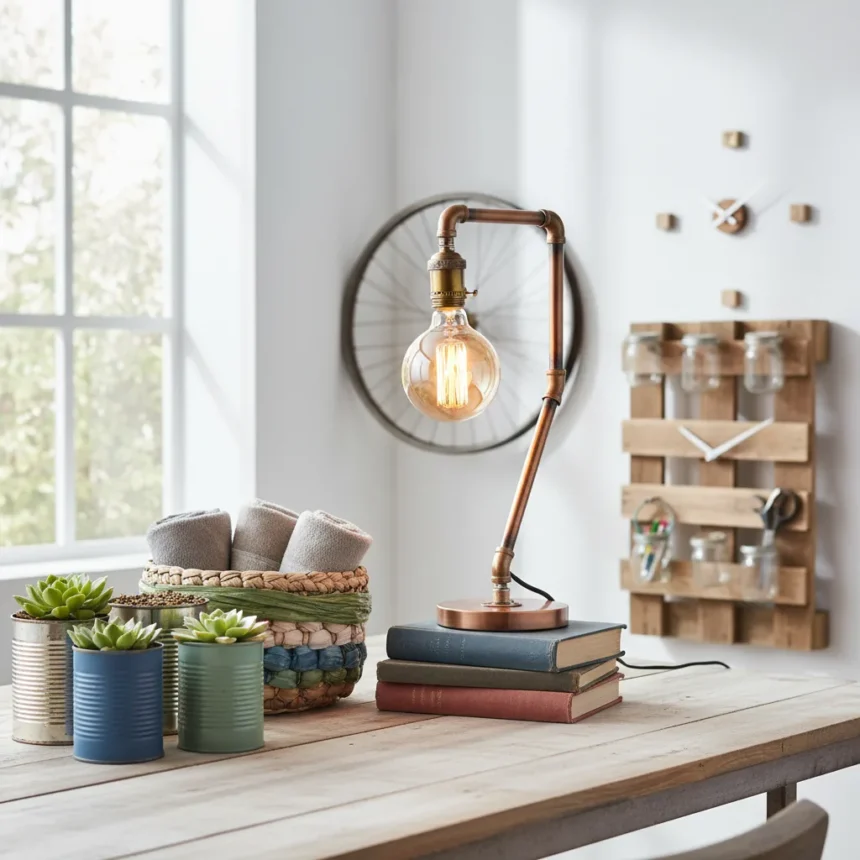
Household upcycling hacks offer a practical way to reduce waste while creating something useful from items destined for the bin. Upcycling refers to the process of transforming discarded or unwanted materials into new products or objects of greater value or utility, rather than simply recycling them into raw materials. Instead of tossing out worn clothing, tin cans, and other household staples, you can repurpose them into functional items that serve your home or garden.
Key Takeaways
- Household upcycling hacks reduce landfill waste while creating useful items from discarded materials.
- Tin cans and old jeans are among the most versatile items for upcycling projects.
- Repurposing household items saves money compared to buying new products.
- Upcycling requires minimal tools and can be completed in a few hours.
- Common household items have multiple second lives if you know where to look.
Why Household Upcycling Hacks Matter Right Now
The volume of household waste continues to grow, and landfills are reaching capacity in many regions. Household upcycling hacks address this problem directly by extending the life of items already in your home. Rather than purchasing new products, you can transform what you already own into something functional and often more durable than mass-produced alternatives. This approach saves money, reduces environmental impact, and encourages creative problem-solving in your daily life.
Upcycling differs from standard recycling in a crucial way: recycled materials are typically broken down and reprocessed into new raw materials, which requires energy and industrial infrastructure. Upcycled items, by contrast, are transformed directly into new products with minimal processing. This makes household upcycling hacks both environmentally efficient and immediately actionable—you do not need specialized facilities or complex logistics to participate.
Tin Cans and Garden Solutions
Tin cans represent one of the most versatile materials for household upcycling hacks, particularly in garden and outdoor spaces. Empty cans from food products can be transformed into planters, drainage containers, or decorative garden markers with minimal effort. The metal construction makes them durable enough to withstand outdoor weather, and their cylindrical shape lends itself naturally to holding soil and supporting plant growth.



To repurpose tin cans as planters, rinse them thoroughly and drill or punch small drainage holes in the bottom. Paint or decorate the exterior to match your garden aesthetic, then fill with potting soil and plant herbs, succulents, or small flowers. For garden markers, flatten the cans slightly and cut them into strips, then write plant names with permanent marker. The reflective surface of unpainted cans can also deter certain garden pests, making them functional beyond their decorative appeal.
Transforming Old Jeans Into New Items
Old jeans are among the most durable fabrics in most households, making them ideal candidates for household upcycling hacks that require sturdy material. Worn-out or outdated jeans can be transformed into tote bags, storage organizers, quilts, or even garden planters. The thick denim construction means these projects can withstand regular use without tearing or degrading quickly.



One straightforward approach is converting jeans into a tote bag: cut off the legs, sew the leg openings closed, and add handles made from the remaining denim strips or repurposed fabric. For storage, cut jeans into panels and sew them into boxes or hanging organizers that fit into closets or over doors. Patchwork quilts made from denim squares provide both warmth and a tangible reminder of the garments’ previous lives. These projects require only basic sewing skills and can be completed in an afternoon with a needle and thread or a simple sewing machine.
Additional Materials Worth Repurposing
Beyond tin cans and jeans, many household items have multiple second lives waiting to be discovered. Glass jars from condiments, sauces, and spreads become storage containers, candle holders, or decorative vases. Plastic bottles can be cut and transformed into organizers, watering cans, or planters. Cardboard boxes serve as storage solutions, drawer dividers, or the foundation for craft projects. Old wooden furniture can be refinished, repainted, or disassembled to create new pieces or decorative elements.
Household upcycling hacks succeed because they work with the natural properties of materials rather than against them. A glass jar’s transparency makes it ideal for displaying dried goods or layered craft materials. A plastic bottle’s lightweight construction and water-resistant properties make it perfect for gardening tasks. Cardboard’s flexibility allows it to be folded, cut, and reshaped into almost any form. Understanding these inherent qualities helps you identify which items in your home are ready for their next purpose.
Getting Started With Your First Project
Begin with household upcycling hacks that require minimal tools and skills. Tin can planters and glass jar storage projects are ideal entry points because they require only basic cleaning, optional decoration, and no specialized equipment. Gather materials from your kitchen and pantry, choose a simple project, and allow yourself an hour or two to experiment. The satisfaction of creating something functional from waste builds momentum for more ambitious projects.



As your confidence grows, you can explore more involved household upcycling hacks that require sewing, painting, or light woodworking. Online communities dedicated to upcycling share project ideas, tutorials, and inspiration. The key is starting small, learning from early attempts, and gradually expanding your skills and ambitions. Every household contains dozens of items suitable for upcycling—the challenge is recognizing their potential before they reach the trash.
What materials work best for household upcycling hacks?
Tin cans, glass jars, old jeans, plastic bottles, and cardboard boxes are among the most versatile materials for household upcycling hacks. These items are durable, readily available in most homes, and can be transformed into planters, storage solutions, bags, or decorative pieces with minimal tools or specialized skills.
How much time do typical household upcycling hacks take?
Simple projects like tin can planters or glass jar storage typically take one to two hours from start to finish. More involved projects involving sewing or woodworking may require several hours or a full afternoon, depending on complexity and your experience level.
Do household upcycling hacks really save money?
Yes. Household upcycling hacks use materials you already own, eliminating the cost of purchasing new items. Even accounting for minor supplies like paint or thread, the savings compared to buying equivalent products new are substantial over time.
Household upcycling hacks represent a practical, immediate way to reduce waste while creating functional items for your home and garden. By recognizing the potential in everyday materials—tin cans, old jeans, glass jars, and cardboard—you transform what would become landfill into useful objects that serve real purposes. The barrier to entry is low, the environmental benefit is real, and the satisfaction of creating something with your own hands offers value that mass-produced items rarely match. Start with one simple project this week, and you will quickly discover why so many people are choosing to upcycle instead of discard.
Edited by the All Things Geek team.
Source: Tom's Guide