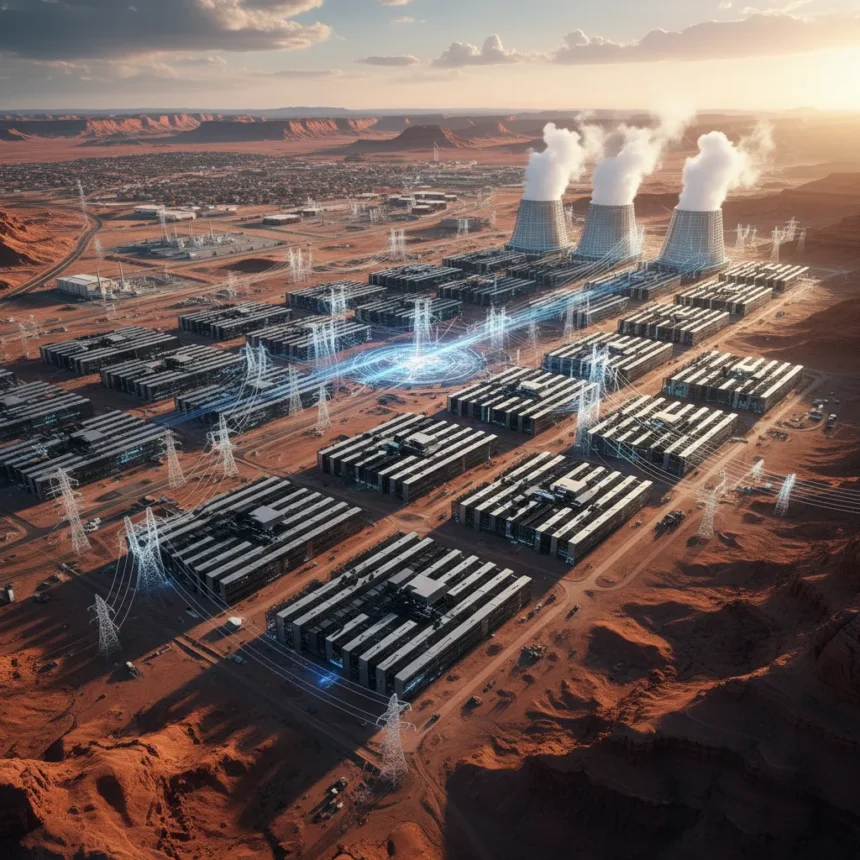
Utah just approved one of the most ambitious data center projects in North America. The Utah data center 9 gigawatt facility, called Stratos, will consume more electricity than the entire state currently uses on average. Backed by investor Kevin O’Leary and developed by O’Leary Digital, the project represents a massive bet on AI infrastructure and energy independence in the Mountain West.
Key Takeaways
- Stratos will generate 9 GW at full buildout, more than double Utah’s current 4 GW average electricity demand.
- The facility spans 41,200 acres across Box Elder County, private land, and state-owned property.
- Phase 1 will deliver approximately 3 GW of on-site generation capacity.
- Power comes from on-site generation connected to the Ruby Pipeline, a 680-mile natural gas line from Wyoming to Oregon.
- The Utah data center 9 gigawatt project will not draw from the existing grid and could export surplus power.
The Utah Data Center 9 Gigawatt Project Explained
The Utah data center 9 gigawatt campus represents a shift in how hyperscale infrastructure is deployed. Rather than relying on existing grid connections, Stratos is designed as an off-grid, self-powered facility with all generation happening on-site. This approach sidesteps the energy bottleneck that has constrained data center expansion in other states. The facility will connect directly to the Ruby Pipeline, a 680-mile interstate natural gas line that runs through northern Utah from Wyoming to Oregon, providing the fuel for on-site generation.
Utah’s Military Installation Development Authority (MIDA) approved the development agreement on Friday, clearing the path for construction. MIDA Executive Director Paul Morris stated the facility will not take one electron from the existing grid and could eventually feed surplus power back into it. At full buildout, the Utah data center 9 gigawatt project will consume more than twice Utah’s current statewide average electricity use of approximately 4 GW, making it a transformative infrastructure decision for the region.
Scale and Land Footprint
The project’s physical footprint is staggering. Stratos will occupy 40,000 acres of private land plus an additional 1,200 acres of military and state-owned property, totaling 41,200 acres in Box Elder County. For context, the project is described as roughly twice the size of Manhattan. This scale places it among the largest data center campuses ever approved in the United States. The phased development approach begins with Phase 1 delivering approximately 3 GW of generation capacity, with additional phases planned to reach the full 9 GW buildout.

The land requirement reflects the infrastructure needed to support both the data center halls and the on-site power generation systems. Unlike traditional data centers that operate at higher power densities and rely on grid connections, Stratos’s off-grid model requires significant space for generation equipment and cooling systems. This architectural choice, while land-intensive, allows the facility to operate independently from Utah’s existing power infrastructure.
Energy Independence and Grid Impact
One of the most striking aspects of the Utah data center 9 gigawatt project is its designed grid independence. Rather than straining Utah’s power grid, Stratos will generate all its electricity on-site through connections to the Ruby Pipeline. This stands in contrast to traditional data center development, which typically requires massive grid connections and can overwhelm local power systems. The facility’s ability to potentially export surplus power back into the grid could eventually benefit the broader Utah energy market.



The timing of this approval reflects broader industry trends. Data centers powering artificial intelligence and cloud computing have created unprecedented electricity demand. States like Texas and Virginia have seen grid stress from data center clustering. Utah’s approval of an off-grid, self-powered facility sidesteps these traditional bottlenecks, positioning the state as an alternative hub for hyperscale infrastructure development. The Ruby Pipeline connection ensures fuel supply without competing for natural gas from other state users, since the pipeline is designed specifically for this interstate transport.
What This Means for Utah’s Tech Future
The Stratos approval signals Utah’s willingness to embrace large-scale data center development as an economic driver. Box Elder County, historically dependent on agriculture and military installations, now has the infrastructure for a major tech employer. The project will require construction workers, engineers, and operations staff, creating both short-term and permanent job opportunities. However, the approval also raises questions about land use, environmental impact, and whether other states will follow Utah’s model of off-grid data center development.
The facility’s success could reshape how hyperscale infrastructure is built across North America. By proving that off-grid, gas-powered data centers can operate at massive scale without straining existing power systems, Stratos may become a template for other states struggling to accommodate AI infrastructure demand. Conversely, if the project encounters operational challenges or environmental concerns, it could slow adoption of this model elsewhere.
Is the Utah data center 9 gigawatt project actually off-grid?
Yes. The facility is designed to generate all 9 GW of power on-site through connections to the Ruby Pipeline and will not draw electricity from Utah’s existing grid. According to MIDA, it could eventually export surplus power back into the grid rather than consuming from it.



How much electricity does Utah currently use?
Utah’s current average statewide electricity consumption is approximately 4 GW. The Stratos facility at full buildout will consume more than twice this amount, making it a massive addition to the state’s energy infrastructure.
When will Stratos be fully operational?
Phase 1 will deliver approximately 3 GW of capacity, but the research brief does not specify exact timelines for Phase 1 completion or full buildout to 9 GW. Development is phased, but specific dates have not been publicly announced.
The Utah data center 9 gigawatt approval represents a pivotal moment for infrastructure policy in the American West. Utah has chosen to embrace hyperscale development on its own terms, building an off-grid facility that powers itself rather than competing for grid capacity. Whether this model proves sustainable and replicable will shape data center development across the region for years to come.
Edited by the All Things Geek team.
Source: TechRadar