





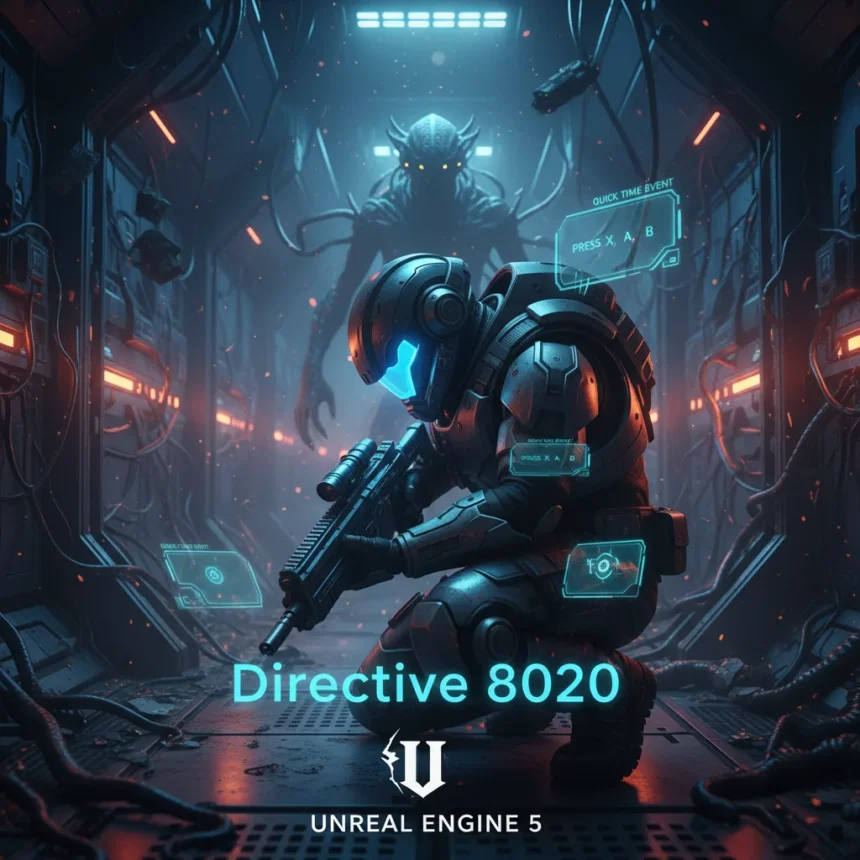
Directive 8020 is a narrative-driven sci-fi horror game developed by Supermassive Games, released in early 2026 for PS5, Xbox Series X/S, and PC via Unreal Engine 5. The game positions itself as the studio’s first full UE5 showcase, arriving amid a 2026 wave of engine-powered horror titles. Yet beneath its glossy late-’90s sci-fi aesthetic and technically impressive visuals lies a game that squanders its atmospheric setup with repetitive mechanics and diminishing tension.
Key Takeaways
- Directive 8020 marks Supermassive Games’ debut using Unreal Engine 5, leveraging Lumen lighting and volumetric effects for cinematic horror visuals.
- The game runs 8-10 hours per playthrough with branching narrative paths, multiple endings, and chapter-based progression across five main acts.
- Quick-time events dominate the core loop, becoming predictable and undermining the sci-fi horror atmosphere despite strong voice acting and motion capture.
- Available on PS5, Xbox Series X/S, and PC at $59.99 USD standard edition; Deluxe edition includes soundtrack and art book for $69.99 USD.
- Technical bugs including clipping, audio desyncs, and unresponsive combat mechanics detract from the visual showcase.
Directive 8020 Review: A Technical Triumph That Fails to Terrify
Supermassive Games has built its reputation on branching narrative horror—the studio behind Until Dawn and The Quarry understands how to weave player choice into interactive storytelling. Directive 8020 follows that formula faithfully: you play a security officer investigating anomalies aboard a space station, scanning corridors for clues, making dialogue choices that determine alliances and betrayals, and navigating quick-time event sequences when threats emerge. The structure is familiar. The execution, however, feels rote.
The station itself is rendered with impressive technical fidelity. Unreal Engine 5’s Lumen global illumination system bathes corridors in moody blue and amber light, while volumetric fog and depth-of-field effects create a cinematic quality that justifies the engine upgrade. Early chapters establish genuine atmosphere—the isolation of a lone officer in a compromised facility, the slow revelation of a spreading corruption, the tension of unknown threats. But atmosphere alone cannot sustain a horror game for 8-10 hours without meaningful stakes or evolving challenge.
Why Directive 8020’s Tension Evaporates Despite Visual Splendor
Quick-time events are the backbone of Directive 8020’s pacing, and their repetition is the game’s fatal flaw. By Chapter 3, every QTE follows an identical visual and audio cue—a red flash, a controller rumble, a 1.5-second window to press the correct button. The game trains players to recognize these patterns instantly, draining any sense of danger. Compare this to Supermassive’s own The Quarry, where group dynamics and character relationships created emotional stakes that made QTE failures feel consequential. Directive 8020’s solo protagonist investigation lacks that emotional anchor. When you fail a QTE and reload, nothing meaningful changes except your position in the corridor.



The scanning mechanic compounds this problem. Chapter 4’s puzzle gauntlet requires scanning 10+ environmental objects via an augmented reality scanner to unlock a core sequence. Each scan triggers a brief animation and log entry. The process feels like busywork rather than exploration, especially when compared to Cthulhu: The Cosmic Abyss, a competing 2026 UE5 sci-fi horror that uses similar scanning but ties it to more ambitious puzzle design. Directive 8020’s scans feel rote by design.
Combat and Technical Issues Undermine the Horror Premise
Combat in Directive 8020 feels tacked-on, as though Supermassive added it late in development to satisfy action-game expectations. The security officer has access to a stun weapon and environmental traps, but the controls feel unresponsive and floaty. Enemies telegraph attacks with generous wind-up animations, and the Chapter 5 boss confrontation—a three-phase QTE sequence—devolves into pattern memorization rather than strategic challenge. The game’s technical bugs, including character clipping through walls, audio desynchronization during dialogue, and occasional frame rate dips despite the hardware’s capabilities, further erode immersion.



These issues matter because horror depends on environmental trust. When a player sees a character’s arm clip through a doorframe or hears dialogue desync from character lips, the carefully constructed atmosphere cracks. Alone in the Dark’s 2024 remake shares UE5’s heritage and suffers similar bugs, yet maintains stronger atmosphere through superior camera work and pacing. Silent Hill 2’s Bloober Team remake demonstrates how a faithful over-the-shoulder perspective can sustain tension even in a remake format—Directive 8020’s wider third-person shots distance players from the protagonist’s vulnerability, diluting horror impact.
Is Directive 8020 Worth Playing?
Directive 8020 is worth playing if you value technical artistry and narrative branching over mechanical depth. The voice acting is strong, motion capture is detailed, and the late-’90s sci-fi aesthetic provides visual novelty. If you completed The Quarry and wanted a similar experience with fresh visual polish, Directive 8020 delivers that—just with less emotional resonance. For players seeking genuine horror tension or innovative puzzle design, better options exist in 2026’s horror lineup. The game’s $59.99 standard edition and $69.99 Deluxe edition (which includes a soundtrack and art book) are reasonably priced for a narrative experience, but expect to finish it in a single weekend and move on.
How long is Directive 8020?
A single playthrough of Directive 8020 takes approximately 8-10 hours depending on exploration and dialogue choices. Multiple endings exist based on narrative decisions, encouraging replays, though the core loop remains unchanged across playthroughs.
Does Directive 8020 have multiplayer or co-op?
No, Directive 8020 is a single-player experience. The solo protagonist design is central to its narrative structure, though it also contributes to the lack of group dynamics that made Supermassive’s earlier titles more emotionally engaging.



What platforms can I play Directive 8020 on?
Directive 8020 is available on PS5, Xbox Series X/S, and PC via Steam. Digital versions are available on PlayStation Store, Xbox Store, and Steam; physical PS5 and Xbox copies are available at major retailers at standard retail price.
Directive 8020 is a paradox: a game that looks like a next-generation horror experience but plays like a last-generation interactive movie. Supermassive’s mastery of branching narrative remains intact, and the Unreal Engine 5 upgrade delivers visual fidelity that justifies the hardware. But technical showcase and atmospheric setup cannot overcome mechanical stagnation. The game’s reliance on predictable QTEs, repetitive scanning, and unresponsive combat means players will spend most of their time watching cutscenes rather than feeling threatened. If you’re drawn to Supermassive’s style and willing to accept a visual tour over a genuine horror challenge, Directive 8020 delivers. Everyone else should look elsewhere.
Edited by the All Things Geek team.
Source: Creativebloq