





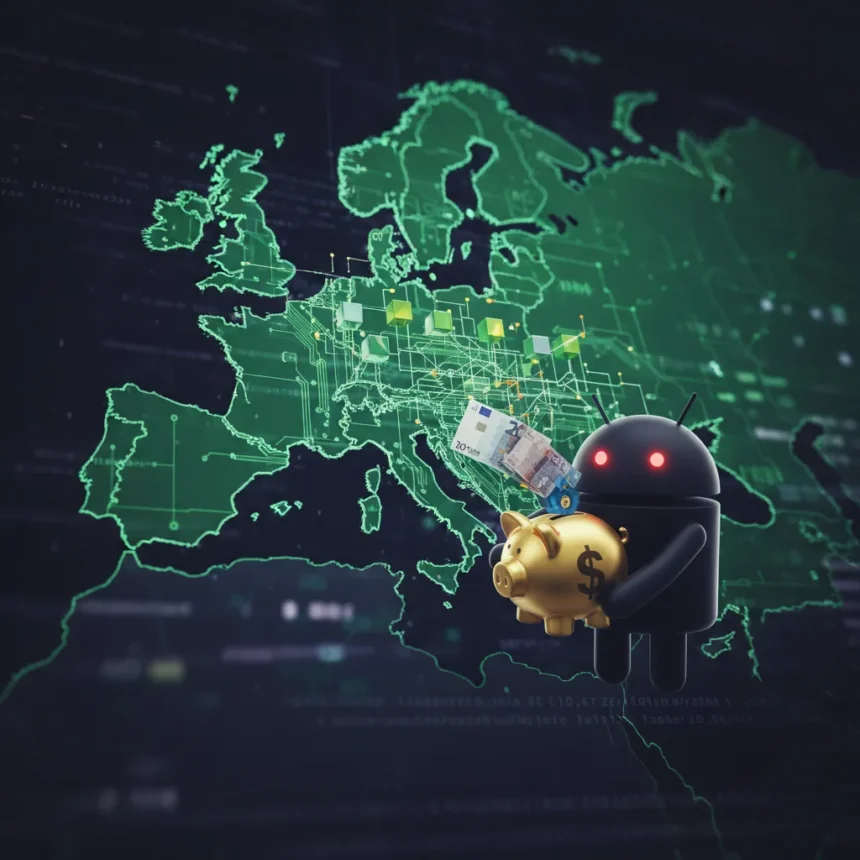
Android malware blockchain evasion has reached a new sophistication level with the return of TrickMo, a banking trojan that first emerged in September 2019 and has never stopped evolving. The latest variant ditches traditional command-and-control infrastructure for something far more elusive: The Open Network (TON) blockchain, routed through an embedded local TON proxy on infected devices. This architectural shift makes the malware significantly harder to track and disrupt than previous versions.
Key Takeaways
- TrickMo banking trojan has returned with TON blockchain-based command-and-control communications for evasion.
- New variant targets France, Italy, and Austria, disguised as TikTok or streaming application.
- Modular two-stage design separates loader persistence from offensive capabilities like phishing overlays and keylogging.
- Capabilities include screen recording, SMS interception, OTP suppression, and live screen streaming to attackers.
- ThreatFabric identified the variant in current European campaigns.
How TrickMo Uses Blockchain for Command-and-Control
The innovation here is architectural, not accidental. TrickMo’s new variant leverages The Open Network (TON) blockchain through .ADNL addresses routed via an embedded local proxy on the compromised device. Unlike traditional C2 servers that can be taken offline or blocked by ISPs and security vendors, blockchain-based communication distributes command delivery across a decentralized network. A single takedown notice cannot kill the infrastructure. This is why Android malware blockchain evasion is becoming a real concern for defenders—the attack surface has expanded beyond conventional network monitoring.
The modular design amplifies this advantage. The initial host APK acts as a loader and persistence layer, establishing the foothold. Once embedded, it downloads a second APK module at runtime that contains the actual offensive toolkit. This separation means the initial infection appears relatively benign to static analysis tools. Only after execution does the full payload reveal itself, bypassing many automated detection systems that flag suspicious behavior at installation time.
What TrickMo Actually Steals From Your Phone
TrickMo does not just sit quietly and phone home. The malware is built to actively compromise banking and cryptocurrency wallets through a comprehensive toolkit. Phishing overlays impersonate legitimate banking apps, capturing credentials when users believe they are logging into their real bank. Keylogging captures everything typed on the device. Screen recording and live screen streaming give attackers a real-time view of user activity.


The trojan also intercepts SMS messages and suppresses OTP notifications, preventing two-factor authentication alerts from reaching users even as attackers drain accounts. Clipboard modification allows it to swap cryptocurrency wallet addresses during paste operations, silently redirecting transfers. Notification filtering hides alerts from banking apps warning of suspicious activity. These are not crude tools—they are precision instruments designed to maximize theft while minimizing detection.
Why European Users Are Targeted Right Now
Current campaigns focus on France, Italy, and Austria, according to ThreatFabric’s analysis. This is not random geography. Europe’s banking infrastructure is relatively mature and heavily regulated, which paradoxically makes it a lucrative target. Users in these regions often carry higher account balances and use sophisticated banking apps with stronger security than many developing markets. The attackers are going after high-value targets where a single successful compromise yields substantial returns.


Distribution happens through deception. TrickMo campaigns disguise the malware as TikTok or streaming applications, capitalizing on the legitimacy and ubiquity of these apps. Users searching for these applications on third-party app stores or sideloading links encounter what appears to be the real thing. The APK file looks correct, the icon matches, the branding is perfect. Only after installation does the malware’s persistence mechanisms activate, by which point the user has already granted the necessary permissions.
Why This Matters More Than Previous Variants
Earlier TrickMo campaigns relied on conventional C2 servers hosted on compromised infrastructure or bulletproof hosting providers. Security vendors could identify these servers, block traffic to them, and take them offline. Law enforcement could subpoena hosting providers. The blockchain approach eliminates that single point of failure. Android malware blockchain evasion through TON creates a distributed, resilient command channel that does not depend on any centralized server. This is not a minor upgrade—it is a fundamental shift in how the malware operates.
The modular architecture compounds this problem. Traditional antivirus scanning looks for malicious payloads in the APK at installation time. TrickMo’s two-stage design means the dangerous code does not exist on the device until after installation completes. By the time the offensive module downloads and executes, static analysis has already passed. Behavioral detection becomes the primary defense, but by then the malware has already requested the permissions it needs to operate freely.
How to Protect Yourself
Download applications only from official app stores—Google Play Store for Android. Third-party app stores and sideloading links are the primary distribution vector for TrickMo and similar trojans. Verify the developer name and check user reviews before installing anything that handles banking or financial data. Legitimate apps have established developer accounts with histories and user bases.

Enable Google Play Protect, which scans installed applications for known malware signatures. While it will not catch every variant, it catches the obvious ones. Use a dedicated authenticator app for two-factor authentication rather than SMS-based OTP when possible. SMS interception is one of TrickMo’s core capabilities. If your bank offers push-based authentication, enable it—this requires the attacker to have physical access to your device or have already compromised it so deeply that SMS interception is the least of your problems.
Will Android Malware Blockchain Evasion Become the New Standard?
Probably. Once a technique works and proves difficult to defend against, other malware authors adopt it. TrickMo’s use of TON blockchain for C2 is innovative enough that it will likely inspire imitators. This does not mean your phone is doomed—it means the cat-and-mouse game between attackers and defenders has entered a new phase where traditional infrastructure takedowns are less effective.
Can blockchain-based malware be detected at all?
Yes, but differently. Behavioral analysis becomes more important than network monitoring. If a banking app is trying to access your clipboard, record your screen, or intercept notifications, that is detectable regardless of where commands originate. The challenge is that detection requires more sophisticated tools than simple signature matching. Enterprise security solutions and advanced endpoint detection systems can spot these behaviors, but consumer-grade antivirus may struggle.
Should I stop using TikTok because of this?
No. The malware is not hiding inside the legitimate TikTok app. It is distributed as a fake TikTok APK through third-party sources. Using the real TikTok from Google Play Store carries no additional risk from TrickMo. The threat comes from sideloading or installing applications from untrusted sources, not from the legitimate apps themselves.
Android malware blockchain evasion represents a genuine escalation in mobile threat sophistication, but it is not unstoppable. Stick to official app stores, use strong authentication, and stay alert for unusual app behavior. The attackers have gotten smarter, but so have the tools available to defend against them. Vigilance remains your strongest defense.
Edited by the All Things Geek team.
Source: TechRadar