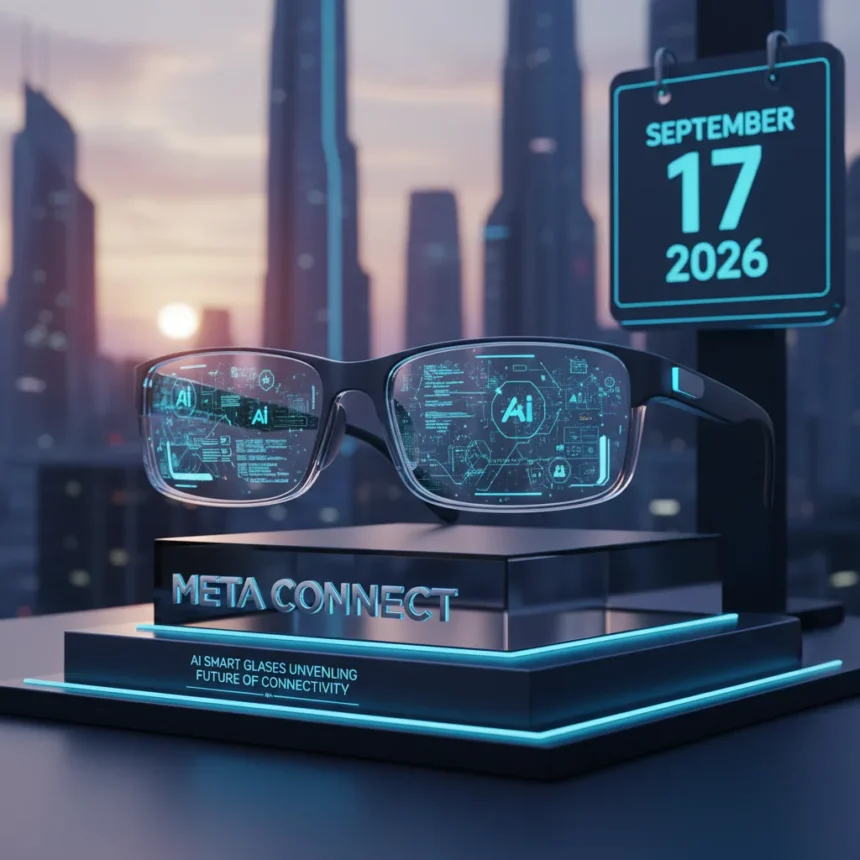
Meta Connect 2026 is scheduled for Thursday, September 17, 2026, marking the company’s annual showcase for virtual reality, augmented reality, and artificial intelligence announcements. The event will bring together developers and industry watchers eager to see what Meta has built since last year’s keynote, with particular focus on smart glasses integration and AI capabilities that could reshape the wearables market.
Key Takeaways
- Meta Connect 2026 takes place September 17, 2026, at Meta headquarters in Menlo Park, United States.
- Mystery smart glasses are teased as a primary announcement, alongside broader AI updates.
- Mark Zuckerberg is expected to deliver the main keynote covering AI glasses and Meta’s metaverse vision.
- Developer sessions will likely announce new SDKs and toolkits for building on Meta’s platforms.
- The event will be streamed online free for those unable to attend in person.
What Meta Connect 2026 Will Showcase
Meta Connect 2026 will feature the company’s latest thinking on how artificial intelligence and wearable hardware intersect. The mystery smart glasses tease suggests Meta is ready to unveil a new product category or significant iteration on existing eyewear technology. Meta’s CTO Andrew Bosworth has previously signaled that the company plans major wearables announcements, and 2026 is shaping up to be the year those bets pay off publicly.
The keynote will likely echo the structure of prior years, with Mark Zuckerberg laying out Meta’s vision for how AI glasses fit into the broader metaverse strategy. This is not just about hardware—it is about positioning Meta’s ecosystem as the platform where AI-powered AR experiences become everyday tools. The contrast with competitors like Apple, whose Vision Pro takes a high-end, closed-garden approach, underscores Meta’s bet on accessible, AI-first wearables.
Expected Announcements and Developer Focus
Beyond the mystery smart glasses, Meta Connect 2026 will almost certainly include new developer toolkits and SDKs designed to make it easier for third-party creators to build on Meta’s platforms. Past events have used this stage to announce critical infrastructure updates—think new APIs, performance improvements, or integration pathways that unlock new use cases. Developers attending will be watching closely for how Meta expects them to leverage AI in their applications.



Rumors from reliable sources suggest Meta is working on an ultralight headset with a tethered compute module, running Horizon OS, potentially shipping in late 2026. While Meta has kept official details under wraps, this trajectory—moving toward lighter, more practical hardware paired with offboard processing—signals where the company’s engineering priorities lie. It is a different bet than the all-in-one headset approach, and it could define the next generation of spatial computing.
Timing and Logistics
With approximately 127 days until September 17, 2026, anticipation is building. The event will follow Meta’s established pattern of a Wednesday evening keynote and Thursday developer sessions, with keynotes typically streamed free online starting at 5 p.m. PT. This means global audiences can tune in without traveling to Menlo Park, though in-person attendance offers networking opportunities and hands-on access to new hardware.



Exact attendance numbers and ticketing details remain sparse, though the event typically draws thousands of developers and press. Meta has not announced public pricing for conference passes, suggesting a mix of free livestream access and paid in-person registration for those who want to attend sessions and demos.
Why Meta Connect 2026 Matters Right Now
Meta Connect 2026 arrives at a critical moment for Meta’s hardware ambitions. The company has invested heavily in AR/VR infrastructure, and the metaverse narrative has shifted—it is no longer about a distant virtual world, but about practical AI-powered tools that live on your face. Smart glasses that understand context, respond to voice, and integrate with Meta’s AI models could become the next computing platform, much like smartphones did in the previous decade.
The mystery smart glasses announcement will either validate that bet or signal a pivot. Either way, the developer ecosystem Meta builds around these devices will determine whether the company can sustain momentum against better-resourced competitors and more established platforms. Meta Connect 2026 is where that story gets its next chapter.
Will Meta Connect 2026 be live-streamed?
Yes, Meta Connect 2026 will be streamed online free for those who cannot attend in person. The main keynote is expected to air on Wednesday evening, with developer sessions continuing Thursday morning, following the pattern established by previous years.


What is the mystery smart glasses product at Meta Connect 2026?
Meta has not revealed specific details about the mystery smart glasses beyond teasing their existence. Speculation suggests it could be a new form factor, enhanced AI integration, or a significant upgrade to existing Ray-Ban collaboration products, but official details will come during the keynote.
When exactly is Meta Connect 2026?
Meta Connect 2026 is scheduled for Thursday, September 17, 2026, at Meta headquarters in Menlo Park, United States. The event will likely span two days, with the main keynote on Wednesday evening and developer sessions on Thursday.
Meta Connect 2026 represents a pivotal moment for the company’s hardware roadmap. With smart glasses and AI updates on the agenda, the event could reshape expectations around what wearables can do and how they fit into daily life. For developers, investors, and AR/VR enthusiasts, September 17 marks the date to watch.
Edited by the All Things Geek team.
Source: Tom's Guide