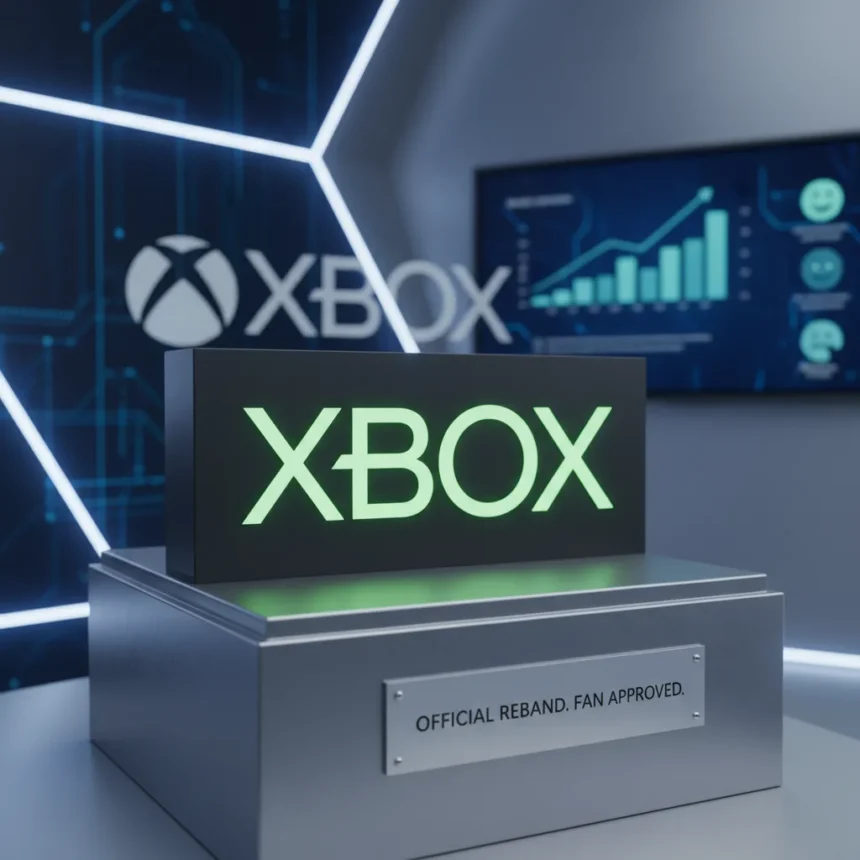
The Xbox rebranding all caps shift is now official. Microsoft’s gaming division has moved to an all-caps branding strategy, ditching the traditional “Xbox” for “XBOX,” following feedback from a social media poll that apparently resonated with fans. The change marks a deliberate pivot in how the company presents itself to players worldwide, signaling either bold confidence or a willingness to let the internet decide corporate strategy—possibly both.
Key Takeaways
- Xbox has officially rebranded to XBOX in all-capital letters following a social media poll.
- Fan reaction to the Xbox rebranding all caps change has been positive, according to Windows Central reporting.
- The rebrand was driven by a clever social media engagement strategy rather than a traditional corporate announcement.
- The shift represents a departure from decades of mixed-case branding conventions in gaming.
- The decision highlights how gaming companies now test brand changes through community feedback.
How Xbox Rebranding All Caps Happened
The Xbox rebranding all caps decision came through an unconventional route: a social media poll that invited fans to weigh in on the company’s visual identity. Rather than announcing the change through a press release or earnings call, Xbox leveraged community engagement to validate the shift. This approach taps into a broader trend where gaming brands test major decisions with their audience before full rollout, treating players as stakeholders in brand evolution rather than passive consumers.
The humor embedded in the rebrand itself—the implication that “Xbox” wasn’t loud enough and needed capitals to be heard—suggests the company is leaning into playful self-awareness. Gaming communities have long joked about brand decisions, and Xbox’s willingness to acknowledge that sentiment through the rebrand’s framing shows an understanding of how modern audiences engage with corporate messaging. The all-caps treatment transforms a standard brand name into something that demands attention in text-based environments, from social media posts to gaming forums.
Fan Reception and What It Signals
Windows Central reports that fans are “loving” the Xbox rebranding all caps shift, which indicates the poll results favored the change decisively. Positive community response matters in gaming more than in most industries because player loyalty directly influences ecosystem adoption. When a brand like Xbox makes a visual change that the community endorses, it strengthens the perception that the company listens to its audience—a valuable asset in an industry where player sentiment can shift rapidly.


The all-caps format also carries practical implications for digital environments. In chat applications, forums, and social media, all-caps text historically signals shouting or intensity. By embracing XBOX as the official brand, Microsoft is essentially weaponizing that cultural association, positioning the brand as bold and demanding attention rather than polite and understated. This aligns with how gaming brands increasingly differentiate themselves through personality rather than pure specification advantages.
What Xbox Rebranding All Caps Means for Brand Strategy
The Xbox rebranding all caps move reflects a shift in how major tech and gaming companies approach identity changes. Instead of top-down corporate decisions handed to consumers, brands now run polls, gather feedback, and build consensus before committing to visual changes. This democratization of branding decisions can backfire if poorly executed, but when it succeeds—as Windows Central suggests it has here—it creates a sense of ownership among the community.

Competitors in the gaming space, from PlayStation to Nintendo, have maintained relatively static brand identities for decades. The fact that Xbox is willing to experiment with something as fundamental as capitalization shows a company less bound by legacy expectations. Whether this signals genuine innovation or simply a brand searching for differentiation remains an open question, but the willingness to ask the community first is notable in an industry where most major decisions remain behind closed corporate doors.
Is the Xbox rebranding all caps change permanent?
Windows Central’s reporting suggests the rebrand is official, but the source material does not specify whether XBOX will remain the permanent branding standard across all Xbox properties or if this represents a limited campaign. Given that the change came through a social media poll rather than a formal corporate announcement, it is possible the all-caps treatment could be context-specific—used prominently in digital marketing and community spaces while traditional capitalization persists on hardware and official documentation.
Why did Xbox choose all-caps branding?
The humorous framing in the rebrand announcement—”apparently we weren’t typing loud enough”—suggests Xbox embraced the all-caps shift as a way to stand out in text-dominated digital spaces where gaming communities congregate. All-caps text demands attention and carries cultural weight in online communication. By making XBOX the official brand, Microsoft aligned its visual identity with how players already interact in gaming forums, Discord servers, and social media.
How does XBOX compare to other gaming brand identities?
PlayStation, Nintendo, and Steam have maintained consistent brand capitalization for years, treating their logos and names as fixed visual assets. Xbox’s willingness to shift to all-caps puts it in a different category—a brand willing to evolve its identity based on community input rather than preserving a static corporate image. This approach carries risk but also demonstrates confidence that the brand itself matters more than the exact presentation format.


The Xbox rebranding all caps shift ultimately reveals a company comfortable enough in its market position to experiment with identity. Whether XBOX becomes the permanent standard or remains a campaign-specific choice, the decision to let fans influence the outcome signals where modern gaming brands are heading: toward communities that feel heard rather than lectured. For a company competing in an industry where player sentiment drives everything from sales to ecosystem health, that shift might matter more than the capitalization itself.
Edited by the All Things Geek team.
Source: Windows Central