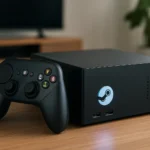
A Steam Machine leak has exposed the bones of Valve’s upcoming hybrid gaming device strategy, revealing references to four distinct product packages alongside a reservation queue system designed to stop scalpers before pre-orders even go live. Developers discovered the code buried in Steam’s database, first reported by the r/steamachine subreddit, suggesting that Valve is actively preparing infrastructure for a launch that has already slipped from its original early 2026 target.
Key Takeaways
- Steam Machine leak reveals 4 different product packages, not just the two officially announced models.
- Valve plans to use a reservation queue system modeled after Steam Controller to prevent scalpers and bots.
- Official Steam Machine models: 512GB and 2TB versions with delayed 2026 launch due to component shortages.
- Leaked European retailer pricing suggests around $950 for 512GB and $1,070 for 2TB, though not officially confirmed.
- Reservation system places buyers in a waiting line rather than allowing immediate purchases, prioritizing genuine customers.
What the Steam Machine Leak Actually Reveals
The database code references four Steam Machine packages alongside two Frame packages and additional Controller and Deck packages, according to findings from the r/steamachine community. This suggests Valve is planning more than just the two officially announced storage tiers—512GB and 2TB models that were revealed in November 2025. The exact composition of all four packages remains unclear, but the leak indicates Valve is preparing multiple bundle configurations to appeal to different buyer segments.
Valve has remained tight-lipped about the full product lineup. The company announced the Steam Machine alongside the Steam Frame and refreshed Steam Controller near the end of 2025, but declined to reveal complete specifications or pricing details at that time. The leak offers a rare glimpse into backend planning that Valve clearly intended to keep private until closer to launch.
How Valve Plans to Stop Scalpers This Time
The reservation queue system discovered in the leak mirrors the anti-scalping approach Valve deployed for the Steam Controller, a device that faced massive reseller pressure during its initial release. Instead of allowing customers to buy immediately when stock drops, the queue places buyers in a waiting line based on reservation time. Users attempting to purchase join a virtual queue, receive a ticket or reservation spot, and wait to be notified when inventory becomes available for their purchase window.

Valve learned this lesson painfully with the Steam Controller. The company stated at the time: while we were happy to see such a high level of interest, the experience for a lot of you trying to buy it was incredibly frustrating. We plan to continue replenishing stock as we get more in, but in the meantime wanted to share changes we’re making to improve the purchase experience and to limit reseller activity. The reservation queue launched on May 8 at 10 AM Pacific, prioritizing genuine buyers over bots and resellers who typically use automated tools to snag limited inventory.
This approach fundamentally changes the purchase experience. Instead of a chaotic scramble where the fastest internet connection wins, Valve is betting that a fair queue system will reduce frustration and keep prices stable by eliminating the artificial scarcity that scalpers exploit. Whether this works at scale for a device as anticipated as the Steam Machine remains to be seen.


Pricing and Availability Remain Murky
A separate leak from European retailer Smarty, an authorized Valve seller in the Czech Republic, suggests pricing in the ballpark of $950 for the 512GB model and $1,070 for the 2TB version. These prices were discovered in the retailer’s source code but are not officially confirmed by Valve and may be region-specific. Official pricing has never been announced, and Valve has given no timeline for when pre-orders might activate.
The original launch window of Q1 2026 has already slipped due to manufacturing component shortages, particularly RAM availability. Valve now targets the first half of 2026, though no confirmed date exists. The leak suggests that the reservation system infrastructure is being prepared and could go live relatively soon, but Valve has offered no public statement about imminent pre-order dates.
Steam Machine vs. Steam Deck: Different Beasts, Same Ecosystem
The Steam Machine occupies a different market position than the Steam Deck, Valve’s wildly successful handheld. Where the Deck is a portable gaming computer designed for on-the-go play, the Steam Machine is positioned as a living room console alternative—a hybrid device that lets users smoothly switch between desktop gaming, handheld mode via Steam Deck integration, and a traditional console-like experience on the TV via SteamOS. The leak references both Steam Machine and Deck packages, suggesting Valve may bundle them together or offer them through shared reservation infrastructure.
The Steam Controller, now being refreshed, sits between these devices as an input method. By tying all three products into a single reservation system, Valve is betting that buyers want a complete ecosystem rather than isolated hardware. This is a significant departure from how console makers typically operate—Nintendo, Sony, and Microsoft sell their devices independently, whereas Valve is building toward an integrated suite of hardware running the same operating system.


Why the Queue System Matters More Than You Think
Scalping destroyed the launch experience for the PS5, Xbox Series X, and Nvidia’s RTX 40-series graphics cards. Resellers using bots purchased entire allocations within seconds, then resold them at 50-100% markups. Valve watched this unfold and decided the Steam Controller queue was the answer. For the Steam Machine, this approach could set a precedent for how limited hardware should launch in 2026 and beyond.
The queue system is not foolproof. Determined scalpers can still join the queue early, and Valve’s ability to replenish stock consistently will determine whether the system actually works. But by forcing buyers to wait in line rather than race against bots, Valve is at least removing the primary advantage scalpers have: speed. A person with a reservation spot will eventually get to buy at list price. A bot can’t jump the queue.
When Could Pre-Orders Actually Launch?
The leak suggests that Valve has the infrastructure ready, but no official announcement has been made. Typically, Valve would announce pre-order dates weeks in advance, allowing the community to prepare and manage expectations. The fact that the reservation system is already coded into Steam’s backend implies that launch is not imminent—Valve rarely deploys backend code until it is ready to flip the switch within days or weeks.
Manufacturing delays remain the wildcard. Component shortages, particularly RAM, forced the original Q1 2026 target to slip. If those constraints ease, Valve could activate the queue system with little warning. If they persist, pre-orders could slip further into the second half of 2026 or beyond.
Is the Steam Machine worth the wait?
The Steam Machine targets a specific audience: living room gamers who want a console-like experience but prefer the flexibility and game library of PC gaming via SteamOS. For players who already own a Steam Deck or a gaming PC, it offers a way to consolidate hardware and leverage existing game libraries on the TV. For console-only gamers, the value proposition is less clear—the Deck and Machine together cost more than a PS5 or Xbox Series X.
How does the reservation queue actually work?
When Valve opens reservations, users visit the Steam store and attempt to purchase. Instead of completing the transaction immediately, they are placed in a queue based on reservation time. Valve then replenishes inventory in batches, notifying queued users in order that stock is available. Users then have a limited window to complete their purchase before their spot is released. This prevents bots from scalping entire allocations and ensures that people who reserved early get priority.
Will the Steam Machine actually launch in 2026?
Valve’s official target is the first half of 2026, but manufacturing delays have already pushed back the original Q1 timeline. The leak suggests that backend infrastructure is ready, which is a positive sign, but component shortages could cause further delays. No confirmed launch date has been announced, and Valve has historically been cautious about committing to hardware timelines publicly.
The Steam Machine leak confirms that Valve is serious about this product and actively preparing for launch, but patience will be required. The reservation queue system shows that Valve learned hard lessons from past launches and is determined to make this one fair. Whether that translates to a smooth pre-order experience or another chaotic scramble remains to be seen. For now, the waiting begins—literally.
Edited by the All Things Geek team.
Source: Tom's Guide