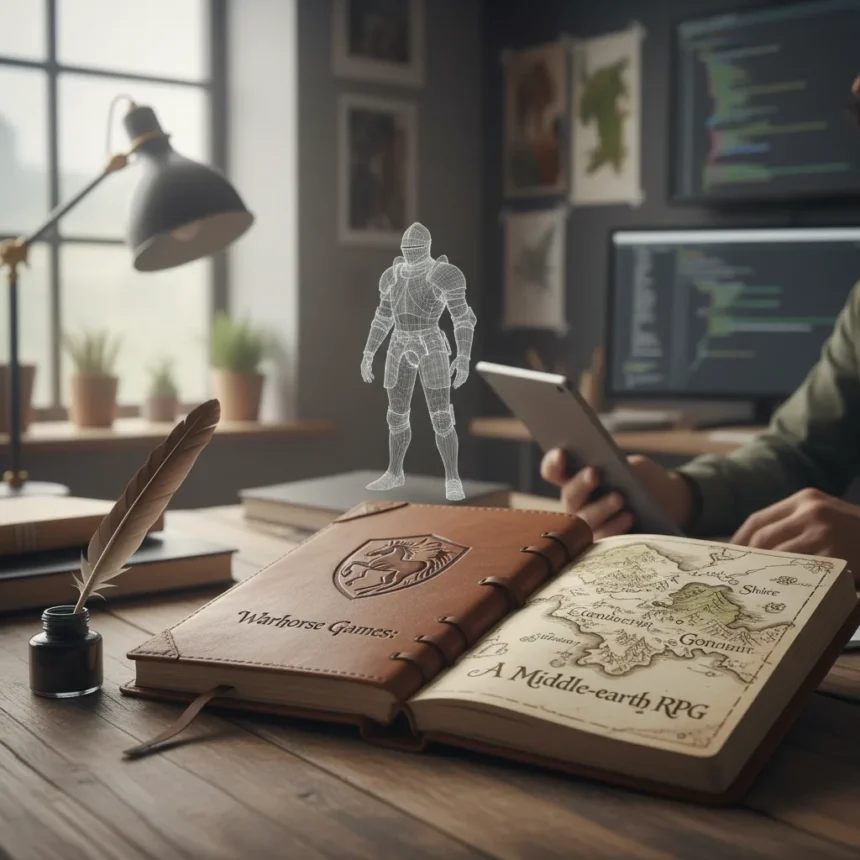
Warhorse Games, the studio behind Kingdom Come: Deliverance 2, has announced it is developing a Middle-earth RPG positioned as an absolute passion project built in what the team describes as a very specific Warhorse way. The studio is publicly committing to deep immersion as the core design philosophy for this new venture into Tolkien’s legendary world.
Key Takeaways
- Warhorse Games is making a Middle-earth RPG as a passion project for the studio.
- The game will prioritize deep immersion as its central design principle.
- Development will follow Warhorse’s distinctive methodical approach to game design.
- The project represents the studio’s expansion beyond the Kingdom Come franchise.
- Immersion-focused design contrasts with action-heavy fantasy RPGs dominating the market.
What Makes This Middle-earth RPG Different
Warhorse’s Middle-earth RPG stands apart from other fantasy role-playing games through its stated commitment to deep immersion built in a very specific Warhorse way. Rather than chasing cinematic spectacle or blockbuster action sequences, the studio is doubling down on the immersive design philosophy that defined Kingdom Come: Deliverance 2. This approach prioritizes player agency, environmental storytelling, and systemic depth over flashy combat or narrative railroading.
The distinction matters because the fantasy RPG landscape has increasingly shifted toward action-oriented design and graphical fidelity as primary selling points. Warhorse’s decision to emphasize immersion as the core pillar suggests the studio believes there is an audience hungry for something more deliberate and grounded, even in a Middle-earth setting. The studio’s track record with Kingdom Come: Deliverance 2 demonstrates it can execute on this philosophy at scale, though applying that methodology to an established fantasy IP presents unique creative challenges.
Warhorse’s Design Philosophy in Action
What Warhorse describes as its very specific way of building games emphasizes systemic consistency and player immersion over guided narratives. The studio has earned a reputation for creating worlds that feel lived-in rather than authored, where NPC routines, environmental details, and mechanical systems reinforce each other to create believable spaces. This design approach is labor-intensive and requires discipline to maintain across an entire project, but it creates a sense of presence that many modern games lack.


The challenge for a Middle-earth RPG is translating this philosophy into a world with established lore, iconic characters, and fan expectations. Warhorse will need to balance its desire for systemic immersion with the constraints and opportunities that come with adapting Tolkien’s universe. The studio’s framing of this project as a passion project suggests the team is approaching it with creative conviction rather than treating it as a commercial obligation, which could be the difference between a respectful adaptation and a cynical licensed product.
What This Means for Fantasy RPG Players
The announcement of a Middle-earth RPG from Warhorse signals that immersion-focused design remains viable in a market dominated by action RPGs and live-service games. Players who found Kingdom Come: Deliverance 2 rewarding for its depth and systemic approach now have reason to anticipate a similar experience in a fantasy setting. The studio’s commitment to building the game in a very specific Warhorse way means the final product will likely prioritize player choice, environmental storytelling, and mechanical coherence over branching dialogue trees and character-driven cinematics.



This positioning also suggests Warhorse is not attempting to compete directly with massive fantasy franchises like The Elder Scrolls or Baldur’s Gate 3 on their terms. Instead, the studio is carving out a niche for players who value immersion and world-building depth. Whether that niche is large enough to sustain a major AAA project remains an open question, but the studio’s willingness to pursue a passion project indicates confidence in both the creative vision and the audience that will connect with it.
FAQ: Warhorse’s Middle-earth RPG
What is Warhorse Games known for before this Middle-earth RPG?
Warhorse Games is best known for the Kingdom Come: Deliverance series, which earned recognition for its immersive, systemic approach to medieval RPG design. The studio built a reputation for creating detailed, believable worlds where player choice and environmental storytelling take precedence over traditional quest markers and narrative guidance.
How will the Middle-earth RPG differ from other fantasy games?
Warhorse has committed to building the Middle-earth RPG with deep immersion as the core design principle, following the studio’s very specific methodical approach. This contrasts with many modern fantasy RPGs that prioritize action sequences, cinematic storytelling, or live-service mechanics over systemic depth and player agency.
When will the Middle-earth RPG release?
Warhorse has not announced a release date or development timeline for the Middle-earth RPG. The studio has only confirmed the project exists and described its design philosophy, so players should expect a lengthy development period before any concrete launch information emerges.


Warhorse’s commitment to a deeply immersive Middle-earth RPG built in its distinctive way reflects a bet that there is an audience willing to wait for a game that prioritizes immersion over speed-to-market. In a landscape saturated with action-heavy fantasy experiences, that conviction could define the project’s success or failure. The studio’s track record suggests it understands how to execute on this promise—but only time will reveal whether Middle-earth is the right canvas for Warhorse’s immersive design philosophy.
Edited by the All Things Geek team.
Source: Windows Central