The Garmin Forerunner 170 vs 165 is the question every runner wearing the older model is asking right now. Garmin’s Forerunner 170 arrives as the official successor to the popular 165, but a newer model number doesn’t automatically mean a better watch for your wrist. After testing both watches on a real 10K run, the answer is more nuanced than Garmin’s marketing suggests.
Key Takeaways
- The Forerunner 170 replaces the 165 in Garmin’s entry-level running watch lineup.
- The 165 uses single-band GPS; the 170 brings dual-band GPS for more precise tracking.
- The 170 includes Training Readiness scores, a metric absent from the 165.
- Upgrade decisions depend on whether you value advanced metrics or prefer simplicity and lower cost.
- Both watches serve different runner profiles—budget-conscious beginners versus data-driven athletes.
Garmin Forerunner 170 vs 165: Core Differences
The Garmin Forerunner 170 vs 165 comparison starts with GPS technology. The older 165 relies on single-band GPS, which works fine for most runs but can drift in dense urban environments or under heavy tree cover. The 170 upgrades to dual-band GPS, meaning it locks onto signals from two frequency bands simultaneously. This reduces multipath errors—bouncing signals that confuse single-band receivers—and delivers tighter, more accurate route tracking. For casual runners, the difference is subtle. For those obsessing over split times and course mapping, it matters.
Training Readiness represents the second major gap. The 170 calculates this metric by analyzing your recovery data, sleep quality, and recent training stress. It tells you whether your body is primed for a hard workout or needs an easy day. The 165 lacks this feature entirely. If you train by feel or follow a coach’s plan, you won’t miss it. If you rely on metrics to guide daily intensity, the 170 speaks your language.
Real-World 10K Performance: What the Data Shows
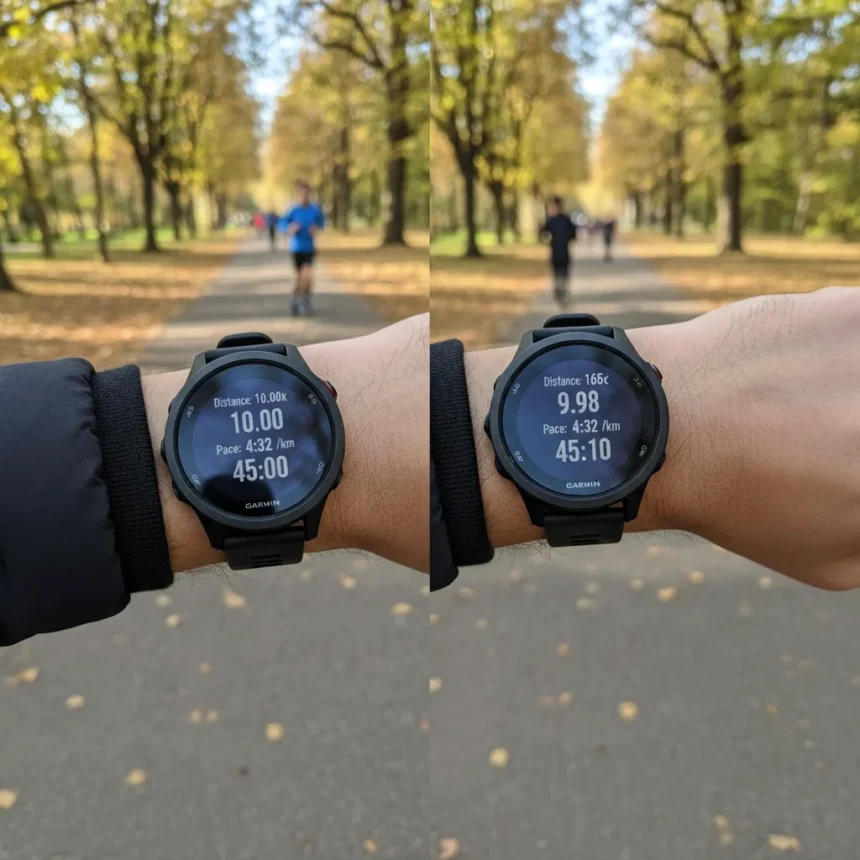
During a 10K test run, both watches tracked distance, pace, and heart rate reliably. The 165 delivered clean data with no dropouts. The 170’s dual-band GPS showed marginally tighter tracking, especially through a tree-lined park section where the 165’s single-band signal briefly wavered. The difference amounted to roughly 20 meters over 10 kilometers—noticeable on a map, invisible to your legs.


Heart rate monitoring proved nearly identical on both devices. Neither watch stumbled on the run’s hill climbs or flat sections. Battery life favors the 165 slightly, as it carries less processing overhead, though both watches comfortably last a week of daily use plus multiple runs. The 170’s additional sensors and metrics drain the battery a bit faster, but not dramatically.
Should You Upgrade from the Forerunner 165?
The upgrade calculus depends on your running goals and wallet. If you own a 165 and run recreationally—logging 15 to 25 miles per week—the 170 offers incremental gains that won’t transform your training. Dual-band GPS helps in challenging signal environments, but single-band works fine for most park loops and road routes. Training Readiness is a nice-to-have, not a must-have.



The 170 makes sense if you’re a serious runner chasing personal records, training for a marathon, or running in cities with heavy GPS interference. It also appeals to runners upgrading from much older Garmin models or switching from competitors. For the 165 owner content with their current watch, patience wins. The 165 remains a capable running watch that handles the fundamentals well.
Consider too that the 165 is positioned as Garmin’s value-focused entry point in the running-watch category. The 170, as its replacement, carries a higher price tag to fund the GPS upgrade and additional training metrics. Budget runners should ask whether they’d use Training Readiness enough to justify the cost difference. Data-obsessed athletes will find the answer obvious.
Garmin Forerunner 170 vs 165: Ecosystem and Software
Both watches sync with the Garmin Connect app, which means training data, route history, and social features work the same way on either device. Software updates arrive regularly for both models, so neither watch feels abandoned. The 170 benefits from newer firmware tuned for dual-band GPS, but the 165 receives continued support. This isn’t a case of the older model becoming obsolete overnight.
Who Should Buy Which Watch?
Buy the 165 if you’re new to running watches, training casually, or want a straightforward device without overwhelming metrics. It tracks what matters—distance, pace, heart rate, and basic training load—without clutter. Buy the 170 if you’re upgrading from an older Garmin, running seriously, or training in GPS-challenged areas. The dual-band GPS and Training Readiness features justify the premium for runners who value precision and recovery insights.



Is the Garmin Forerunner 170 worth upgrading to from the 165?
Not if you own a 165 and run casually. The improvements are real but incremental. Upgrade if you run seriously, want Training Readiness data, or experience GPS issues with your current watch. Otherwise, keep your 165 and invest in better running shoes or a coach instead.
What’s the main difference between the Forerunner 170 and 165?
The 170 adds dual-band GPS for more accurate tracking and introduces Training Readiness scores to guide daily training intensity. The 165 uses single-band GPS and lacks Training Readiness. Both track runs competently, but the 170 offers more precision and insights.
Can you use the same apps and data with both watches?
Yes. Both sync with Garmin Connect and share the same ecosystem. Training data, routes, and social features work identically on either device. You won’t lose compatibility switching between the two models.
The Garmin Forerunner 170 vs 165 decision ultimately hinges on your running ambitions and budget. Neither watch is bad—the 165 remains a solid, capable running watch that handles 10K training and racing without drama. The 170 simply adds layers of precision and insight for runners who crave them. If you own the 165, there’s no urgency to upgrade unless dual-band GPS or Training Readiness directly addresses a gap in your training. For new buyers, the 170 is the smarter choice, but the 165 is still a legitimate alternative if cost matters more than latest metrics.
Where to Buy
Edited by the All Things Geek team.
Source: Tom's Guide