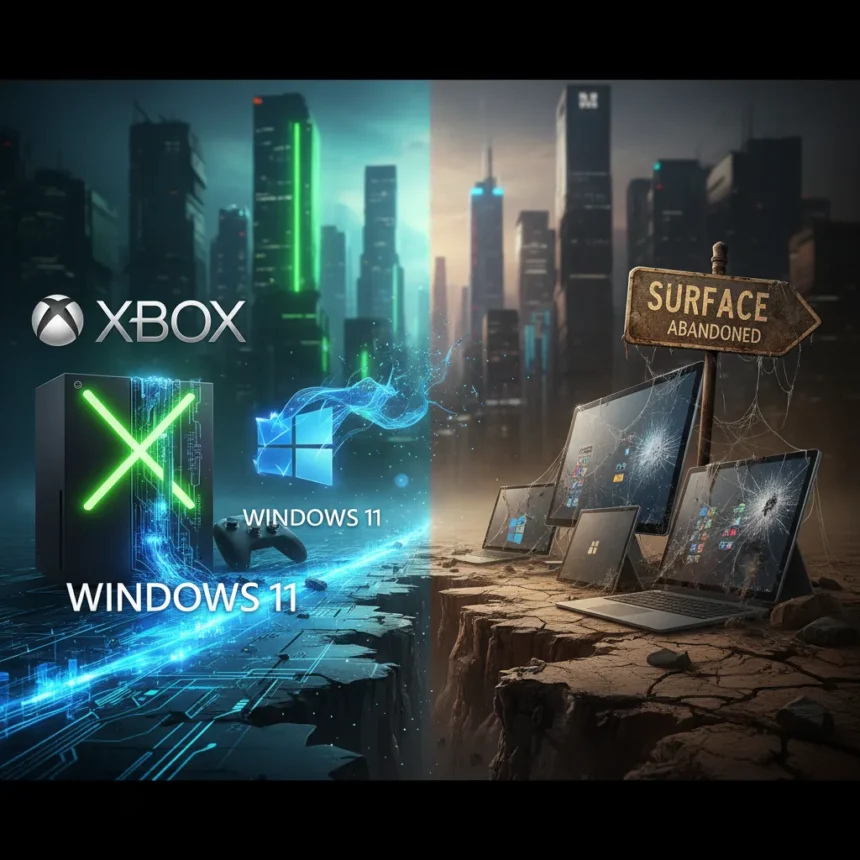
Microsoft Surface hardware is being left to collect dust while the company pours renewed energy into Xbox and Windows 11, according to recent analysis of where Microsoft’s engineering and leadership focus is actually landing. The contrast reveals a troubling strategic misalignment: two product lines are getting real fixes and direction, while one of Microsoft’s most ambitious hardware initiatives sits stagnant.
Key Takeaways
- Microsoft is actively rebuilding Xbox with tangible fixes and fresh leadership attention.
- Windows 11 is receiving parallel investment and modernization efforts.
- Surface hardware remains stuck with aging components and unclear direction.
- The disparity signals Microsoft’s shifting priorities across its major product ecosystems.
- Surface’s stagnation contrasts sharply with momentum in gaming and operating systems.
Why Microsoft Surface Hardware Is Falling Behind
Microsoft Surface hardware faces a crisis of neglect. The product line, once positioned as a flagship showcase for Microsoft’s hardware ambitions, now feels abandoned. Years-old components populate current Surface devices, and there is no clear roadmap for where the line is headed. Meanwhile, Xbox and Windows 11 are receiving the engineering resources and leadership attention that Surface desperately needs.
This is not a minor product management issue. Surface was supposed to demonstrate that Microsoft could compete with Apple’s hardware polish and design innovation. Instead, the line has become a cautionary tale about what happens when a company loses focus on a strategic initiative. The aging hardware is not just a specification problem—it signals that Microsoft’s executives have moved on to other priorities.
Xbox and Windows 11 Get the Real Rebuilding Work
In stark contrast, Xbox is being rebuilt with purpose. Microsoft has signaled genuine commitment to fixing problems and bringing in leadership that understands the gaming market. Windows 11, similarly, is receiving active modernization efforts that address real user pain points. Both initiatives are getting the engineering talent, the budget allocation, and the executive attention that drives actual product improvement.


The difference is tangible. When Microsoft decides to rebuild something, it commits resources and accountability. Xbox is getting that treatment. Windows 11 is getting that treatment. Surface is not. This is not a temporary delay or a market timing decision—it reflects where Microsoft sees its future, and Surface is apparently not part of it.
What This Means for Microsoft’s Hardware Strategy
The uneven investment across Microsoft’s product lines exposes a deeper strategic problem. A company cannot claim to be committed to hardware innovation while letting one of its flagship hardware lines stagnate. Surface was meant to prove that Microsoft could build devices as compelling as its software. Instead, it has become a symbol of misplaced priorities.


For buyers who invested in the Surface ecosystem, this shift is frustrating. The devices were never cheap, and the promise was that Microsoft would iterate and improve them the way Apple iterates on MacBooks or iPad Pro. That promise appears to be breaking down. Without clear direction or refreshed hardware, Surface risks becoming a niche product for enterprise buyers rather than a consumer flagship.
Is Microsoft Abandoning Surface Entirely?
The brief does not specify whether Microsoft is planning to discontinue Surface or eventually revive it. The criticism is focused on the current state: aging hardware, unclear direction, and lack of active rebuilding efforts. This does not necessarily mean Surface is doomed, but it does mean the product line is not a priority right now.
Why Does Microsoft’s Rebuilding of Xbox and Windows 11 Matter?
Microsoft’s decision to rebuild Xbox and Windows 11 while neglecting Surface reveals where the company believes it can win. Gaming and operating systems are core to Microsoft’s identity and revenue. Surface, by contrast, is a smaller bet in the hardware space where Microsoft has never dominated the way it does in software. That calculus may be rational, but it is also a retreat from the ambitious vision Surface once represented.
What Should Surface Users Do Right Now?
If you own a Surface device, the current situation is frustrating but not immediately dire. Existing devices will continue to receive software support. However, if you are considering a Surface purchase, the lack of hardware momentum is a genuine concern. You are buying into a line that is not being actively developed, which means your investment may feel dated sooner than it should.



Microsoft’s uneven priorities across Xbox, Windows 11, and Surface tell a story about what the company actually values right now. Xbox and Windows 11 are getting rebuilt because Microsoft sees those as competitive battlegrounds worth fighting. Surface, once positioned as the future of hybrid computing, is apparently not worth the fight anymore. For a company that built its reputation on software excellence, that is a harsh admission that hardware innovation is not where Microsoft’s heart really is.
Where to Buy
Edited by the All Things Geek team.
Source: Windows Central