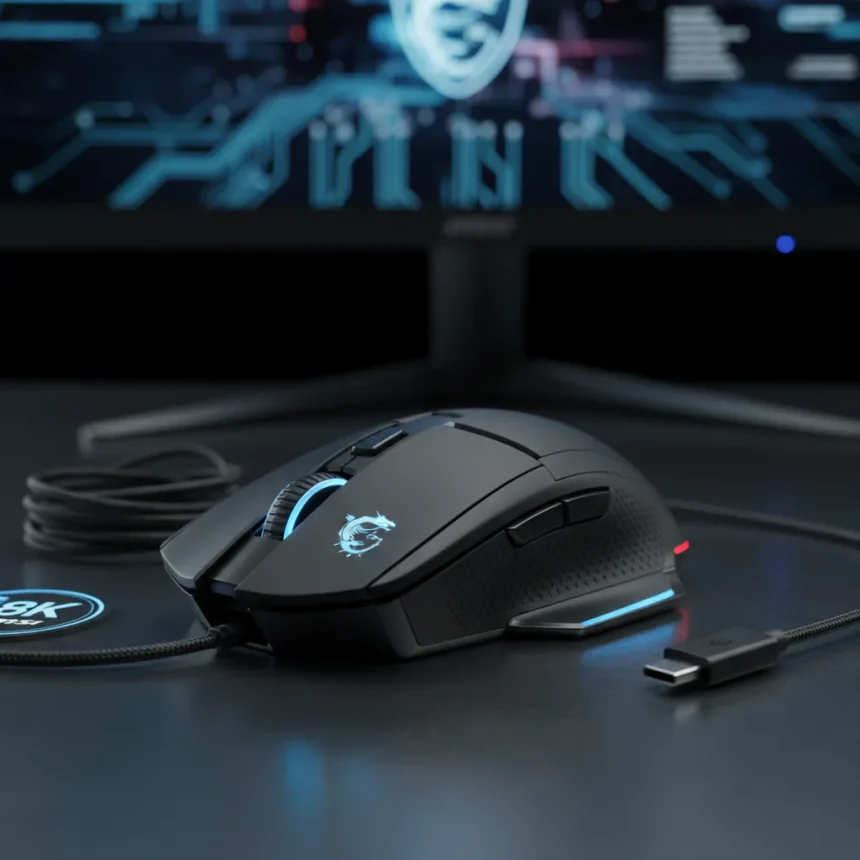
The MSI Versa 300 Wireless 8K is a gaming mouse that arrives with a compelling spec sheet and a price tag that genuinely stands out in a crowded market. At first glance, the combination of wireless connectivity, an 8,000 Hz polling rate, and competitive pricing raises an obvious question: is this actually good value, or does something get sacrificed along the way?
Key Takeaways
- The MSI Versa 300 Wireless 8K delivers high-polling performance in a wireless package.
- Pricing is described as competitive given the specification level offered.
- The mouse targets gamers seeking performance without typical premium-tier costs.
- Value proposition hinges on balancing spec-sheet appeal against real-world usability.
- Wireless 8K polling remains a relatively rare combination in the gaming mouse market.
What Makes the MSI Versa 300 Wireless 8K Stand Out
The MSI Versa 300 Wireless 8K enters a market where gaming mice often force a choice between wireless convenience and high-polling-rate performance. The 8K designation signals an 8,000 Hz polling rate, a specification that eliminates input lag and delivers snappier response times in competitive titles. Pairing this with wireless connectivity is the real differentiator here—most mice at this performance tier still tether you to a cable or demand a wired connection for peak performance.
The fact that MSI positioned this mouse as competitively priced is the story the headline screams. In gaming peripherals, you typically pay a premium for wireless plus high polling, or you accept compromise. The Versa 300 Wireless 8K appears to challenge that trade-off directly. Whether it succeeds depends entirely on how well the components underneath actually perform in daily use.
Price as the Central Value Proposition
The MSI Versa 300 Wireless 8K’s pricing really stands out because it undercuts what you’d normally expect to pay for a wireless mouse with an 8,000 Hz polling rate. Gaming mouse pricing has inflated significantly over the past five years, with premium wireless models routinely hitting three-figure sums. A competitively priced alternative that doesn’t force you to choose between wireless and polling-rate performance is genuinely noteworthy for budget-conscious gamers and esports enthusiasts alike.


What matters most is whether that price reflects genuine value or whether corners were cut elsewhere. A mouse with a flimsy sensor, unreliable wireless connection, or poor ergonomics will feel cheap regardless of its polling rate. The review’s central tension—whether the specs justify the price—hinges on how well MSI executed the fundamentals beneath the headline numbers.
Wireless 8K Gaming Mice in Context
Wireless gaming mice have improved dramatically over the past three years, but 8,000 Hz polling in a wireless package remains uncommon. Most competing offerings either stick with wired connections for maximum responsiveness or sacrifice polling rate to extend battery life in wireless models. The MSI Versa 300 Wireless 8K attempts to split the difference, which is ambitious. Whether it achieves that balance without sacrificing battery endurance, connection stability, or build quality is what separates a genuine value play from a spec-sheet mirage.



Gamers considering this mouse should weigh their priorities carefully. If you play fast-paced competitive shooters or fighting games where input latency matters, the 8K polling rate is a tangible advantage. If you mainly play slower-paced titles or use the mouse for general productivity, that specification becomes less critical, and you might find better value in simpler alternatives. The MSI Versa 300 Wireless 8K positions itself for players who want both wireless freedom and competitive performance, a narrower audience than the broader gaming market.
Does Spec Sheet Translate to Real-World Performance
High polling rates on paper don’t always translate to noticeably better gameplay in practice, especially if other components—sensor quality, button responsiveness, or wireless stability—fall short. The 8,000 Hz rate itself is only half the story. How well the mouse tracks movement, how quickly it reports clicks, and how reliably the wireless connection maintains that polling rate under real-world conditions all matter equally. A mouse that promises 8K polling but drops to 1,000 Hz when the battery dips below 50 percent is technically compliant with its spec but practically disappointing.
The review’s verdict on whether the MSI Versa 300 Wireless 8K is actually good value ultimately depends on how thoroughly it tested these real-world factors. A mouse can look impressive on a spec sheet and still feel sluggish or unreliable in daily use. Conversely, a mouse with slightly lower polling rate but superior ergonomics and wireless stability might deliver better value to the player who uses it eight hours a day.
Why Gaming Mouse Pricing Matters Now
Gaming peripherals have become a significant cost center for serious players. A full setup—keyboard, mouse, and headset—can easily exceed the cost of a mid-range graphics card. In that context, finding a wireless mouse with high-polling performance at a competitive price is genuinely valuable. It’s not just about saving money; it’s about refusing to overpay for hype. The MSI Versa 300 Wireless 8K’s pricing strategy suggests the company is betting that gamers will reward sensible value over unnecessary premium pricing.



Whether that bet pays off depends on execution. A mouse that delivers on its promises at a fair price becomes a word-of-mouth recommendation. A mouse that disappoints despite its specs becomes a cautionary tale. The gaming community is unforgiving of value-priced products that fail to deliver, and the Versa 300 Wireless 8K will be judged harshly if it cuts corners where it shouldn’t.
Is the MSI Versa 300 Wireless 8K worth buying?
The MSI Versa 300 Wireless 8K makes sense if you prioritize wireless connectivity and high-polling-rate responsiveness without wanting to pay flagship prices. If you’re a competitive gamer or esports player who uses a mouse for eight or more hours daily, the combination of features at a competitive price point is compelling. If you’re a casual player, a wired alternative or a lower-polling wireless mouse might deliver better overall value.
How does the 8K polling rate affect gaming performance?
An 8,000 Hz polling rate reduces input latency compared to standard 1,000 Hz mice, making movements feel snappier in fast-paced games. The practical benefit varies by game type—competitive shooters and fighting games show the biggest difference, while slower-paced titles may not reveal any noticeable advantage. Real-world performance depends on whether the wireless connection maintains that polling rate consistently.
What makes wireless 8K polling mice rare?
Wireless mice traditionally sacrifice polling rate to extend battery life, while high-polling mice typically require a wired connection for stability. Combining both features demands advanced wireless technology and efficient power management, which increases manufacturing complexity and cost. The MSI Versa 300 Wireless 8K’s approach to bridging this gap is what makes its competitive pricing genuinely noteworthy in the gaming peripheral market.
The MSI Versa 300 Wireless 8K represents a meaningful attempt to deliver gaming-grade performance without the typical premium markup. Whether it succeeds depends on how well the hardware executes on its promises, but the pricing strategy alone signals that MSI is serious about challenging the assumption that wireless and high-polling performance must cost a fortune. For gamers tired of inflated peripheral prices, this mouse deserves a close look.
Where to Buy
Edited by the All Things Geek team.
Source: TechRadar