






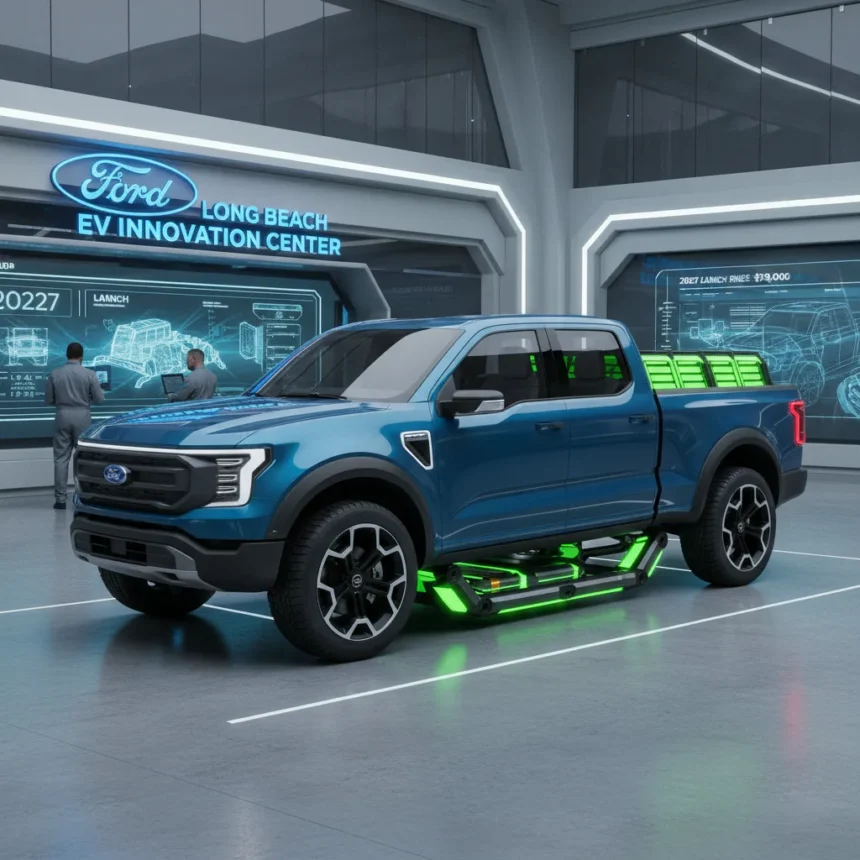
Ford’s electric midsize truck represents the automaker’s bet that a Ford electric midsize truck can crack the mass-market EV segment by hitting a $30,000 price point. The company is developing this vehicle at its Long Beach development center using a modular Universal EV platform designed to reduce manufacturing complexity and costs. The truck is targeted for a 2027 launch, making it one of Ford’s most aggressive pushes into affordable electrification.
Key Takeaways
- Ford targets a $30,000 price for an electric midsize truck launching in 2027.
- The Universal EV platform uses modularity to reduce development and production costs.
- The Long Beach development center houses Ford’s EV innovation and engineering teams.
- Modular architecture allows Ford to build multiple vehicle types on the same foundation.
- Affordability is central to Ford’s strategy for mainstream EV adoption.
Ford’s Modular Platform Strategy
The Universal EV platform sits at the heart of Ford’s affordability ambition. Rather than designing a bespoke architecture for each vehicle, Ford is building a flexible foundation that can underpin multiple models across different segments. This modular approach reduces engineering redundancy, speeds up development cycles, and lowers per-unit manufacturing costs. The strategy mirrors approaches used by competitors developing cost-efficient EV lineups, though Ford’s execution at the Long Beach facility suggests a focused commitment to this particular truck segment.
Modularity in EV design typically addresses battery configuration, motor placement, and chassis geometry. By standardizing these core components across platforms, automakers can negotiate better component pricing and streamline factory tooling. Ford’s Long Beach center appears designed specifically to prototype and validate this modular framework before full-scale production begins.
Why the $30,000 Price Matters
A $30,000 electric midsize truck would fundamentally reshape the EV market’s accessibility. Currently, most affordable electric vehicles are compact hatchbacks or sedans; trucks remain a premium segment even in traditional gasoline markets. Ford’s target price suggests the company believes it can deliver a functional work truck without the cost premium typically associated with electrification. This price point is aggressive enough to attract price-conscious buyers who might otherwise stick with used gas trucks or entry-level combustion vehicles.



The challenge lies in achieving this target without compromising utility, range, or durability. A midsize truck at this price must justify its cost through genuine capability rather than stripped-down specifications. Ford’s engineering teams at Long Beach are presumably balancing battery size, motor power, payload capacity, and towing ability against the hard constraint of hitting that $30,000 figure.
Long Beach Development Center Access
Ford’s decision to open its Long Beach development center for a tour signals confidence in its EV strategy and willingness to demonstrate progress to the public. Development centers typically house prototype builds, engineering labs, and advanced manufacturing testbeds where companies validate designs before committing to production tooling. The fact that Ford allowed journalist access suggests the company has reached a maturity level with this truck project worth showcasing, though details about specific engineering breakthroughs or design surprises remain limited in available information.



2027 Timeline and Production Reality
A 2027 launch date gives Ford roughly two years from now to finalize engineering, secure battery supply contracts, and prepare manufacturing facilities. This timeline is tight but not unprecedented for established automakers with existing EV experience. The modular platform approach may accelerate this schedule by reusing validated components rather than designing everything from scratch. However, battery supply chains, semiconductor availability, and regulatory certifications remain unpredictable variables that could impact any announced timeline.
Is Ford’s $30,000 electric truck realistic?
Achieving a $30,000 price requires aggressive cost management across battery procurement, manufacturing, and labor. Ford’s scale and supplier relationships give it advantages smaller EV startups lack. However, current battery costs and labor expenses in developed markets make this target challenging. If Ford delivers, it would represent a major milestone for mainstream EV adoption; if the final price climbs to $35,000 or $40,000, the impact diminishes significantly.
How does the Universal EV platform compare to competitors?
Other automakers are developing modular EV platforms—Volkswagen’s MEB, General Motors’ Ultium, and others—but Ford’s Universal EV platform is specifically optimized for cost reduction in the midsize truck segment. The competitive advantage lies not in the modularity concept itself but in how effectively Ford executes affordability without sacrificing the truck characteristics buyers actually want.
What surprised journalists most about Ford’s development center?
The article’s framing as a tour that revealed surprising details suggests Ford’s engineering approach, facility design, or development methodology contained unexpected elements. Without access to the full article text, the specific surprise remains unspecified, but tours of advanced manufacturing facilities typically highlight automation, precision tooling, or unconventional design choices that differ from industry norms.



Ford’s $30,000 electric midsize truck could reshape affordable EV access if the company delivers on its 2027 timeline and price target. The modular Universal EV platform represents a pragmatic engineering strategy, but execution will determine whether this truck becomes a market disruptor or another delayed EV announcement. The Long Beach development center tour suggests Ford is serious about this segment, but affordability at scale remains the ultimate test.
Edited by the All Things Geek team.
Source: Tom's Guide




