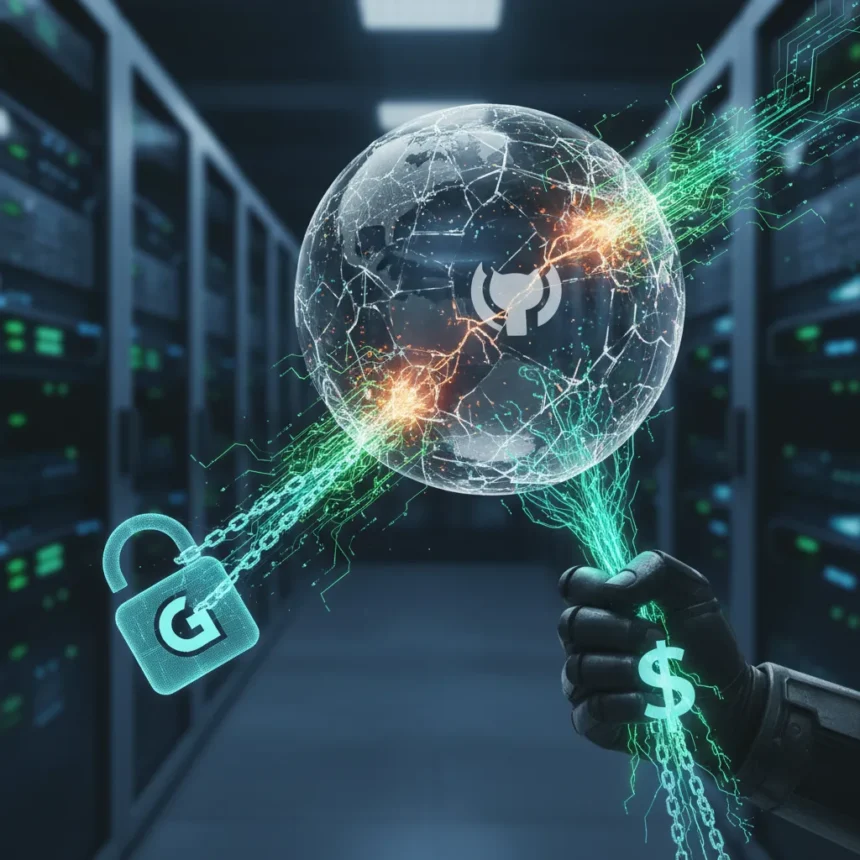
A GitHub token compromise at Grafana exposed the company’s source code to attackers who then demanded ransom to prevent its release. The observability platform maker refused to pay, a stance that highlights both the rising threat of codebase extortion and the limits of capitulation in cybersecurity incidents.
Key Takeaways
- Attackers used a stolen GitHub token to download Grafana’s entire codebase.
- The threat actor demanded payment to prevent the stolen code from being released publicly.
- Grafana rejected the ransom demand and disclosed the breach publicly.
- No customer data or production systems were compromised, according to the company’s investigation.
- The breach stemmed from a misconfigured GitHub Action with a known “Pwn Request” vulnerability.
How the GitHub token compromise unfolded
An unauthorized party obtained a token that granted direct access to Grafana’s GitHub environment, then used that access to download the company’s source code. The attacker subsequently attempted extortion, demanding payment in exchange for not releasing the stolen codebase publicly. Grafana’s response was unambiguous: the company refused to pay and disclosed the incident to the public.
The GitHub token compromise was detected after one of Grafana’s canary tokens—a security tripwire designed to alert the company to unauthorized access—was triggered. This early warning system proved critical. Once alerted, Grafana’s security team investigated and traced the root cause to a recently enabled GitHub Action workflow that contained a “Pwn Request” vulnerability. The vulnerable workflow was tied to `pull_request_target` behavior in a public repository, a known attack vector that allows malicious pull requests to execute code with elevated permissions.
The attacker did not stop at Grafana’s public repositories. After compromising the initial token, the threat actor used the stolen credentials to replicate the attack against four additional private repositories, expanding the scope of the breach beyond what was initially apparent.


What the GitHub token compromise cost Grafana
While source code theft is serious, Grafana’s investigation found no evidence that customer data or personal information was accessed during the GitHub token compromise. Production systems and customer operations were not impacted. This distinction matters: the breach was a codebase theft, not a customer-data breach, which limited the immediate operational fallout even as it created longer-term competitive and security concerns.
Grafana moved quickly to contain the damage. The company invalidated the compromised credentials and removed the vulnerable GitHub Action that had enabled the initial access. All workflows across public repositories were disabled to prevent further exploitation while the team assessed the full scope of the incident. These containment measures prevented the attacker from maintaining persistent access, though the damage to the codebase was already done.



Why Grafana refused to pay and what it signals
Grafana’s decision to reject the ransom demand aligns with guidance from law enforcement. The FBI has warned that paying a ransom does not guarantee recovery of stolen data and only creates incentive for future attacks. By refusing to pay, Grafana avoided funding criminal activity and signaled that extortion would not work—a stance that, if widely adopted, could reduce the financial motivation for source-code theft operations.
The GitHub token compromise also reflects a troubling shift in ransomware and extortion tactics. Rather than encrypting data and demanding payment for decryption keys, modern attackers increasingly steal code and threaten public release. Source code is valuable intellectual property, and the threat of exposure can be more damaging than encryption alone because it cannot be simply restored from backup. Competitors gain insight into architecture and security practices. Vulnerability researchers can analyze the code for exploits. The attacker holds leverage indefinitely.
Grafana’s refusal to capitulate is noteworthy because it removes the financial incentive from this particular attack. However, the company still faces the reality that its codebase is in the hands of an attacker who may release it anyway, or sell it to other threat actors. The GitHub token compromise demonstrates that even well-resourced companies with security programs can fall victim to workflow misconfigurations that create critical access paths.
What this means for GitHub Actions security
The root cause of the GitHub token compromise—a misconfigured GitHub Action with a “Pwn Request” vulnerability—is not unique to Grafana. Many organizations use GitHub Actions for CI/CD automation without fully understanding the security implications of certain workflow triggers. The `pull_request_target` event, which runs code from untrusted pull requests with access to repository secrets and tokens, is particularly dangerous when combined with workflows that execute arbitrary code or interact with external systems.


This incident underscores the importance of treating GitHub tokens with the same rigor as other critical credentials. A single exposed token can grant an attacker access to an entire codebase, private repositories, and potentially other systems. Organizations should regularly audit GitHub Actions workflows, use least-privilege tokens with minimal scopes, and monitor for suspicious access patterns using canary tokens or similar detection mechanisms.
Did Grafana’s refusal to pay prevent the code release?
The research brief does not confirm whether the attacker released the stolen codebase after Grafana refused to pay. The incident disclosure focused on the breach itself and the ransom demand, but the ultimate fate of the stolen code remains unclear from available reporting.
How does the GitHub token compromise affect Grafana customers?
Grafana customers should not be directly affected by the GitHub token compromise because no customer data or production systems were accessed. However, the exposure of Grafana’s source code could eventually affect security if vulnerabilities discovered by analyzing the code are exploited before patches are released. Customers should monitor for security updates from Grafana and apply them promptly.
What should other companies do after the Grafana GitHub token compromise?
Organizations should audit their GitHub Actions workflows immediately, especially any that use `pull_request_target` or similar high-privilege triggers. Rotate any GitHub tokens that may have been exposed, implement token expiration policies, and use separate tokens with minimal scopes for different workflows. Enable branch protection rules that require code review before merging pull requests, and consider using GitHub’s security features like secret scanning and dependency checking to catch misconfigurations before they become breaches.
The Grafana GitHub token compromise is a reminder that source code is now a primary target for extortion attacks, and that no company—regardless of security maturity—is immune to workflow misconfigurations. Refusing to pay is the right call, but preventing the initial compromise through rigorous access controls and workflow audits is the better strategy.
Edited by the All Things Geek team.
Source: TechRadar