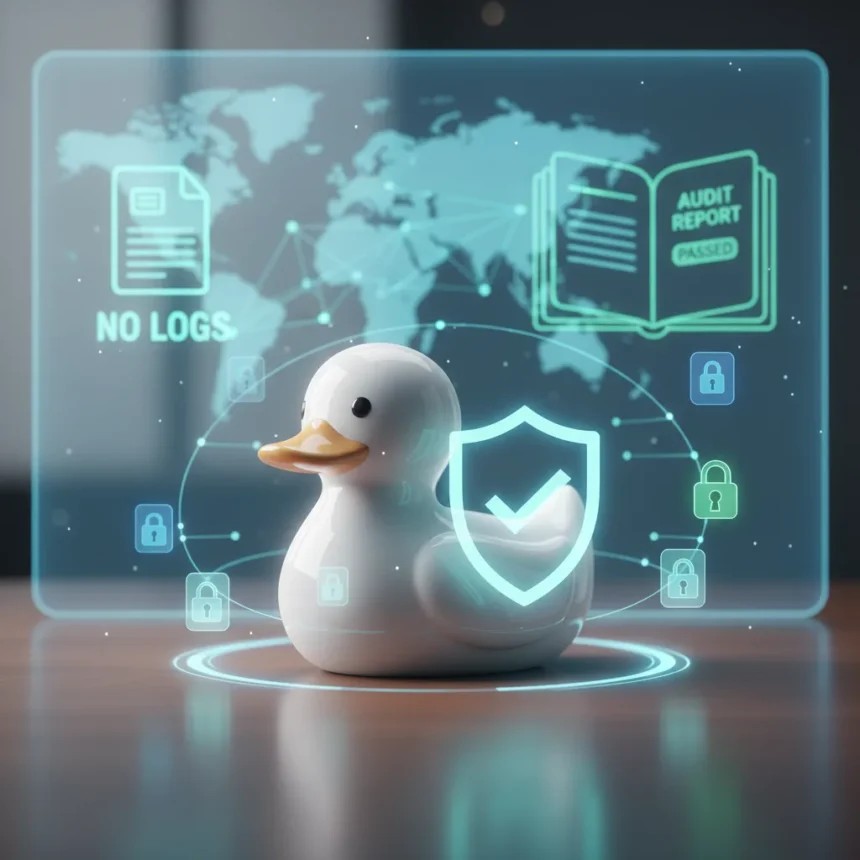
DuckDuckGo VPN no-logs audit has delivered the privacy verification the service lacked for years. The independent audit confirms that DuckDuckGo keeps no logs of user activity while connected to its VPN, addressing a critical gap in the company’s privacy transparency.
Key Takeaways
- DuckDuckGo VPN passed an independent no-logs audit confirming zero activity tracking
- VPN uses dedicated servers and retains only anonymous performance metrics
- 2024 security audit found no critical vulnerabilities in VPN infrastructure
- First formal audit for DuckDuckGo VPN follows years without independent verification
- Proton VPN has completed four independent audits, setting a higher verification standard
What the DuckDuckGo VPN No-Logs Audit Actually Confirms
The independent audit verifies that DuckDuckGo has no technical means to tie user actions to identities while connected to its VPN service. According to DuckDuckGo’s Subscription Privacy Policy, the company cannot log which websites you visit, what data you transmit, or any metadata that would reveal your browsing behavior. This is not a self-reported claim—an external auditor independently tested the infrastructure and confirmed the policy reflects reality.
The VPN operates on dedicated servers not shared with other users, a design choice that isolates your traffic from other customers. DuckDuckGo retains only anonymous performance metrics needed to maintain service quality, not data tied to individual accounts. The distinction matters: performance data like uptime and latency does not reveal what you were doing online.
Why This Audit Matters Now
DuckDuckGo previously lacked formal independent privacy audits for any of its services, relying instead on complaint investigations and self-reported policies. The company’s browser, for example, had made privacy promises while allowing Microsoft trackers to load—a contradiction only fixed after public exposure. The VPN audit is the company’s first serious third-party verification of its privacy infrastructure, making it a genuine credibility milestone.


The timing reflects growing skepticism about VPN privacy claims. Competitors like Proton VPN have undergone four independent no-logs audits as of August 2025, with the most recent audit by Securitum confirming no user activity or metadata logs across all servers. DuckDuckGo is playing catch-up, but the audit does provide concrete evidence rather than marketing language.
How Strong Is This Verification?
The 2024 security audit found no critical vulnerabilities in DuckDuckGo’s VPN security measures, which is the baseline you want. However, one audit is not the same as the repeated, ongoing verification that more mature VPN providers have undergone. Proton VPN’s four independent audits over multiple years demonstrate a sustained commitment to transparency; DuckDuckGo has taken a single step.



The audit confirms the technical architecture is sound and the no-logs policy is real. It does not mean DuckDuckGo’s VPN is feature-rich—it is bundled into the company’s privacy browser package but lacks advanced capabilities that other VPN services offer. The audit verifies privacy, not performance or features.
Should You Trust DuckDuckGo’s Privacy Claims Now?
The independent audit provides real evidence that DuckDuckGo VPN does not log your activity, which is the core privacy promise. That verification is valuable and addresses a legitimate previous gap. However, DuckDuckGo’s history of privacy exceptions—like allowing Microsoft trackers in its browser—suggests caution about assuming the company prioritizes privacy across all products equally.
If you are choosing between DuckDuckGo VPN and other services, the audit confirms the no-logs claim is legitimate. The decision then comes down to whether the service’s features and performance meet your needs, not whether you should worry about hidden logging.
Is the DuckDuckGo VPN no-logs audit independent?
Yes, the audit was conducted by an external third party, not by DuckDuckGo itself. Independent audits mean a company cannot control the results or hide unfavorable findings. This is fundamentally different from self-reported privacy policies.



How does DuckDuckGo VPN compare to Proton VPN for privacy?
Both services have passed independent no-logs audits. Proton VPN has undergone four audits as of August 2025, while DuckDuckGo VPN has completed one. Proton’s repeated verification over time demonstrates a longer track record of transparency, though DuckDuckGo’s single audit does confirm its core no-logs claim is genuine.
Does the audit cover DuckDuckGo’s browser privacy?
No, the audit covers only the VPN service. DuckDuckGo’s browser has had separate privacy issues, including allowing Microsoft trackers to load, which were only addressed after public criticism. The VPN audit does not extend to the browser’s privacy practices.
The DuckDuckGo VPN no-logs audit is a genuine step forward for the company’s transparency. It proves the service does not log your activity, which is the fundamental privacy claim that matters. However, one audit is a starting point, not a guarantee of future behavior. If privacy verification is your priority, watch whether DuckDuckGo commits to ongoing independent audits like Proton does, or whether this single audit becomes a one-time marketing moment.
Edited by the All Things Geek team.
Source: Tom's Guide