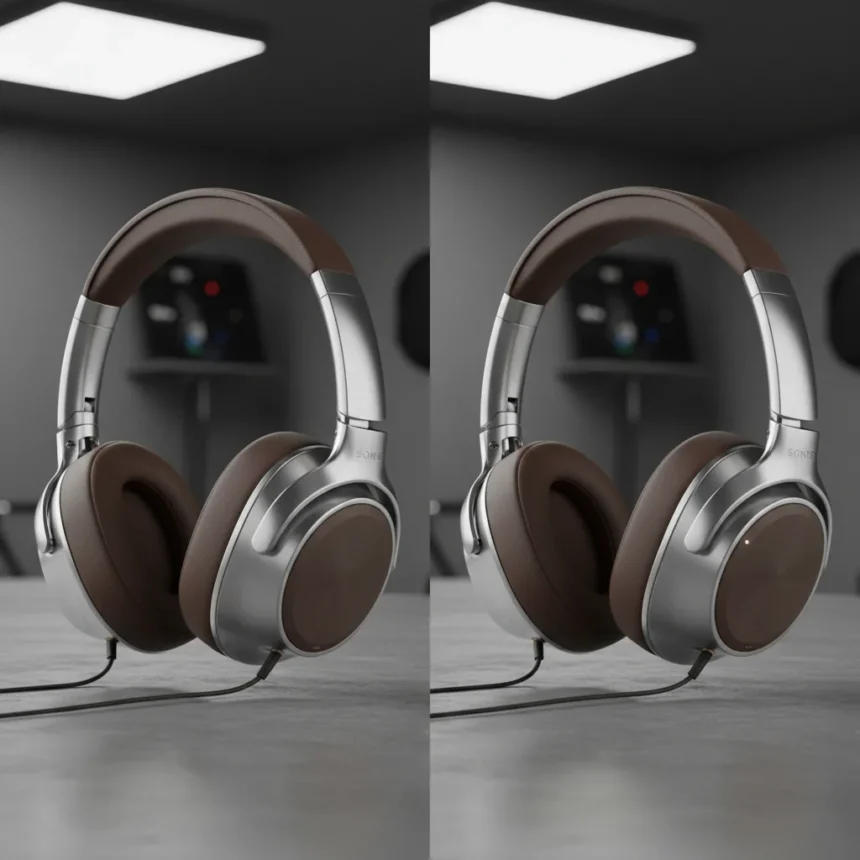
The Sony 1000X The Collexion looks so much like the Sonos Ace that even seasoned audio reviewers have done a double-take. Both are chrome-detailed, slim-designed premium headphones with faux leather padding, raising a legitimate question: can you actually tell them apart?
Key Takeaways
- Sony 1000X The Collexion and Sonos Ace share nearly identical chrome detailing and slim design profiles.
- Both feature faux leather padding, making visual distinction challenging at first glance.
- The headphones are positioned as premium products in the crowded wireless audio market.
- TechRadar’s picture quiz highlights how close the two designs have become.
- Design similarity raises questions about differentiation in the premium headphone category.
Why Design Similarity Matters in Premium Audio
Premium headphones live or die on industrial design. When two flagship products from different manufacturers look nearly identical, it signals either convergent design thinking or something more problematic. The Sony 1000X The Collexion and Sonos Ace both rely on chrome accents and slim construction as their visual identity, which means buyers relying on aesthetics alone might struggle to choose between them. This matters because premium pricing demands premium differentiation—whether that’s sound quality, features, or unmistakable design language that sets one brand apart from another.
The faux leather padding on both models suggests manufacturers are chasing the same luxury aesthetic: understated, minimalist, professional. Yet when two products converge this closely on appearance, consumers naturally wonder if the underlying engineering differs meaningfully. Are these headphones truly distinct products, or do they share more DNA than their brand badges suggest?
Chrome Details and Design Language: The Similarity Problem
At first glance, the chrome-detailed construction on both the Sony 1000X The Collexion and the Sonos Ace creates an immediate visual parallel. Chrome accents have become a shorthand for premium in audio design—they catch light, feel substantial, and signal a step above plastic-heavy competitors. Yet when both companies deploy the same material language in nearly the same proportions, the result is a visual identity crisis. TechRadar’s picture quiz premise exists precisely because this similarity is so pronounced that casual observers genuinely cannot distinguish between them without close inspection.



The slim profile both models employ also speaks to a shared design philosophy: less bulk, more elegance. But this convergence raises a practical question for buyers. If you cannot reliably identify which headphones you own from a photo, has either brand succeeded at creating distinctive visual identity? Premium positioning demands that consumers feel they are buying something unmistakably different, not a near-duplicate from a rival manufacturer.
What Sets Them Apart Beyond Appearance
While the Sony 1000X The Collexion and Sonos Ace appear nearly twins, the real differentiation likely lies in areas the eye cannot immediately detect: sound signature, noise cancellation implementation, software ecosystem, and feature set. Sonos has built its reputation on seamless multi-room audio integration and software polish. Sony’s 1000X line traditionally emphasizes aggressive noise cancellation and extended battery life. These functional differences matter far more than chrome finish, yet they are invisible in a static photograph, which is precisely why TechRadar’s visual quiz works as a commentary on modern headphone design.



The leaked status of the Sony 1000X The Collexion adds another layer to this comparison. A leaked product suggests Sony has not yet had the chance to build brand awareness or establish a distinct market position before launch. By contrast, Sonos Ace has already established its identity in the market. When a new product launches looking identical to an established competitor, first-mover advantage matters enormously.
The Broader Trend: Headphone Design Convergence
The Sony 1000X The Collexion and Sonos Ace are not anomalies—they represent a broader trend in premium audio where industrial design has plateaued. Over-ear headphones have a fixed form factor: ear cups, a headband, padding, and hinges. The variables are materials, proportions, and accent colors. When manufacturers opt for similar material choices (chrome, faux leather, matte finishes), the results inevitably converge. This is not necessarily a flaw in design thinking; it may simply reflect that the optimal premium headphone design has already been discovered and refined by multiple teams independently.
Yet from a marketing standpoint, this convergence is a problem. Consumers shopping for premium headphones want to feel they are making a distinct choice, not picking between near-identical options. The Sony 1000X The Collexion will need to lean heavily on sound quality, ecosystem integration, and price positioning to differentiate itself from the Sonos Ace, because appearance alone will not carry the brand message.
Can You Tell Them Apart? The Real Test
TechRadar’s picture quiz format is more than just entertainment—it is a reality check on how effectively these two brands have carved out visual territory. If readers struggle to identify which headphones are which, that suggests both Sony and Sonos have failed to create sufficiently distinctive design languages, or they have both succeeded in hitting the same aesthetic sweet spot, depending on your perspective. Either way, the similarity is undeniable. The chrome details, slim profiles, and faux leather padding create an uncanny visual echo between the Sony 1000X The Collexion and the Sonos Ace that makes them harder to tell apart than they should be.



Should I buy the Sony 1000X The Collexion or Sonos Ace?
That depends on your ecosystem and priorities. If you already use Sonos speakers and value seamless multi-room integration, the Ace makes sense. If you prioritize aggressive noise cancellation and extended battery life—hallmarks of Sony’s 1000X tradition—the Sony 1000X The Collexion may serve you better. Design similarity does not mean functional equivalence. Listen to both before deciding.
Why do the Sony 1000X The Collexion and Sonos Ace look so similar?
Both companies have converged on the same premium aesthetic: chrome accents, slim construction, and faux leather padding. This reflects broader trends in headphone design where the optimal form factor has largely been discovered. Material choices and proportions matter far more than fundamental shape, so when two brands pursue similar luxury positioning, visual similarity becomes inevitable.
Which headphones should I choose based on design alone?
You should not. Design similarity between the Sony 1000X The Collexion and Sonos Ace means appearance is not a reliable differentiator. Instead, evaluate sound quality, noise cancellation, software features, and ecosystem integration. Premium headphones demand more than good looks—they demand functional excellence that justifies their price tag. The fact that these two models look nearly identical underscores why you must listen to them, not just look at them, before committing to a purchase.
The Sony 1000X The Collexion and Sonos Ace represent a moment of truth for premium headphone design. When flagship products from rival manufacturers become visually indistinguishable, it forces both brands and consumers to focus on what actually matters: sound quality, features, and ecosystem fit. The chrome details and slim profiles may catch your eye, but your ears will make the final decision. That is how it should be.
Edited by the All Things Geek team.
Source: TechRadar