





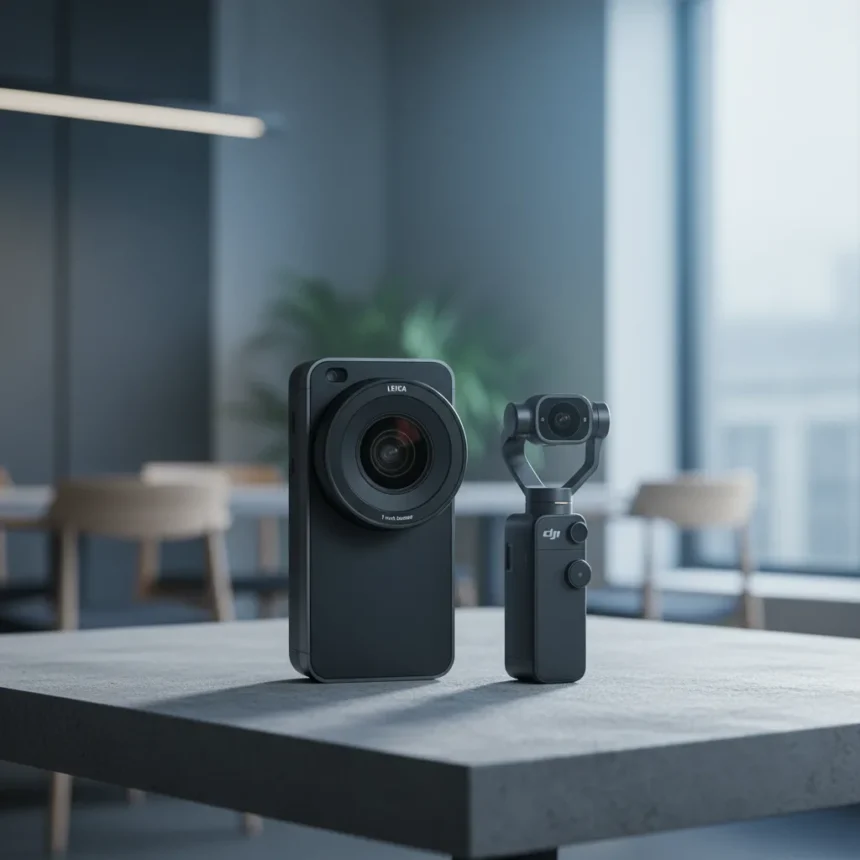
The Insta360 Luna Ultra is Insta360’s answer to DJI’s dominance in the pocket gimbal space, but it approaches the category differently—as a camera first, stabilization second. The device combines Leica lenses, a 1-inch sensor, and 12x zoom in a form factor that blurs the line between compact camera and handheld gimbal, according to hands-on testing.
Key Takeaways
- Insta360 Luna Ultra features Leica-designed lenses for professional image quality.
- The 1-inch sensor represents a significant step up from typical gimbal camera sensors.
- 12x zoom capability extends reach without sacrificing image stabilization.
- The device prioritizes photographic experience over gimbal-first mechanics.
- Direct competitor positioning against DJI Pocket’s established market presence.
Why Insta360 Luna Ultra Feels Like a Real Camera
The defining characteristic of the Insta360 Luna Ultra is its philosophical departure from traditional gimbal design. Where DJI Pocket models emphasize stabilization as the primary feature, the Luna Ultra inverts that hierarchy—it is a camera that happens to have excellent stabilization built in. The Leica lens partnership signals intent to compete on image quality rather than mechanical innovation alone. A 1-inch sensor is substantially larger than what you find on competing pocket gimbal cameras, capturing more light and delivering richer detail in both stills and video.
This sensor-first approach matters for photographers who view stabilization as a tool rather than the main event. The 12x zoom capability further reinforces the camera positioning, allowing users to frame shots without constantly repositioning the device. That is a fundamental shift in workflow compared to gimbal-centric competitors that prioritize gimbal range and movement smoothness as primary selling points.
How Insta360 Luna Ultra Compares to DJI Pocket
The Insta360 Luna Ultra and DJI Pocket occupy the same physical space but pursue different user priorities. DJI Pocket devices excel at gimbal performance—smooth pans, fluid tracking, and intuitive motion control dominate their design philosophy. The Luna Ultra trades some gimbal refinement for optical capability, betting that photographers care more about what the sensor captures than how smoothly the gimbal tracks a moving subject. The Leica partnership is the clearest signal of this repositioning: DJI does not market its Pocket cameras with premium lens branding, whereas Insta360 leads with optics credentials.

For vlogging and cinematic movement, DJI Pocket remains the stronger choice. For photography-focused creators who want stabilization without sacrificing image quality, the Luna Ultra’s sensor and zoom range address a different need. Neither approach is objectively superior—they serve different creative priorities.
What the 1-Inch Sensor and Leica Lenses Mean for Image Quality
A 1-inch sensor is the standard in serious compact cameras and premium action cameras. Insta360’s decision to include one in a pocket gimbal signals that the Luna Ultra is targeting photographers who refuse to compromise on sensor size just because they want portability. Leica lenses have long been associated with color science and optical precision, and that partnership extends beyond marketing—it shapes how the device renders color and handles contrast in real-world shooting.



The 12x zoom capability works in concert with the larger sensor to enable flexible framing. Telephoto work on smaller sensors often introduces visible noise and color banding, but a 1-inch sensor provides enough light-gathering capacity to maintain image integrity across the zoom range. This is where the Luna Ultra’s camera-first philosophy becomes tangible: it prioritizes the final image over gimbal mechanics.
Is the Insta360 Luna Ultra Worth Choosing Over DJI Pocket?
The answer depends entirely on whether you prioritize photographic output or gimbal performance. If you are a content creator who values smooth, predictable gimbal movement and intuitive controls, DJI Pocket remains the category leader. If you are a photographer who wants portable stabilization without settling for mediocre optics, the Insta360 Luna Ultra’s emphasis on image quality and zoom range addresses a gap that DJI has not aggressively targeted.
The Luna Ultra’s positioning is refreshingly honest about what it is: a premium compact camera with gimbal stabilization, not a gimbal that happens to take photos. That clarity of purpose matters when making a purchase decision.
Does the Insta360 Luna Ultra have optical image stabilization?
The hands-on testing emphasizes the device’s stabilization capability without specifying whether stabilization is purely electronic or hybrid. The Leica lenses and 1-inch sensor work together to minimize visible shake, but the exact stabilization mechanism is not detailed in available testing materials.



How does the 12x zoom perform on the Insta360 Luna Ultra?
The 12x zoom is positioned as a key differentiator, extending reach without requiring gimbal repositioning. On a 1-inch sensor, telephoto performance maintains image quality better than smaller-sensor competitors, though real-world zoom quality depends on lighting conditions and subject distance.
What makes the Insta360 Luna Ultra different from other pocket cameras?
The Insta360 Luna Ultra combines gimbal stabilization with premium optics—specifically Leica lenses and a 1-inch sensor—in a pocket-sized form factor. This camera-first philosophy distinguishes it from gimbal-first competitors like DJI Pocket, which prioritize mechanical stabilization over sensor quality.
The Insta360 Luna Ultra represents a meaningful alternative for photographers tired of compromising on optics for portability. Whether it ultimately succeeds depends on execution and real-world reliability, but the strategic positioning is sound: prioritize the image, let stabilization enhance rather than define the experience. That is a philosophy DJI Pocket users have never had to choose between.
Edited by the All Things Geek team.
Source: T3




