





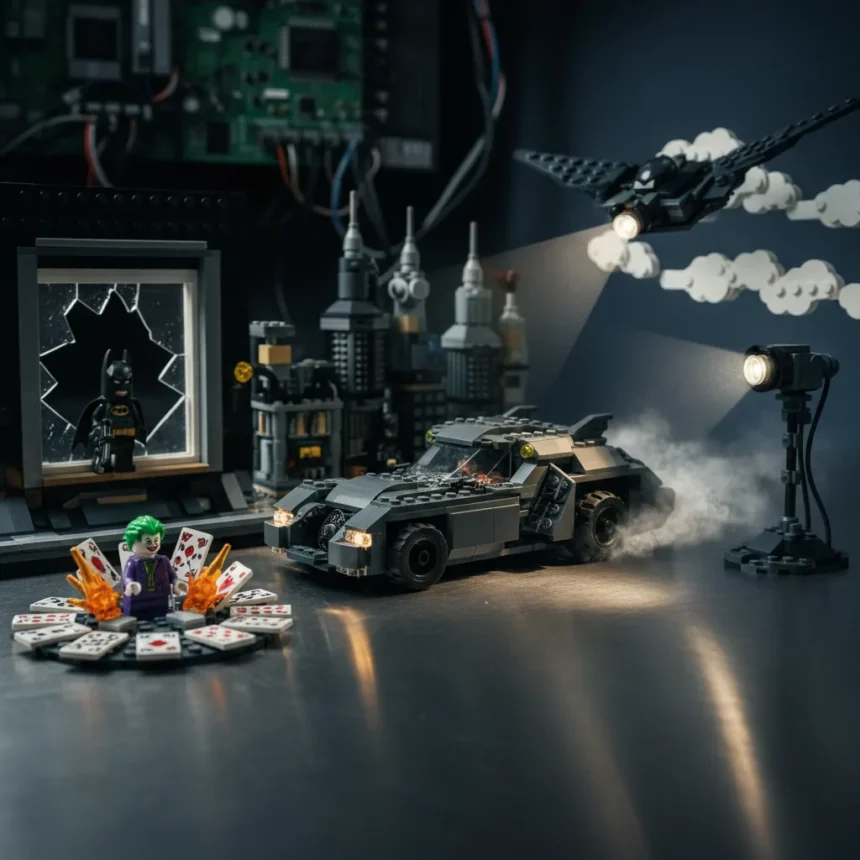
Lego Batman: Legacy of the Dark Knight stands out among licensed games for its deliberate visual references to Batman cinema. Rather than simply adapting storylines, the game reconstructs iconic movie moments as interactive sequences, creating a bridge between gaming and film that rewards players familiar with decades of Batman media.
Key Takeaways
- The game features frame-by-frame tributes to prior Batman films and media.
- Visual homage approach distinguishes it from typical movie-to-game adaptations.
- The game blends gaming mechanics with cinematic scene recreation.
- Batman movies serve as the primary visual and narrative reference point.
- The design emphasizes faithful recreation over original storytelling.
How Lego Batman: Legacy of the Dark Knight Approaches Movie Tributes
Lego Batman: Legacy of the Dark Knight takes an unconventional approach to licensed game design by treating Batman films as a visual template rather than a story to retell. The game reconstructs specific scenes and moments from Batman cinema with attention to framing, composition, and iconic imagery. This frame-by-frame tribute strategy means players encounter familiar shots and sequences reimagined in Lego’s blocky aesthetic, creating a layered experience for viewers who recognize the references.
The decision to prioritize visual homage over narrative innovation reflects a broader trend in licensed games that celebrate source material rather than extend it. Where many adaptations attempt to create new stories set in established universes, Lego Batman: Legacy of the Dark Knight instead asks: what if we could walk through the exact moments that defined these films? This approach transforms the game into a interactive museum of Batman cinema, letting players inhabit scenes they have only watched.
Lego Batman: Legacy of the Dark Knight vs Traditional Movie Adaptations
Traditional Batman games often either create original stories loosely inspired by films or compress movie plots into playable form. Lego Batman: Legacy of the Dark Knight diverges by maintaining visual and compositional fidelity to source material while adding interactivity. The game does not ask players to experience a new Batman narrative—it asks them to experience Batman narratives they already know through a gaming lens.


This distinction matters because it changes player expectations. A movie-based game that invents new plot threads risks disappointing fans seeking faithfulness; one that recreates existing scenes risks feeling like a passive recreation. Lego Batman: Legacy of the Dark Knight navigates this by making the recreation itself the experience. The Lego aesthetic adds a layer of interpretation—the bright, blocky visual style contrasts with the darker cinematic source material, creating tension between reverence and playful irreverence.
Why Frame-by-Frame Tributes Resonate With Batman Fans
Batman’s cinematic history spans multiple decades, visual styles, and interpretations. From noir-influenced aesthetics to gothic architecture to modern realism, each film era established distinct visual language. Fans of the character often harbor deep attachment to specific films and their iconic moments. A game that acknowledges this history through careful scene recreation speaks directly to that fandom.


The frame-by-frame approach also solves a structural problem: how do you honor multiple Batman film eras simultaneously without creating narrative confusion? By treating scenes as discrete, interactive moments rather than a continuous story, Lego Batman: Legacy of the Dark Knight can pull from different films and eras without requiring them to coexist in a single timeline. A player might recreate a scene from one film in one level and a completely different film’s moment in the next, with no contradiction.
What This Design Philosophy Means for Licensed Games
Lego Batman: Legacy of the Dark Knight suggests an alternative path for how licensed games can operate. Rather than viewing source material as raw narrative to be adapted, the game treats it as visual and compositional reference worthy of direct recreation. This philosophy could influence how other franchises approach game development, particularly those with rich cinematic histories that fans deeply revere.
The success of this approach depends on execution—faithful recreation requires meticulous attention to detail, and the Lego aesthetic must feel like an intentional artistic choice rather than a limitation. When done well, as the game appears to attempt, frame-by-frame tributes create moments of recognition that purely original games cannot achieve. A player who spots a recreated shot from a beloved film experiences a small thrill of connection, a confirmation that the developers understood what made that moment memorable.
Does Lego Batman: Legacy of the Dark Knight work as both game and tribute?
The game succeeds at visual homage, but whether it functions as engaging gameplay depends on how thoroughly the Lego structure supports interactive recreation. The best licensed games balance reverence with originality—they honor source material while creating something that stands on its own. Lego Batman: Legacy of the Dark Knight’s frame-by-frame approach prioritizes the former, which appeals strongly to fans but requires solid mechanics to avoid feeling like a guided tour.


How does recreating movie scenes in a game compare to watching films?
Interactivity fundamentally changes the relationship between viewer and content. Watching a scene unfold on screen is passive; controlling a character through that same scene adds agency and presence. Lego Batman: Legacy of the Dark Knight uses this distinction—players do not simply observe iconic moments, they inhabit them, making choices within recreated spaces. This transforms recognition into participation, deepening engagement with material fans already know.
Can frame-by-frame game tributes work for other franchises?
The approach is franchise-agnostic in theory, but works best for properties with visually distinctive, widely recognized moments. Batman cinema provides abundant iconic imagery—establishing shots of Gotham, signature action sequences, memorable character introductions. Franchises with equally iconic visual language could employ similar strategies, though execution would vary based on how well the source material translates to interactive space and how clearly fans recognize the references.
Lego Batman: Legacy of the Dark Knight demonstrates that licensed games need not choose between honoring source material and creating original experiences. By treating Batman films as a visual foundation for interactive recreation, the game offers fans something neither pure adaptation nor pure original creation can deliver: the chance to step inside moments they thought they could only watch. Whether this approach becomes a template for future licensed games depends on how thoroughly it succeeds at marrying reverence with playability.
Where to Buy
LEGOBatmobile$29.99shop now | 18% OFFLEGOBatman Construction Figure & Bat-Pod$53.10$64.99shop now | 20% OFFLEGOTumbler Vs. Two-Face & the Joker$47.99$59.99shop now | Lego BatmanLegacy of the Dark Knight – Playstation 5$69shop now
Edited by the All Things Geek team.
Source: Creativebloq




