





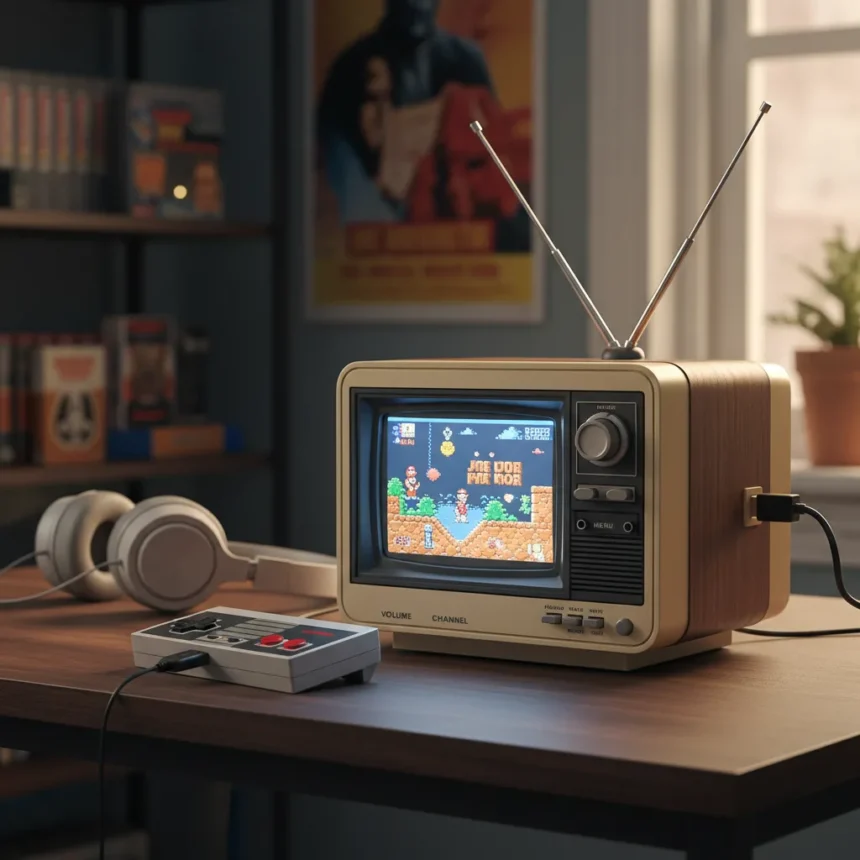
A DIY retro mini-TV project brings back the chunky, boxy charm of 1980s television sets in a fully functional form factor. This maker-style build combines nostalgic design with practical utility: it can play classic NES games and movies on a 2.8-inch display, making it both a conversation piece and an actual entertainment device.
Key Takeaways
- DIY retro mini-TV features a 2.8-inch display for gaming and video playback
- Supports classic NES games and movie content on a single compact device
- Designed to mimic vintage television aesthetics from the 1980s era
- Positioned as a maker project rather than a commercial off-the-shelf product
- Appeals to retro gaming enthusiasts and electronics hobbyists
Why This DIY Retro Mini-TV Stands Out
The appeal of a DIY retro mini-TV lies in its refusal to apologize for looking old. While modern gaming handhelds prioritize sleek minimalism and high-resolution screens, this project embraces the aesthetic of a television that might have sat in a living room during the Reagan administration. The 2.8-inch display is deliberately small—not because of technical limitations, but because authenticity demands it. A 1980s TV was never meant to be pocket-sized.
What makes this more than nostalgia theater is functionality. This isn’t a decorative replica. It actually runs classic NES games and plays movies, transforming a retro aesthetic into a practical entertainment platform. That combination—looking like it belongs in a museum while performing like a modern device—is what separates a novelty from a genuinely interesting maker project.
DIY Retro Mini-TV vs. Modern Gaming Alternatives
Contemporary handheld gaming devices prioritize screen real estate and processing power. The Nintendo Switch, for instance, offers a 6.2-inch display and access to modern games. Emulation devices like the Analogue Pocket deliver high-fidelity retro gaming on modern screens. A DIY retro mini-TV makes a different choice: it sacrifices screen size and modern convenience for aesthetic authenticity and the satisfaction of building something yourself.


The maker approach also differs fundamentally from commercial retro products. Where a mass-market retro console comes pre-built and pre-loaded, a DIY project demands hands-on engagement. You’re not just buying nostalgia—you’re constructing it, which appeals to a specific audience: people who care about the process as much as the product.
Who Should Build This Project
A DIY retro mini-TV appeals most to electronics hobbyists with intermediate soldering and assembly skills. If you’ve built a Raspberry Pi project before or enjoy tinkering with vintage hardware, this sits squarely in your wheelhouse. The project rewards patience and attention to detail—getting that authentic 1980s look while ensuring the 2.8-inch display works reliably requires both mechanical and electrical competence.



Retro gaming collectors represent another natural audience. If your shelf already displays vintage consoles or arcade cabinets, a working DIY retro mini-TV that actually plays NES games offers functional nostalgia rather than static decoration. It’s the kind of project that generates conversation and demonstrates genuine engagement with the hobby beyond passive consumption.
The Appeal of Building vs. Buying
The maker movement thrives on projects that could theoretically be purchased but feel more rewarding when self-assembled. A DIY retro mini-TV fits this perfectly. Yes, commercial retro gaming devices exist. Yes, you could buy a small portable screen. But assembling them into a cohesive package that looks authentically 1980s while functioning as a real entertainment device carries satisfaction that no off-the-shelf product quite delivers.
There’s also creative freedom. A DIY approach lets you customize colors, materials, and internal components to match your exact vision. Want wood paneling? Add it. Prefer a different color scheme? You control that. A commercial product locks you into one design; a maker project is yours to modify.
What Makes the 2.8-Inch Display the Right Choice
The 2.8-inch screen might seem limiting by modern standards, but it’s historically appropriate and practically sufficient. Classic NES games were designed for small screens with limited resolution. A 2.8-inch display handles that content without scaling artifacts or wasted space. Movies play fine at that size for personal viewing—it’s not meant for group entertainment, just like a vintage portable TV wasn’t.


Screen size also reinforces the aesthetic. A massive modern display would shatter the illusion of authenticity. The compact 2.8-inch format keeps the entire device proportionally correct, maintaining that boxy, chunky silhouette that defined 1980s television design.
Can you use a DIY retro mini-TV for modern gaming?
The DIY retro mini-TV is optimized for classic NES games and movie playback, not modern titles. Modern games require processing power and graphics capabilities far beyond what this project typically accommodates. It’s a device built for a specific purpose: celebrating and playing retro content, not competing with contemporary gaming hardware.
How difficult is it to build a DIY retro mini-TV?
Assembly difficulty depends on your experience level with electronics projects. If you’re comfortable soldering, reading schematics, and troubleshooting hardware, a DIY retro mini-TV is achievable. Complete beginners should expect a learning curve and might benefit from detailed guides or communities focused on similar maker projects. The mechanical assembly (case, display mounting) is typically easier than the electrical components.
What’s the practical advantage of a DIY build over buying a retro gaming device?
DIY construction offers customization, cost control, and personal satisfaction that commercial products cannot match. You choose components, design aesthetics, and internal layout. You also understand exactly how the device works, making repairs and upgrades straightforward. For enthusiasts, that hands-on knowledge and creative control justify the time investment over simply purchasing a finished product.
A DIY retro mini-TV isn’t for everyone. It demands soldering skills, patience, and genuine interest in the building process itself. But for makers who want a functional piece of nostalgia that actually plays NES games and movies while looking authentically 1980s, it delivers something no commercial product quite achieves: a device that’s as rewarding to build as it is to use.
Edited by the All Things Geek team.
Source: TechRadar




