





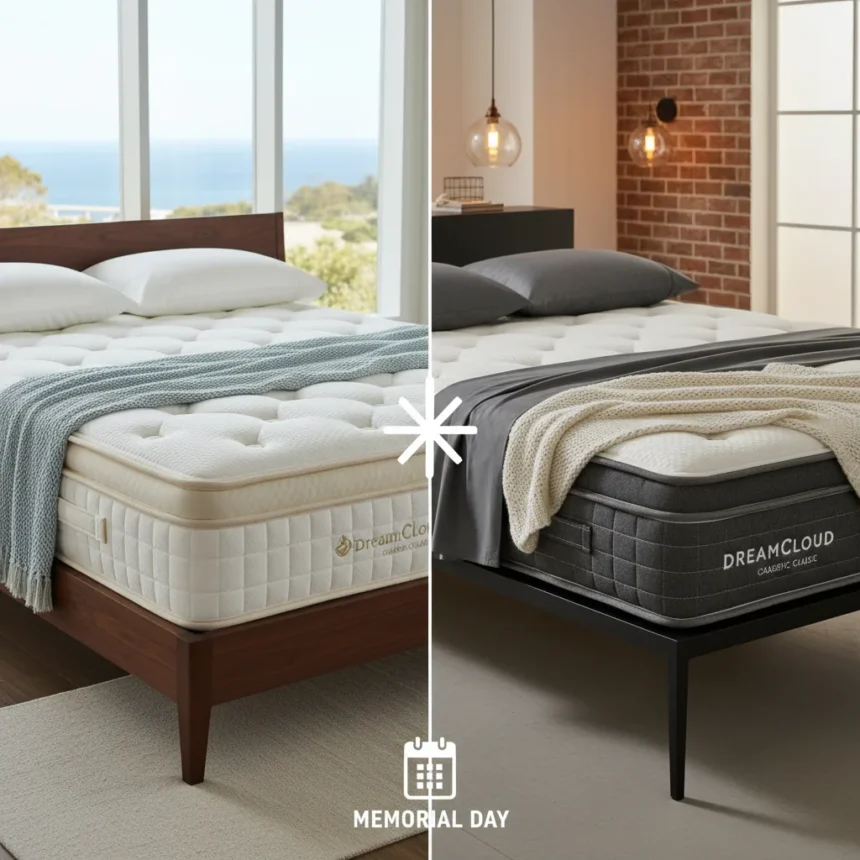
The Saatva Classic vs DreamCloud Classic showdown matters right now because Memorial Day mattress sales are live, and these two hybrid beds are among the most popular choices for shoppers hunting a deal. Both offer solid construction at different price points, but they perform differently where it counts most: edge support, motion isolation, and overall comfort.
Key Takeaways
- The Saatva Classic outperforms the DreamCloud Classic in edge support and motion isolation.
- The DreamCloud Classic is significantly cheaper and features a quilted top with memory foam layers ideal for side sleepers.
- The Saatva Classic is the stronger all-around choice for most sleepers seeking premium hybrid performance.
- The DreamCloud Classic delivers better value for budget-conscious buyers, especially those who sleep on their side.
- Memorial Day pricing makes both mattresses more accessible, but the Saatva remains the performance leader.
Saatva Classic vs DreamCloud Classic: Core Differences
The Saatva Classic is a luxury hybrid mattress that combines coil springs with foam layers, designed to feel responsive and supportive across all sleeping positions. The DreamCloud Classic Hybrid is a medium-firm alternative that emphasizes comfort through quilted fabric and memory foam construction, particularly favored by side sleepers. The key distinction: the Saatva prioritizes premium engineering and all-around performance, while the DreamCloud targets budget-conscious shoppers willing to trade some advanced features for lower cost.
Both mattresses use hybrid construction—combining innerspring coils with foam comfort layers—but their execution differs significantly. The Saatva’s engineering emphasizes durability and responsiveness, making it feel more like a traditional luxury bed. The DreamCloud’s quilted surface and memory foam layers create a softer initial impression, which appeals to side sleepers who want pressure relief at the shoulders and hips.
Edge Support and Motion Isolation: Where the Saatva Wins
The Saatva Classic decisively outperforms the DreamCloud Classic in edge support, meaning it maintains firmness and stability when you sit or lie near the mattress perimeter. This matters if you sleep with a partner, have children who climb into bed, or simply want to use the full surface without feeling like you might roll off. The Saatva’s reinforced edge construction keeps you supported right to the edge, whereas the DreamCloud’s softer design allows more edge sag.

Motion isolation—the mattress’s ability to absorb movement so your partner’s tossing doesn’t wake you—is another clear Saatva advantage. The Saatva Classic’s coil system and foam layers work together to contain motion, keeping disturbances localized. The DreamCloud, while adequate, transfers more movement across the surface, which can be problematic in shared beds. If you’re a light sleeper or frequently share your bed, this performance gap matters.
Who Should Buy the DreamCloud Classic?
The DreamCloud Classic is not the weaker choice for everyone—it’s the right choice for specific sleepers. Side sleepers benefit most from its quilted top and memory foam layers, which conform closely to shoulders and hips and reduce pressure points. The mattress’s medium-firm feel works well for lighter sleepers who don’t need maximum support or for anyone prioritizing budget over premium features. At less than half the Saatva’s price, the DreamCloud delivers genuine comfort for its cost tier.



If you sleep alone, side sleepers are the primary beneficiary here. Couples where one partner is a heavy back sleeper might find the DreamCloud’s softer construction frustrating, but solo sleepers or couples where both prefer softer support will find it adequate. The quilted surface also appeals to hot sleepers who appreciate the breathable fabric over dense memory foam.
Why the Saatva Classic Remains the Top Pick for Most
The Saatva Classic wins the all-around comparison because it performs better on the metrics that matter across all sleep positions and body types. Superior edge support and motion isolation aren’t luxuries—they’re practical benefits that improve sleep quality night after night. The Saatva also feels more durable, with engineering designed to resist sagging and maintain support over years of use.
For back sleepers, stomach sleepers, and anyone who shares a bed, the Saatva’s advantages compound. You get a mattress that keeps you supported at the edges, isolates your partner’s movement, and maintains consistent feel across the entire surface. The luxury construction justifies the price premium, especially during Memorial Day sales when discounts narrow the gap.
Memorial Day Pricing: What You’re Actually Paying
Both mattresses are discounted for Memorial Day, but the price gap remains substantial. The DreamCloud Classic’s lower baseline price makes it genuinely affordable for budget shoppers, while the Saatva’s premium positioning means even with holiday discounts, you’re investing more upfront. The question isn’t whether the Saatva is more expensive—it is—but whether the performance gains justify the cost for your specific needs.



If you’re a side sleeper on a tight budget, the DreamCloud’s Memorial Day pricing makes it defensible. If you sleep in any other position, share your bed, or plan to keep the mattress for a decade, the Saatva’s engineering pays dividends. Think of it this way: the Saatva is the mattress you’ll forget about because it performs consistently; the DreamCloud is the mattress you might outgrow if your sleep needs change.
Should I buy the DreamCloud Classic if it’s cheaper?
Not automatically. Cheaper doesn’t mean better for your situation. The DreamCloud works well for side sleepers and solo sleepers on budget constraints. If you’re a back sleeper, share your bed regularly, or want maximum durability, the Saatva’s superior edge support and motion isolation justify the higher cost. Price alone shouldn’t drive the decision—your sleep position and bed-sharing situation should.
How does the DreamCloud Classic compare to other budget hybrid mattresses?
The DreamCloud Classic is strong within the budget hybrid category, particularly for side sleepers drawn to its quilted top and memory foam comfort layers. However, the research brief does not provide detailed comparisons to other budget competitors, so specific performance claims against alternative budget options cannot be verified here. What we know is that among premium hybrids, the Saatva outperforms it; whether other budget options match or exceed the DreamCloud requires separate research.
Which mattress is better for hot sleepers?
The DreamCloud Classic’s quilted fabric surface is more breathable than dense memory foam, making it the better choice if you sleep hot. The Saatva Classic, while engineered for airflow through its coil system, has a more traditional feel that may retain slightly more heat. If temperature regulation is your primary concern, the DreamCloud’s construction gives it an edge here, even though the Saatva wins on support and isolation metrics.
The Saatva Classic vs DreamCloud Classic decision ultimately hinges on what matters most to you. The Saatva is the all-around winner for most sleepers—better support, better isolation, better durability. The DreamCloud is the smart choice if you’re a side sleeper on a budget and willing to accept softer construction in exchange for cost savings. This Memorial Day, neither mattress is a bad choice, but the Saatva’s engineering makes it the one most people should buy.
Edited by the All Things Geek team.
Source: Tom's Guide




