





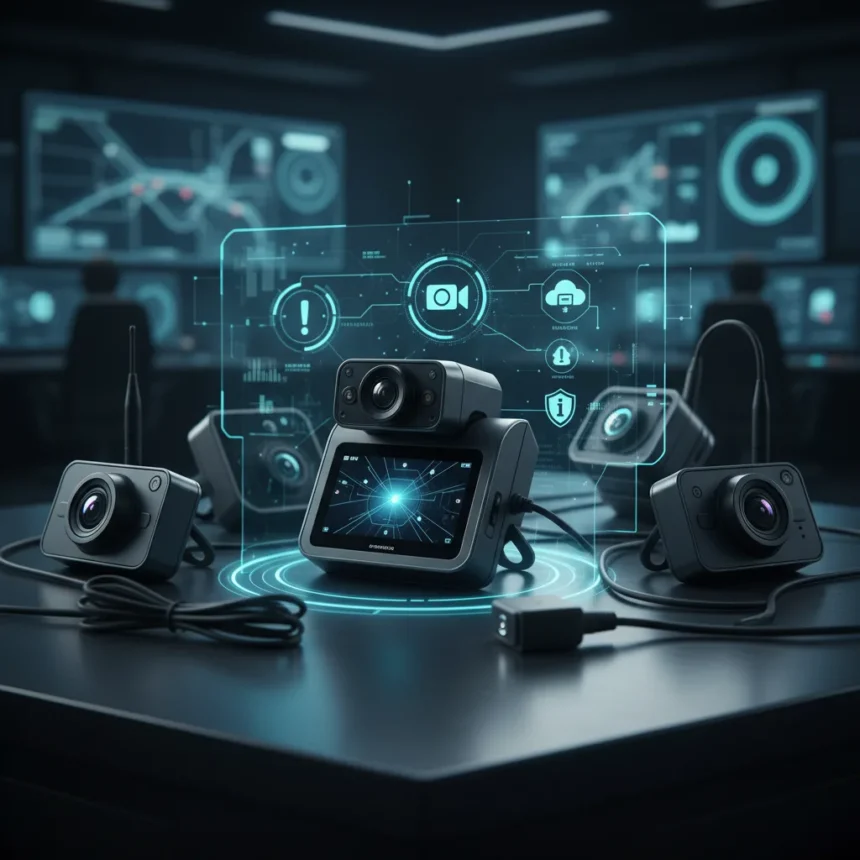
Enterprise-grade smart dash cams have evolved far beyond simple video recorders. Unlike consumer dash cams focused on basic incident capture, enterprise-grade smart dash cams integrate real-time driver alerts, structured safety coaching, and direct claims workflow automation into a single platform designed to reduce fleet risk, lower insurance costs, and preserve critical evidence.
Key Takeaways
- Enterprise-grade smart dash cams require dual-facing cameras capturing both road and driver with at least 1080p resolution and infrared night vision.
- Real-time alerting systems combined with post-trip coaching produce stronger sustained improvements in driver behavior than recording-only systems.
- Battery-backed recording preserves and uploads footage during collisions or power loss, which is essential for litigation and high-severity incident evidence.
- Formal insurer partnerships can unlock premium discounts and streamlined claims handling through automated collision reporting.
- 30–200+ hours of onboard storage with on-demand retrieval enables both immediate safety response and long-term legal protection.
Video Quality and Detection Coverage: The Foundation for Legal Evidence
The practical foundation of any enterprise-grade smart dash cam system rests on video quality and detection coverage. Footage must be legible enough to show exactly what happened in a legal context—meaning blurry or partial captures are liabilities, not assets. This is where enterprise systems diverge sharply from consumer models. A fleet operator evaluating enterprise-grade smart dash cams should insist on dual-facing cameras that capture both the road ahead and the driver simultaneously. Why both? Because accident disputes often hinge on driver behavior: was the driver distracted, asleep, or responding to a genuine road hazard? A single forward-facing camera cannot answer that question.
Resolution standards matter. Look for at least 1080p HD resolution paired with infrared night vision. Night incidents are statistically more severe and more likely to trigger litigation—and that is precisely when resolution becomes your evidence. A 720p camera might capture a collision; a 1080p system with infrared can capture the exact moment of impact, vehicle positions, and road conditions well enough to withstand cross-examination in court.
Storage, Retrieval, and Power Resilience During High-Severity Events
Enterprise-grade smart dash cams should retain 30–200+ hours of onboard footage with video retrieval on demand. That depth of storage serves two purposes: immediate safety response (a manager can pull footage within minutes of an incident) and legal protection (evidence is preserved independently of cloud connectivity). But onboard storage alone is insufficient for litigation scenarios. Battery-backed recording is the critical differentiator. When a vehicle loses power in a collision—the exact moment when evidence matters most—a battery-backed system continues uploading to the cloud even as the vehicle sits disabled at the scene. Without this feature, footage from the most severe incidents may be lost to power disruption, corrupted memory, or delayed manual retrieval.


This resilience directly addresses litigation purposes. High-severity incidents are where the most critical evidence is needed, and they are also where power loss is most likely. A system without battery backup is gambling that every serious accident will occur on a sunny day with a functioning electrical system.
Real-Time Alerts vs. Recording-Only: Prevention Over Documentation
A fundamental split exists between enterprise-grade smart dash cams that only upload footage after an event and systems that provide real-time alerts while risk is still developing. The difference is the gap between documentation and prevention. Recording-only systems excel at proving what happened. Real-time alerting systems prevent it from happening in the first place. Platforms combining in-cab audio alerts with structured post-trip coaching tend to produce the strongest sustained improvement in driver behavior. The audio alert interrupts risky behavior immediately—a lane departure warning sounds before a collision occurs. The post-trip coaching reinforces the lesson, turning a single near-miss into a teaching moment.



If your fleet’s primary goal is cost reduction through insurance premium negotiation, recording-only systems may suffice. If your goal is to reduce collisions, injuries, and operational disruption, real-time alerting is non-negotiable. Most enterprise buyers find that the accident prevention value justifies the platform cost within 12–18 months.
Insurance Partnerships and Claims Workflow Integration
Enterprise-grade smart dash cams deliver maximum value when they integrate directly with your insurance relationships and claims workflow. This is where many fleet operators miss a critical opportunity. Some vendors have formal partnerships with commercial insurers, which may help with premium discounts and documenting a reduced risk profile at renewal. These partnerships are not marketing theater—they represent actual claims workflow automation. Accident management features such as automated collision reporting and flagged footage retrieval can reduce the time and cost of settling claims.
Consider a scenario: a driver is struck by another vehicle. A system with claims integration automatically flags the incident, tags the relevant footage, and notifies your insurer within minutes. The claims adjuster reviews the footage, determines liability, and approves a settlement without weeks of manual evidence gathering. A system without this integration leaves your safety team manually retrieving footage, uploading it to email, and waiting for the insurer to request clarification. The difference in claims resolution time can be weeks. The difference in operational disruption can be significant.
AI-assisted fleet risk management platforms can help fleets exonerate drivers, fight fraudulent claims, and lower insurance costs before a lawsuit begins. This preventive approach—using video evidence to defend against liability before disputes escalate—is the emerging standard in enterprise fleet operations.



Evaluating the Total Cost of Ownership
Enterprise-grade smart dash cams are not purchased like consumer electronics. The lowest upfront cost rarely translates to the lowest total operational value. A $300 camera that produces blurry night footage and requires manual claims processing may cost your fleet thousands in unresolved disputes and missed insurance discounts. A $800 system with battery backup, real-time alerts, and insurer integration may pay for itself through a single prevented collision or a single accelerated insurance settlement. When evaluating competing systems, budget for the full platform: hardware, cloud storage, coaching software, and integration fees. Then measure that against your current accident costs, insurance premiums, and claims processing overhead. The system that reduces total fleet risk is the one worth buying.
Are enterprise-grade smart dash cams worth the investment for small fleets?
Yes, if your fleet operates 10 or more vehicles in a high-risk environment (urban delivery, rideshare, commercial transport). The insurance discount and accident prevention benefits scale quickly. For fleets under 10 vehicles, a simpler system may suffice unless you operate in a high-collision market or carry high-value cargo.
How much onboard storage do I actually need?
30–200+ hours of onboard storage is the enterprise standard because it provides a buffer for immediate retrieval and legal preservation. Aim for at least 100 hours if your fleet operates across multiple time zones or if your claims process requires evidence review before filing.
Can I integrate an enterprise-grade smart dash cam system with my existing fleet management platform?
Integration depends on the vendor’s API and your platform’s openness. Systems with formal insurer partnerships often offer tighter integrations because those partnerships demand seamless claims workflow automation. Confirm integration capability before purchase—a system that does not talk to your existing tools will create manual work, not reduce it.
Enterprise-grade smart dash cams represent a shift from passive recording toward active fleet risk management. The systems that combine high-quality evidence capture with real-time driver coaching and insurance integration will dominate fleet operations over the next five years. The question is not whether to invest in one, but which platform aligns with your fleet’s specific risk profile and insurance relationships.
Edited by the All Things Geek team.
Source: TechRadar