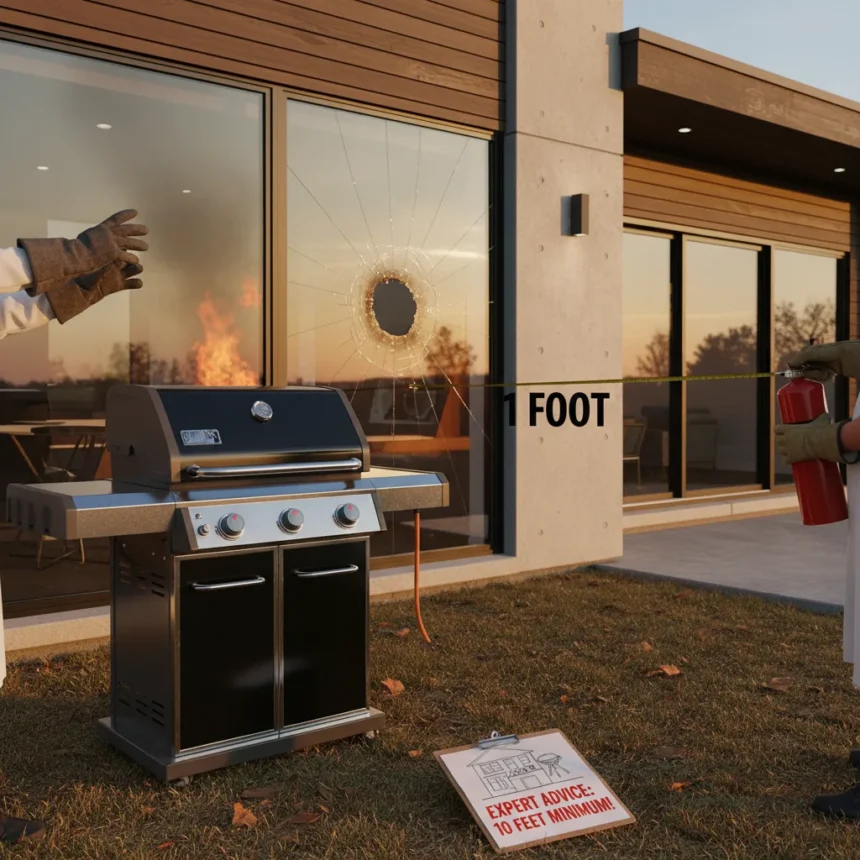
Grill placement safety is one of the easiest ways to prevent costly damage and fire risk, yet most backyard cooks get it wrong. Positioning your grill too close to your home, windows, or patio doors creates a hazard zone where radiant heat can warp frames, crack glass, and ignite nearby materials. The fix is straightforward—follow expert distance guidelines that have nothing to do with aesthetics and everything to do with physics and prevention.
Key Takeaways
- Keep your grill at least 10 feet away from your home structure
- Position the grill 1.5 to 2 metres away from windows and patio doors
- Close nearby windows while cooking and reopen after the grill cools
- Avoid overhead hazards like tree branches, power lines, and gazebos
- Place the grill on a stable, even stone surface in an open, well-ventilated area
The window and door hazard: Why distance matters
Heat radiating from an active grill travels farther than most people realize. Windows and patio doors positioned too close absorb that heat unevenly, causing thermal stress that warps frames and can crack glass over time. Experts recommend positioning a grill at least 1.5 to 2 metres away from windows and doors. This distance is not arbitrary—it reflects the point at which radiant heat dissipates enough to prevent damage. While the grill cooks, keep nearby windows closed; open them again once the grill cools down. This simple habit prevents heat from forcing its way into your home and damaging interior furnishings.
The 10-foot rule: Minimum distance from your home
Beyond windows, your grill needs breathing room from your entire house. Experts recommend keeping the grill at least 10 feet away from your home structure. This distance accounts for heat radiation, smoke drift, and the risk of embers traveling farther than you expect. The grill should sit on a stable, even stone surface with nothing flammable nearby. A solid foundation prevents tipping and ensures heat dissipates evenly into the ground rather than concentrating in one spot.
Hidden hazards: Overhead and surrounding threats
Grill placement safety extends beyond distance from your house. Flammable hazards lurk overhead and on the ground. Low-hanging branches, shrubs, power lines, and gazebos above the grill create fire risk. Grilling under trees, overhanging branches, and enclosed patios should be avoided entirely. The grill needs an open, well-ventilated area—never place it in a tent or under a canopy. These enclosed spaces trap heat and smoke, concentrating fire risk and creating a pressure cooker effect that can lead to flare-ups or worse. An open yard with clear sky above is the safest choice.


Positioning for safety and function
The ideal grill location balances safety with usability. Position your grill far enough from the house to meet the 10-foot minimum, but in a spot where you can reach it easily without creating a traffic hazard. The area should be level and free of obstacles that could cause you to trip while carrying hot food or tools. Avoid placing the grill near deck railings or seating areas where guests might brush against it. The grill should be visible from your kitchen or dining area so you can monitor it without straining, but not so close that smoke drifts directly into your home.
What happens when you ignore these guidelines
Placing a grill too close to windows results in visible heat damage within a season or two—discolored frames, cloudy glass, or warped vinyl. Proximity to the house risks igniting siding, deck boards, or roof overhangs during a flare-up. Overhead hazards like tree branches can catch fire from rising heat or flying embers. Enclosed patios trap smoke and heat, increasing the risk of carbon monoxide buildup and making the grill harder to control. These are not theoretical risks—they are preventable consequences of poor placement decisions.



Can you move a grill closer in winter?
Seasonal temperature changes do not eliminate grill placement safety requirements. While cooler weather may seem to reduce heat risk, a grill still radiates intense heat that can damage windows and siding year-round. Winter grilling is common in many climates, and the same 10-foot distance and 1.5 to 2 metre window clearance apply. Cold air does not make a grill safer to position near flammable materials.
Does grill placement affect cooking performance?
Yes, placement influences both safety and results. A grill in an open, well-ventilated area maintains consistent temperature and reduces the risk of smoke accumulation that can affect flavor. Wind exposure can be a factor—if your chosen spot is extremely windy, you may need to shield the grill slightly, but never with an enclosed structure. A stable stone surface ensures even heat distribution and prevents the grill from settling or tipping during use.
Grill placement safety is not a one-time decision—it is the foundation of every cookout. Follow the 10-foot distance from your home, keep windows and doors 1.5 to 2 metres away, clear overhead hazards, and choose an open, well-ventilated spot on a stable surface. These guidelines prevent damage, reduce fire risk, and let you focus on what matters: cooking great food without worry.
Where to Buy
OXOSilicone Basting & Pastry Brush$13.95shop now | 33% OFFCuisinartPremium Deck and Grill Mat, 65" X 36"$39.97$59.99shop now | 46% OFFCHEF iQ SenseSmart Wireless Meat Thermometer$69.97$129.99shop now | Amazon Basics4-Piece Stainless Steel Bbq Grilling Tool Set$15.05shop now



Edited by the All Things Geek team.
Source: Tom's Guide