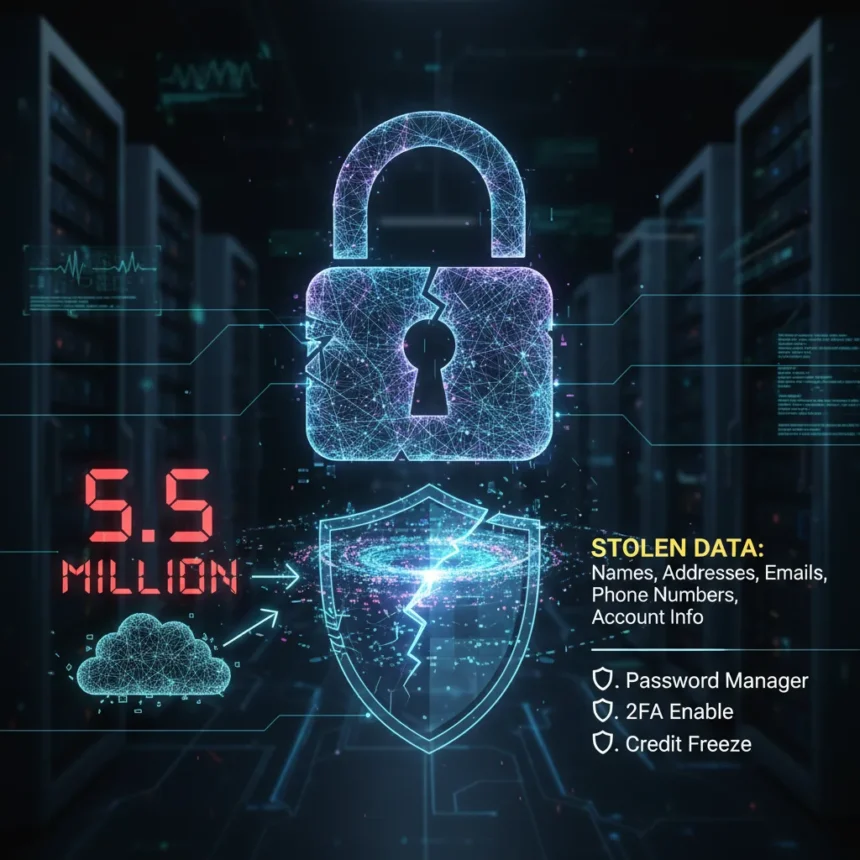
The ADT data breach represents one of the largest security incidents targeting a home security provider in recent years. On April 20, 2026, ADT confirmed unauthorized access to its systems, with the ShinyHunters hacking group claiming responsibility and threatening to leak over 10 million records containing personal information and internal corporate data. Have I Been Pwned now lists approximately 5.5 million unique email addresses from the incident, making it immediately searchable by anyone concerned about their exposure.
Key Takeaways
- ADT detected unauthorized access on April 20, 2026, affecting approximately 5.5 million customers
- Stolen data includes names, phone numbers, addresses; limited SSN or Tax ID last-four digits in some cases
- No payment information, bank accounts, or credit cards were compromised in the ADT data breach
- ShinyHunters exploited voice phishing to compromise an employee’s Okta SSO account, then accessed Salesforce
- ADT offers complimentary identity protection services to all affected individuals
What Was Actually Stolen in the ADT Data Breach
The scope of the ADT data breach is narrower than ShinyHunters initially claimed, though still significant. ADT’s investigation confirmed that exposed information was limited to names, phone numbers, and addresses. In a smaller subset of cases, dates of birth and the last four digits of Social Security numbers or Tax IDs were included. Critically, no payment information—including bank accounts or credit cards—was accessed, and customer security systems themselves were not affected or compromised in any way.
This distinction matters. While personal identifiers enable identity theft and phishing attacks, the absence of full payment card data or security system credentials limits immediate financial exposure. However, the combination of names, addresses, and phone numbers is precisely what scammers use to launch convincing social engineering attacks. Hackers can cross-reference this data with other breaches to build a more complete profile of each victim.
How the ADT Data Breach Happened
ShinyHunters claimed responsibility through a voice phishing attack, also known as vishing. According to the group’s statements, they compromised an employee’s Okta single sign-on (SSO) account, then used that access to infiltrate an ADT Salesforce instance. This technique exploits human trust rather than technical vulnerabilities—attackers call employees posing as IT support or vendors, convincing them to reveal credentials or install malware.


The attack reveals a critical weakness in enterprise security: even companies with sophisticated defenses can fall when attackers target the human layer. ADT’s reliance on cloud-based environments like Salesforce, while standard across modern businesses, created an entry point once employee credentials were compromised. This is not unique to ADT—ShinyHunters has recently targeted the European Commission, Aura, Rockstar Games, and Salesforce itself, suggesting the group specializes in exploiting credential theft and cloud infrastructure access.
ADT Data Breach Context: A Pattern of Incidents
This is not ADT’s first breach. The company suffered unauthorized access incidents in August and October 2024, affecting customer and employee information. Repeated breaches suggest either inadequate remediation after previous incidents or persistent vulnerabilities in ADT’s security posture. For customers, this pattern raises uncomfortable questions about whether ADT’s identity protection offer and forensic investigation will actually prevent future exposure.



ADT has launched a forensic investigation with third-party experts, notified law enforcement, and contacted all impacted individuals. The company is offering complimentary identity protection services, a standard response that helps but does not eliminate the underlying risk. Customers who received previous breach notifications from ADT may feel justified skepticism about whether this time will be different.
How to Protect Yourself After the ADT Data Breach
If your information was exposed in the ADT data breach, immediate action reduces risk. First, check Have I Been Pwned using your email address to confirm exposure. If you are listed, assume your name, address, and phone number are now in circulation among criminal networks. Monitor your credit reports through the three major bureaus—Equifax, Experian, and TransUnion—for fraudulent accounts or inquiries. Consider placing a fraud alert or credit freeze, which prevents new accounts from being opened in your name without additional verification.
Second, be vigilant against phishing and vishing attacks. Criminals now have your phone number and address, making social engineering more convincing. If you receive unsolicited calls claiming to be from ADT, your bank, or government agencies, hang up and call the official number directly rather than using any number provided by the caller. Do not share additional personal information, verify codes, or passwords over the phone unless you initiated the call.
Third, enable multi-factor authentication (MFA) on all critical accounts—email, banking, social media, and cloud services. Even if your password is compromised, MFA prevents unauthorized access. Change passwords for any account that reused credentials across multiple services. Use unique, complex passwords generated by a password manager rather than relying on memory or patterns.



Should You Use ADT’s Identity Protection Offer?
ADT is offering complimentary identity protection services to affected customers. These services typically include credit monitoring, identity theft insurance, and fraud resolution assistance. For someone exposed in the ADT data breach, accepting the offer costs nothing and provides an extra layer of monitoring. However, do not treat it as a complete solution. Identity protection services alert you to suspicious activity but cannot prevent it entirely. You remain responsible for monitoring your own accounts and responding quickly to any red flags.
What Happens Next with ShinyHunters and the Leaked Data
ShinyHunters set an April 27, 2026 deadline for ADT to meet their ransom demand before leaking the full dataset. Whether ADT paid, negotiated, or refused remains unclear. What is certain: the 5.5 million records are already indexed on Have I Been Pwned and searchable by anyone. The data’s value to criminals lies not in the immediate sale but in its use for targeted phishing, vishing, account takeovers, and identity theft campaigns over months or years ahead.
The ADT data breach is a reminder that no company is immune to credential-based attacks. Your personal information’s security depends partly on ADT’s defenses but ultimately on your own vigilance. Check your exposure status, monitor your accounts, and assume that your name, address, and phone number are now known to people with criminal intent. The breach itself cannot be undone, but your response can significantly reduce the damage.
Edited by the All Things Geek team.
Source: Tom's Guide