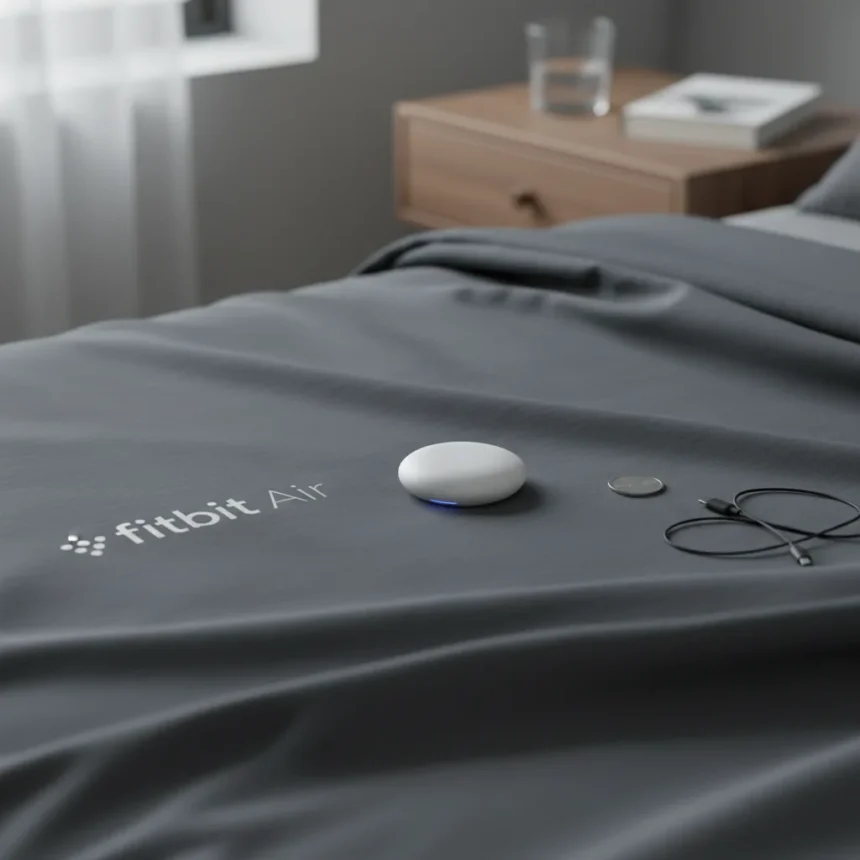
The Fitbit Air sleep tracker is a screen-free, subscription-optional fitness band made by Google, priced at $99 and sold with one band included. It tracks sleep cycles, heart rate, blood oxygen, and body temperature around the clock — without a single notification buzzing your wrist. According to Tom’s Guide senior writer Dan Bracaglia, who tested the device extensively, the Air has changed the way he approaches sleep tracking entirely.
Key Takeaways
- The Fitbit Air costs $99 and includes one band; additional straps start at $34.99 via Amazon.
- It monitors sleep duration, sleep cycles, restlessness, and delivers a daily sleep quality score out of 100.
- The tracker has no screen, no buttons, no onboard GPS, and no NFC — deliberately stripped back by design.
- Tom’s Guide rates the Fitbit Air 21 out of 25, calling it the best no-fuss, subscription-free fitness tracker available right now.
- Two significant limitations — no onboard GPS and limited automatic workout detection — may be dealbreakers for active users.
What Makes the Fitbit Air Sleep Tracker Worth Buying
The Fitbit Air sleep tracker earns its price by doing a small number of things exceptionally well. Its nightly reports cover sleep duration, time spent in each sleep stage, restlessness levels, and a daily sleep quality score out of 100 — detail that rivals trackers costing considerably more. Bracaglia noted that the Air’s sleep and fitness logging is as reliable as Garmin watches priced at roughly 2.5 times the cost, which is a striking comparison for a $99 device.
The hardware itself is deliberately minimal. No screen means no temptation to scroll at 2am. No buttons means nothing to accidentally press in your sleep. What you do get is a continuous heart rate monitor, a blood oxygen saturation reader, and a body temperature sensor — sensors that form the backbone of serious sleep analysis. The data surfaces in the Google Health companion app, formerly the Fitbit app, where the nightly breakdown is genuinely readable and actionable.
Customisation is a legitimate selling point too. The tracker pops out of its strap housing easily, letting you swap between silicone and woven knit bands depending on whether you’re heading to the gym or a dinner. Bracaglia describes the experience as addictive, and it’s easy to see why — it’s one of the few wearables that can genuinely pass as jewellery.


How the Fitbit Air Compares to Whoop and Garmin
The Fitbit Air sleep tracker sits in an interesting competitive position. Against screen-based wearables like the Apple Watch 11, Samsung Galaxy Watch 8, or Google’s own Pixel Watch 4, it’s not trying to compete — it’s offering a deliberate alternative for people who want health data without the smartwatch distractions. The closer comparison is the Whoop 5.0 and Whoop MG, which are also screen-free trackers. The critical difference: Whoop requires a subscription to use at all. The Fitbit Air doesn’t.
That subscription-optional stance is one of the Air’s strongest arguments. Google does offer Google Health Premium at $9.99 per month or $99 per year, which unlocks additional wellness tools including access to a personalised AI wellness Coach. But the core tracking — sleep, heart rate, SpO2, body temperature — works without paying a cent beyond the upfront cost. For a category where ongoing fees have become the norm, that’s a genuinely meaningful distinction.



The Two Reasons the Fitbit Air Falls Short
No onboard GPS is the first and most significant limitation of the Fitbit Air sleep tracker. If you want location data during a run or cycle, you must carry a paired smartphone — the Air has no GPS chip and no altimeter. That’s a real constraint for anyone who trains outdoors regularly and doesn’t want to carry their phone.
The second issue is automatic workout detection. The Air will recognise exercise automatically, but only after 15 minutes of sustained activity, and it covers only a limited range of exercise types. For casual walkers, that’s probably fine. For anyone doing HIIT, CrossFit, or shorter interval sessions, the tracking will either miss sessions entirely or log them inaccurately. These aren’t obscure edge cases — they affect a meaningful portion of the people who might consider buying this device.
Is the Fitbit Air a good option for sleep tracking specifically?
Yes. The Fitbit Air sleep tracker is one of the most capable dedicated sleep monitors at its price point. It delivers detailed nightly breakdowns including sleep stages, restlessness, and a scored sleep quality rating, all without requiring a subscription. For anyone whose primary goal is understanding their sleep rather than tracking athletic performance, it’s a strong choice.
Does the Fitbit Air require a Google Health Premium subscription?
No. The core features — sleep tracking, heart rate monitoring, SpO2, body temperature, and basic fitness logging — work without any subscription. Google Health Premium at $9.99 per month or $99 per year adds extra tools including a personalised wellness Coach, but it’s entirely optional.


How does the Fitbit Air compare to Whoop for sleep tracking?
Both the Fitbit Air and the Whoop 5.0 are screen-free trackers focused on recovery and sleep data. The key difference is cost structure: Whoop requires an ongoing subscription to access its data, while the Fitbit Air’s sleep and health tracking works without one. At $99 upfront with no mandatory monthly fee, the Air is the more accessible option for most people.
The Fitbit Air sleep tracker isn’t trying to replace your smartwatch, and it shouldn’t. What it does — detailed, reliable sleep analysis in a lightweight, screen-free package at $99 — it does well enough to justify the purchase for the right person. If you train seriously outdoors or do short, varied workouts, the GPS gap and limited exercise detection will frustrate you. Everyone else gets a genuinely useful health tool that stays out of your way, which is rarer than it sounds.
Where to Buy
Edited by the All Things Geek team.
Source: Tom's Guide