





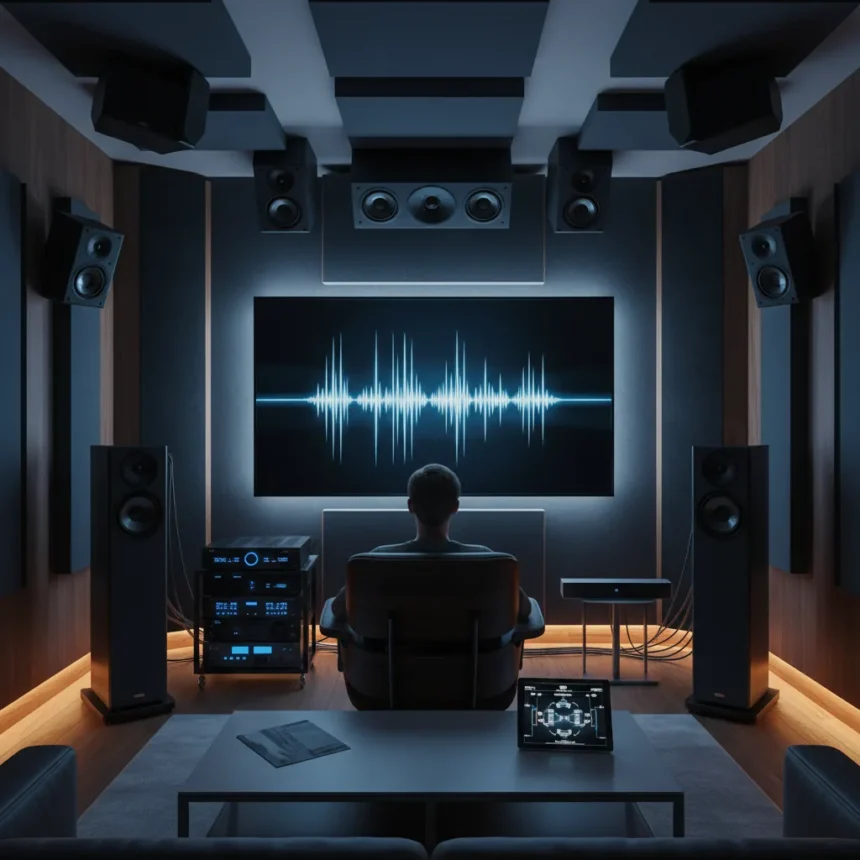
Dolby Atmos surround systems fundamentally altered how sound engineers approach movie soundtracks. When Dolby introduced object-based audio to cinema, something unexpected happened: nearly every mixer independently made the same creative choices without being told to do so. That convergence reveals a deeper truth about how the format works and why it exposes the limitations of soundbars.
Key Takeaways
- Dolby Atmos is object-based audio that adapts to whatever speakers you have, requiring discrete amplification for each speaker.
- Mixers instinctively changed soundtrack construction after Atmos arrived, suggesting the format fundamentally shifted creative possibilities.
- Atmos mixes are created from original sound elements, not upmixed from existing stereo or 5.1 tracks.
- Proper surround setups reveal Atmos clarity and spatial detail that soundbars cannot reproduce.
- Height channels and discrete speaker placement preserve dialogue clarity while adding immersion and openness.
How Dolby Atmos Surround Systems Changed Soundtrack Design
Dolby Atmos surround systems work fundamentally differently from traditional multichannel audio. Rather than locking sounds to fixed channels like left, center, right, and surround, Atmos treats audio as discrete objects that the processor positions in three-dimensional space. When you set up an Atmos system, the processor detects your speaker configuration and calculates in real time where each sound object should be placed. This means the same Atmos mix plays correctly on a 5.1 setup, a 7.1 system, or a full height-channel configuration without requiring separate dedicated mixes.
What shocked Dolby executives was that once this flexibility became available, mixers started making identical creative decisions on their own. A Dolby exec described the phenomenon: almost every mixer, without being told to do so, instinctively applied the same approach to soundtrack construction. They were not following a mandate or a technical requirement. Instead, the architecture of Atmos itself—its object-based flexibility and spatial capability—prompted them to think about sound design differently. That instinctive convergence suggests Atmos did not just offer a new playback format; it opened a new creative frontier.
Why Dolby Atmos Surround Systems Demand Proper Speaker Placement
The real value of Dolby Atmos surround systems emerges only when you have discrete speakers positioned around the listening space. The format is designed to place sounds as individual objects, which means clarity and separation improve dramatically when each speaker has its own amplification and placement. In a restaurant scene, for example, two background conversations that become muddled and indistinct in standard 5.1 remain clear and separate in Atmos because the format can position each conversation as a distinct object rather than blending them into a single surround channel.



This is where soundbars fail. A soundbar attempts to simulate surround sound by bouncing audio off walls or using psychoacoustic tricks to create phantom channels. But Dolby Atmos surround systems rely on actual discrete speakers in actual locations. Height channels add vertical energy and realism. Side and rear speakers place supporting material where it belongs instead of fighting for space in a single stereo image. The result is what Dolby representatives call clarity and openness—the feeling that the mix is no longer compressed into left-right channels but distributed naturally across the room.
The Creative Revolution Behind Dolby Atmos Surround Systems
Before Atmos, sound engineers had to create separate mixes for stereo, 5.1, 7.1, 9.1, 11.1, IMAX, and other specialized formats. Each layout required its own dedicated remix from the original sound elements. Dolby Atmos surround systems eliminated that burden. A single Atmos mix, created from the original sound elements, can be downmixed and rendered into any legacy format the processor needs. This is not upmixing—a process that artificially spreads stereo or 5.1 audio into more channels. Instead, Atmos mixes are built ground-up specifically for the object-based format.



That difference in approach changed how mixers think about quiet scenes. In traditional mixes, silence means the absence of sound. In Atmos, quiet scenes become opportunities for detail. As Dolby representatives explained, when the room breathes a little more, listeners hear every little nuance. The spatial separation provided by proper surround setups means dialogue, ambient sound, and subtle effects remain distinct even at low volumes. A soundbar cannot deliver this effect because it lacks the physical speaker separation required to create true spatial clarity.
Dolby Atmos Surround Systems vs. Traditional Multichannel Audio
The difference between Dolby Atmos surround systems and standard 5.1 or 7.1 setups is not merely a matter of adding more speakers. It is a fundamental shift in how sound is organized. Traditional multichannel formats assign sounds to fixed channels. Atmos assigns sounds to positions in space that adapt to your specific room configuration. This flexibility means immersive mixing can place core musical elements toward the front, supporting material to the sides and rear, and effects above, all while maintaining clarity. Panning and motion guide attention without changing level, so quiet moments stay quiet while remaining detailed.
Soundbars attempt to simulate this spatial experience through psychoacoustic tricks and wall reflections. But they cannot replicate the clarity and openness that actual discrete speakers deliver. When Dolby Atmos surround systems place a sound above your head using a height channel, you hear it above you. When a soundbar attempts the same effect, it creates an illusion. For content specifically mixed for Atmos—which now includes major theatrical releases—that illusion is insufficient.
What Changed When Dolby Atmos Surround Systems Arrived
The arrival of Dolby Atmos surround systems prompted a creative awakening in the mixing community. Engineers realized they could stop thinking about how to cram sounds into five or seven fixed channels and start thinking about where sounds should naturally exist in three-dimensional space. That shift in perspective led nearly every mixer to make similar decisions about soundtrack construction, all without explicit instruction. They were responding to the creative possibilities the format unlocked.



This creative convergence has real implications for how you experience movies at home. If you invest in a proper surround system with discrete speakers and amplification, you hear the benefits of that instinctive mixer consensus. You get clarity, openness, and detail that matches the engineer’s original intent. If you rely on a soundbar, you hear an approximation—a good approximation, perhaps, but still a compromise. The format was designed for proper surround setups, and that design choice is now baked into how modern soundtracks are mixed.
Is Dolby Atmos worth upgrading for if I have a soundbar?
If your soundbar supports Dolby Atmos decoding, you will hear the format, but you will miss the spatial benefits that proper surround systems deliver. A soundbar can reproduce the object-based mix, but it cannot place sounds as discrete objects in your room because it lacks the speaker separation required for true spatial clarity. For the best Atmos experience, you need actual surround speakers and ideally height channels.
Can I get Dolby Atmos surround systems on a budget?
You do not need an expensive setup to experience Dolby Atmos surround systems effectively. A basic 5.1 configuration with a quality receiver, a center channel, and proper left-right-surround speaker placement will reveal the format’s advantages over soundbars. The key is discrete amplification and actual speaker placement, not cost. Even modest surround speakers positioned correctly will outperform a premium soundbar.
How do Dolby Atmos surround systems compare to height channels in music?
Dolby Atmos surround systems were originally designed for cinema, but the principles apply to music as well. Height channels can add vertical energy and realism to musical mixes, creating a sense of space and dimension that traditional stereo or 5.1 cannot match. The same object-based approach that gives clarity to dialogue and effects in movies enhances musical separation and detail.
The real lesson from Dolby Atmos surround systems is that format innovation does not just add features—it changes how creators think about their craft. When nearly every mixer independently converged on the same creative choices, they were not following a script. They were responding to a new tool that made certain creative decisions feel natural and inevitable. If you want to hear what they heard, what they intended, you need the same tool they used: proper surround speakers positioned in your room, not a soundbar trying to fake spatial sound. That is the case Atmos makes, not through marketing, but through the instinctive choices of the engineers who mix for it.
Edited by the All Things Geek team.
Source: TechRadar




