


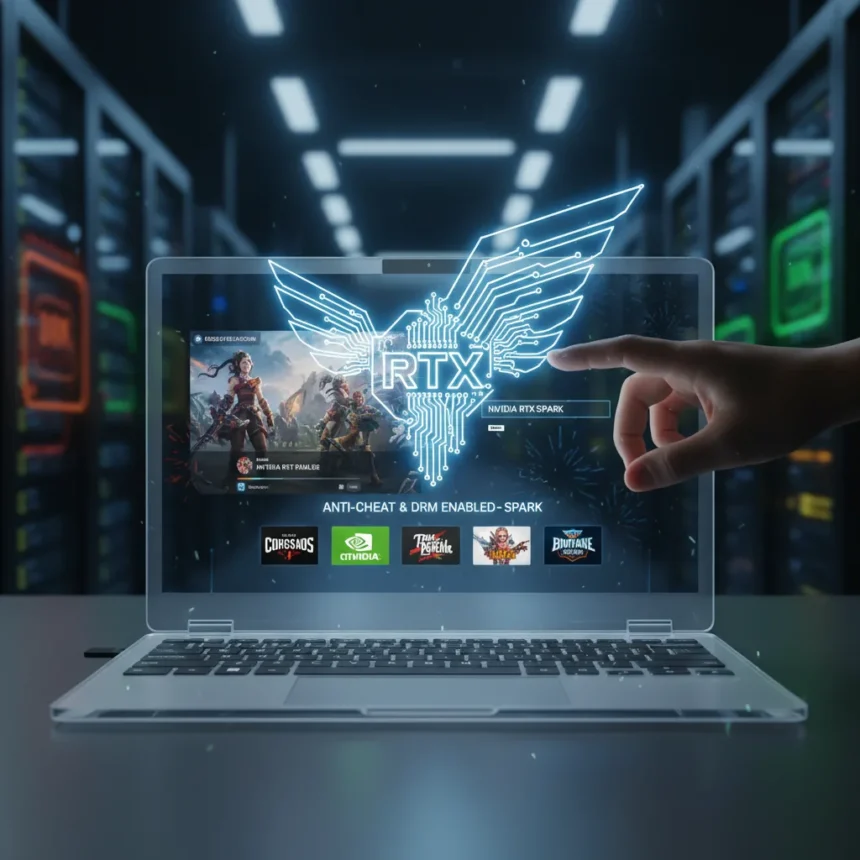
Windows on Arm gaming compatibility has been a persistent problem for developers and players alike. Nvidia’s claim that RTX Spark will support all major anti-cheat and DRM technologies represents a potential turning point, though the full scope and timeline of these capabilities remain unclear.
Key Takeaways
- Nvidia and Microsoft are working together to bring anti-cheat software support to RTX Spark on Windows on Arm.
- Fortnite is currently the only major multiplayer game with a native ARM64 port and Easy Anti-Cheat support on Windows on Arm.
- RTX Spark support for Valorant and Denuvo anti-cheat systems is expected to expand compatibility significantly.
- The move addresses a major barrier preventing popular multiplayer titles from running natively on Arm-based devices.
- This compatibility push signals a broader shift in the Windows on Arm gaming ecosystem.
Why Windows on Arm Gaming Matters Right Now
The Windows on Arm gaming ecosystem has suffered from a fundamental incompatibility problem. Most popular multiplayer games rely on anti-cheat software that simply does not work on Arm processors, forcing players on these devices to either use emulation or accept that entire categories of games are off-limits. This is not a minor inconvenience—it is a hard barrier that has prevented Arm-based Windows devices from competing as gaming platforms.
Fortnite currently stands as the primary exception, offering a native ARM64 port with Easy Anti-Cheat support. That single exception proves the concept is possible but also highlights how limited the current landscape remains. Every other major multiplayer title—Valorant, Call of Duty, Apex Legends, Counter-Strike 2—remains inaccessible to Arm Windows users without workarounds.
The RTX Spark Promise and What It Could Change
Nvidia’s announcement that RTX Spark will support all major anti-cheat and DRM technologies directly addresses this bottleneck. By enabling native compatibility with systems like Valorant’s anti-cheat and Denuvo’s DRM protection, RTX Spark could unlock access to a much broader game library on Windows on Arm devices. The collaboration between Microsoft and Nvidia suggests this is not a one-off fix but part of a coordinated platform strategy.


What makes this significant is the precedent it sets. Once anti-cheat vendors implement support for a major new architecture, subsequent game releases can follow more easily. The current situation—where only Fortnite has made the effort—reflects the chicken-and-egg problem plaguing Arm gaming. Developers see little reason to port games to an architecture with a tiny player base, and players avoid Arm devices because games do not work on them. Breaking this cycle requires simultaneous action from multiple parties, which is exactly what this partnership appears to attempt.
How This Compares to Current Arm Gaming Limitations
Today, Arm Windows users face a stark choice: accept a severely limited game library, rely on emulation layers that introduce latency and compatibility issues, or abandon Arm devices for x86 alternatives. This is not a theoretical problem—it is why Arm-based Windows laptops have struggled to gain traction in the gaming market despite their advantages in battery life and thermal efficiency.


RTX Spark’s anti-cheat and DRM support could flip this calculation. Instead of asking whether a game runs on Arm, the question becomes whether the publisher has bothered to optimize for it. That is a much lower barrier than the current situation, where the answer is almost always no due to technical incompatibility rather than economic choice.
What Remains Uncertain
Nvidia’s claim that RTX Spark will support all major anti-cheat and DRM technologies is ambitious, but several questions linger. The timeline for when games will actually ship with this support is unclear. Vendor cooperation is necessary—each anti-cheat provider must implement Arm support, and each publisher must decide to ship an Arm build. Neither is guaranteed simply because the technical capability exists.
Additionally, the scope of RTX Spark’s actual deployment and market penetration is unknown. A feature that works flawlessly on new hardware means little if the hardware remains niche. Widespread adoption depends on pricing, availability, and whether manufacturers actually build Arm Windows devices with RTX Spark.
Does RTX Spark solve Windows on Arm gaming completely?
Not entirely. While native anti-cheat support removes a major technical barrier, it does not guarantee that publishers will immediately port their games to Arm. Some developers may deprioritize Arm optimization if the addressable market remains small. However, it does eliminate the primary technical excuse for non-support, which is progress.

Why is Fortnite the only major game with Arm anti-cheat support today?
Epic Games invested in a native ARM64 port of Fortnite with Easy Anti-Cheat support because Fortnite’s scale and profitability justified the engineering effort. Most other publishers have not made this investment because the Arm Windows gaming market is currently too small to justify the cost, creating a self-reinforcing cycle of limited compatibility.
Will this support come to existing games or only new releases?
The research brief does not specify whether RTX Spark support will enable updates to existing games or apply only to new releases. This distinction matters significantly—retrofitting anti-cheat systems to older titles requires vendor cooperation and publisher resources, which may not materialize for legacy games.
Nvidia’s commitment to Windows on Arm gaming compatibility through RTX Spark represents a meaningful step forward, but it is not a silver bullet. The real test comes when publishers actually ship games with Arm support and players can verify that the experience matches x86 alternatives. Until then, RTX Spark remains a promise rather than a solution.
Edited by the All Things Geek team.
Source: Tom's Hardware