






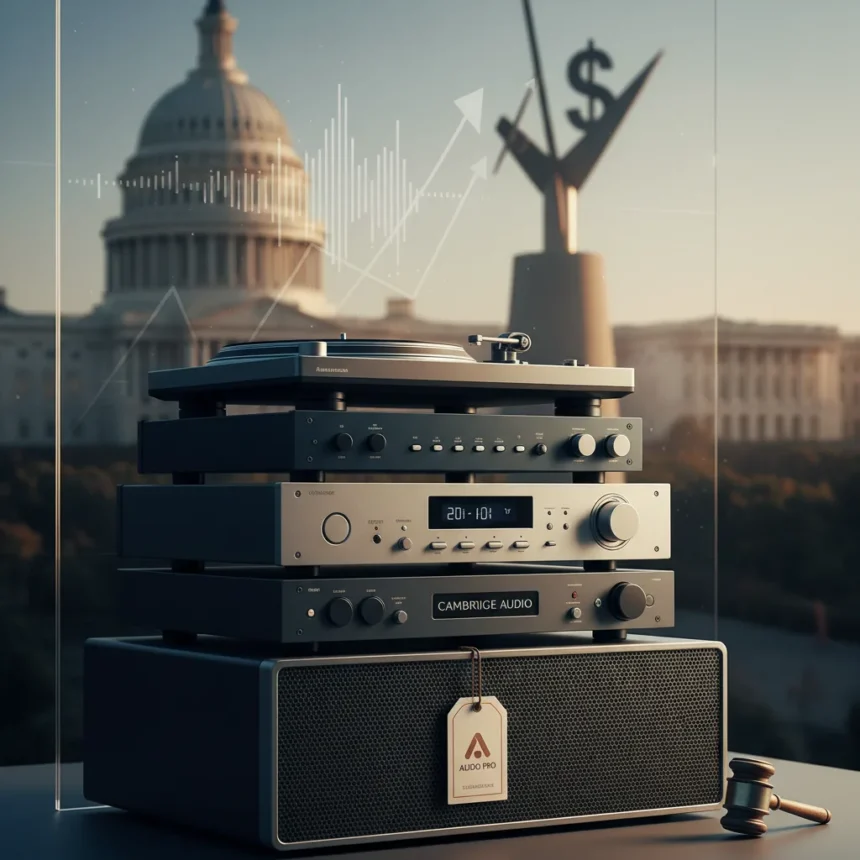
Hi-fi price increases driven by tariffs are no longer theoretical—they are happening now. Audio Pro has already confirmed it will raise prices, and Cambridge Audio expects to follow suit in the near future, signaling a broader industry shift that could reshape how consumers buy speakers, turntables, and separates.
Key Takeaways
- Audio Pro confirmed price increases; Cambridge Audio expects to raise prices soon due to tariffs.
- US tariffs affect parts and manufacturing for audio brands across multiple regions.
- Several brands monitoring tariffs expect product costs to rise if economic conditions don’t improve.
- Sony launched new Bluetooth turntables at £299 and £399, available now.
- Sony’s proposed merger with TCL could reshape the home entertainment landscape by 2027.
Why Hi-Fi Price Increases Matter Right Now
The audio industry depends on global supply chains. Many manufacturers source components and perform assembly in regions now affected by US tariffs, creating immediate cost pressure that manufacturers cannot absorb indefinitely. Audio Pro’s decision to increase prices is not an isolated move—it is a canary in the coal mine. Cambridge Audio’s expectation that it will need to follow suit suggests this is systemic, not limited to one or two brands. Several other manufacturers, speaking off the record, are monitoring the situation closely and expect product costs to rise soon if the economic climate does not change. For consumers, this means the window for purchasing hi-fi equipment at current prices may be closing.
The timing is particularly significant because the hi-fi market already operates on thin margins. Unlike consumer electronics that rely on volume and aggressive pricing, premium audio depends on perceived value and customer loyalty. When hi-fi price increases arrive, they stick—manufacturers do not typically roll prices back once tariffs ease. Buyers considering a new turntable, amplifier, or speaker system should factor in that today’s prices may look like bargains within months.
New Sony Turntables Launch Amid Price Pressure
Sony has introduced two new Bluetooth turntables that arrive just as the industry braces for broader cost increases. The Sony PS-LX3BT costs £299 (€350 / AU$469) and the PS-LX5BT costs £399 (€460 / AU$599), with both models on sale now. These represent fresh options in Sony’s vinyl lineup, adding wireless convenience to an otherwise traditional format. The timing is curious—launching new turntables as tariff-driven price hikes loom suggests Sony is positioning these models before costs rise further.


The Bluetooth integration addresses a genuine consumer pain point: connecting turntables to modern wireless speakers and headphones without running cables. For buyers who have invested in wireless audio ecosystems, these Sony turntables offer a bridge between analog sources and digital convenience. However, prospective buyers should understand that similar tariff pressures affecting the broader hi-fi market will eventually reach turntable pricing as well.
Sony and TCL’s Proposed Home Entertainment Merger
The week’s biggest structural news involves Sony and TCL. TCL plans to acquire a 51 percent share of Sony’s home entertainment business, a deal that represents a fundamental shift in how these companies operate. However, this is not done—both companies have announced their intent, but the transaction is not complete. If approved, the merger could close in 2027. Sony’s Bravia branding will continue to exist in some form even if the deal goes through, meaning consumers will still see Sony’s TV lineup on store shelves.



This proposed merger reflects broader consolidation in the TV market. Sony’s decision to cede control of its home entertainment division suggests the company sees advantages in partnering with TCL’s manufacturing expertise and cost structure. For consumers, the immediate impact is uncertainty—product roadmaps may shift, pricing strategies may change, and the balance between premium and budget models could realign. The 2027 completion timeline means this story will unfold over the next two years, with potential surprises along the way.
What Else Made Waves This Week
Beyond tariff anxiety and Sony’s turntables, the week delivered fresh products and announcements. LG announced plans for a new range of affordable OLEDs, signaling that the company believes it can deliver better value in the OLED TV segment. Bowers & Wilkins unveiled the 707 Prestige Edition standmount speakers, adding to the premium speaker market. Mission introduced the 778CDT CD transport, described as competitively priced, launching at the end of January for £449 (around $600 / AU$886). What Hi-Fi? also highlighted Sony’s five-star Bravia 7 Mini LED TV and five-star Sennheiser headphones among the week’s standout reviews.
Should I buy hi-fi equipment now before tariff-driven price increases hit?
If you have been considering a purchase, the window is closing. Audio Pro’s confirmed price increases and Cambridge Audio’s expectation to follow suit suggest that tariff-driven costs will reach retail prices within weeks or months. Delaying a purchase risks paying more later, especially for turntables, speakers, and separates that manufacturers cannot easily discount once prices rise.
Will the Sony and TCL merger affect Bravia TV quality?
The merger is not finalized and will not complete until 2027 at the earliest. Sony’s Bravia branding will continue, but product strategy and manufacturing may shift over time. For now, current Bravia models like the five-star Bravia 7 represent Sony’s current engineering and quality standards.


Are the new Sony Bluetooth turntables worth buying before prices increase?
The Sony PS-LX3BT and PS-LX5BT offer Bluetooth convenience at reasonable current pricing—£299 and £399 respectively. If wireless turntable connectivity appeals to you, buying now locks in today’s prices before tariff-driven increases take effect across Sony’s lineup.
The hi-fi industry stands at an inflection point. Tariffs are real, price increases are confirmed, and major structural changes like the Sony-TCL merger are underway. For consumers, the message is clear: if you have been on the fence about upgrading your audio or video setup, waiting is no longer a safe strategy. The next few months will determine whether you buy at 2025 prices or 2026 prices—and the gap between them is widening.
Where to Buy
Edited by the All Things Geek team.
Source: What Hi-Fi?




