




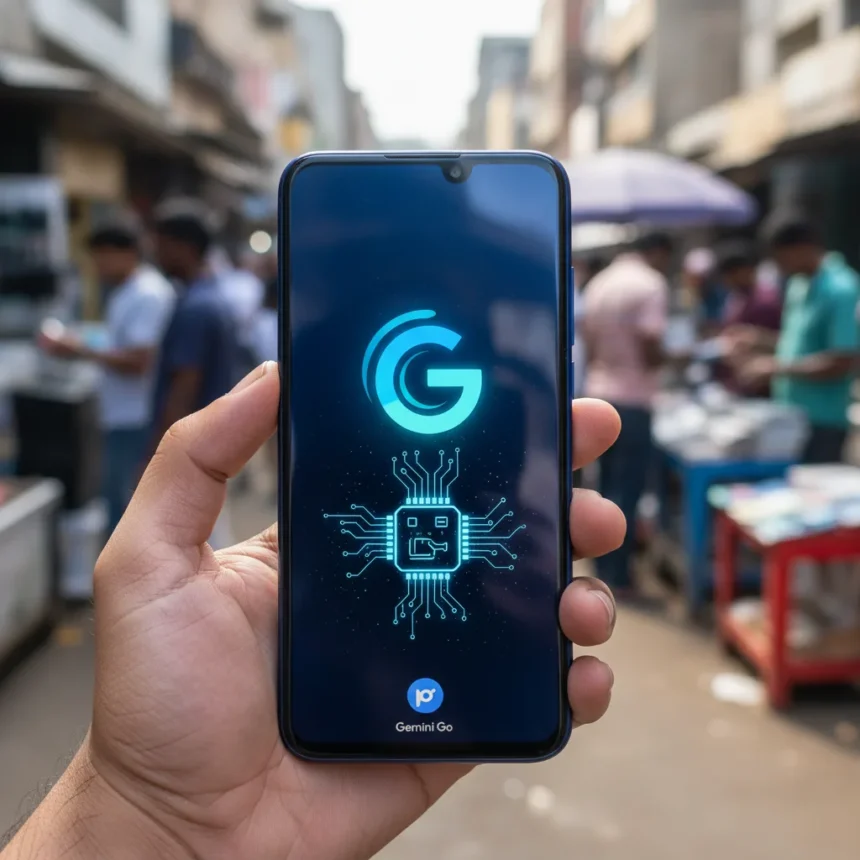
Gemini AI is finally coming to Android Go, Google’s lightweight operating system for the world’s cheapest Android phones. This rollout marks a significant shift in how Google is distributing its most advanced AI features, moving beyond premium flagships to reach devices that typically cost under $200 and serve billions of users in emerging markets.
Key Takeaways
- Gemini AI is rolling out to Android Go phones, extending AI features to budget devices previously left behind.
- Android Go is Google’s lightweight OS for affordable phones with limited hardware resources.
- This rollout signals Google’s strategy to make Gemini a default Android feature across all price tiers, not just premium devices.
- The expansion reflects a broader Google push to integrate AI across the entire Android ecosystem, including wearables, cars, and TVs.
- Budget users will gain access to smarter AI capabilities on devices that were never designed for advanced machine learning.
Why Gemini on Android Go Matters Right Now
For years, AI features have been a privilege of expensive phones. Flagship devices got Gemini first, midrange phones followed months later, and budget Android phones were often forgotten entirely. The arrival of Gemini on Android Go changes that equation. This is not just a technical achievement—it signals that Google views AI as essential infrastructure, not a luxury add-on. Budget phone users in India, Southeast Asia, Africa, and Latin America, who collectively represent billions of devices, are finally getting access to the same AI assistant that premium users have enjoyed.
The timing matters because Android Go phones operate with severely constrained hardware. These devices typically have limited RAM, slower processors, and modest storage. Getting Gemini to work reliably on such hardware demonstrates that Google has optimized its AI for real-world conditions, not just lab benchmarks. This is the opposite of how tech companies usually roll out features—premium first, budget later, if ever. Google is inverting that playbook.
What This Means for Google’s AI Strategy
Google’s broader push is to make Gemini the central intelligence layer across all Android devices and beyond. Android Central’s reporting shows that Google is simultaneously rolling out Gemini features to Wear OS smartwatches, Android Auto in cars, Google TV on streaming devices, and even experimental XR glasses. The Android Go expansion fits into this larger vision: an ecosystem where Gemini is not optional, not premium, but foundational.

This approach differs fundamentally from how competitors handle AI. Apple kept Intelligence exclusive to iPhone 15 Pro and newer, creating a clear hardware tier. Samsung pushed Galaxy AI across its lineup but still favored newer devices. Google, by contrast, is pushing Gemini downward aggressively, making it work on devices that other companies have essentially abandoned from an innovation standpoint. That strategy reflects confidence that Gemini can deliver value even on constrained hardware, or at least that reaching billions of budget users is worth the engineering investment.
The Challenge of AI on Budget Hardware
Running advanced AI on Android Go phones is genuinely difficult. These devices lack the neural processing units and ample memory that make Gemini snappy on flagship phones. Google will likely need to use on-device processing for some features and cloud connectivity for others, balancing privacy, latency, and functionality. The company has experience with this—Google Assistant has worked on cheap phones for years—but Gemini is more ambitious.



Budget users also tend to have less reliable internet connectivity than premium phone buyers, which complicates any cloud-dependent AI features. Google’s engineering teams will need to ensure that Gemini degrades gracefully when bandwidth is limited, offering useful results even on slow connections. These constraints are real, but they are also solvable problems that reflect the actual conditions billions of people live in.
What Features Will Android Go Users Actually Get?
The research brief does not specify which Gemini features are arriving on Android Go or whether all capabilities will be available. This is an important caveat. Google typically rolls out AI features selectively based on hardware capabilities, so budget phones may not get every feature that flagship users enjoy. However, the core Gemini experience—text-based queries, search integration, and basic AI assistance—should be available. Advanced features like image generation, video analysis, or complex reasoning tasks may be limited or absent on Android Go devices.
Users should expect a functional but simplified version of Gemini, not a feature-for-feature replica of what Pixel 9 Pro users experience. That is not a criticism—it is realistic. A $150 phone cannot deliver the same AI performance as a $1,200 flagship. What matters is that budget users are no longer excluded from AI entirely, which was the situation before this rollout.
Is Gemini on Android Go free?
Yes. Gemini is a core Google service integrated into Android, so it comes as part of the operating system. There is no separate subscription or payment required to use Gemini on Android Go phones. Like other Google services on Android, Gemini is free to users, though a Google account is required.



Will Gemini on Android Go work offline?
Most advanced Gemini features require an internet connection because they rely on Google’s cloud servers for processing. Android Go devices with limited connectivity may experience delays or reduced functionality. Some basic features may work on-device, but the full Gemini experience depends on reliable connectivity.
How does Gemini on Android Go compare to older Google Assistant?
Gemini is significantly more capable than the older Google Assistant, with better natural language understanding, reasoning, and integration with Google services. However, on Android Go phones, Gemini’s capabilities will be constrained by hardware limitations. Budget users will get a smarter assistant than they had before, but not the full power of Gemini on flagship devices.
Google’s decision to bring Gemini to Android Go is pragmatic and ambitious at once. Pragmatic because it acknowledges that billions of people use cheap phones and deserve access to modern AI. Ambitious because it forces Google to solve real engineering problems rather than simply marketing AI as a premium feature. For budget Android users, this rollout is long overdue. For Google, it is a bet that AI’s real value lies not in impressing tech reviewers with flagship performance, but in reaching the world’s majority who cannot afford premium devices.
Edited by the All Things Geek team.
Source: Android Central