


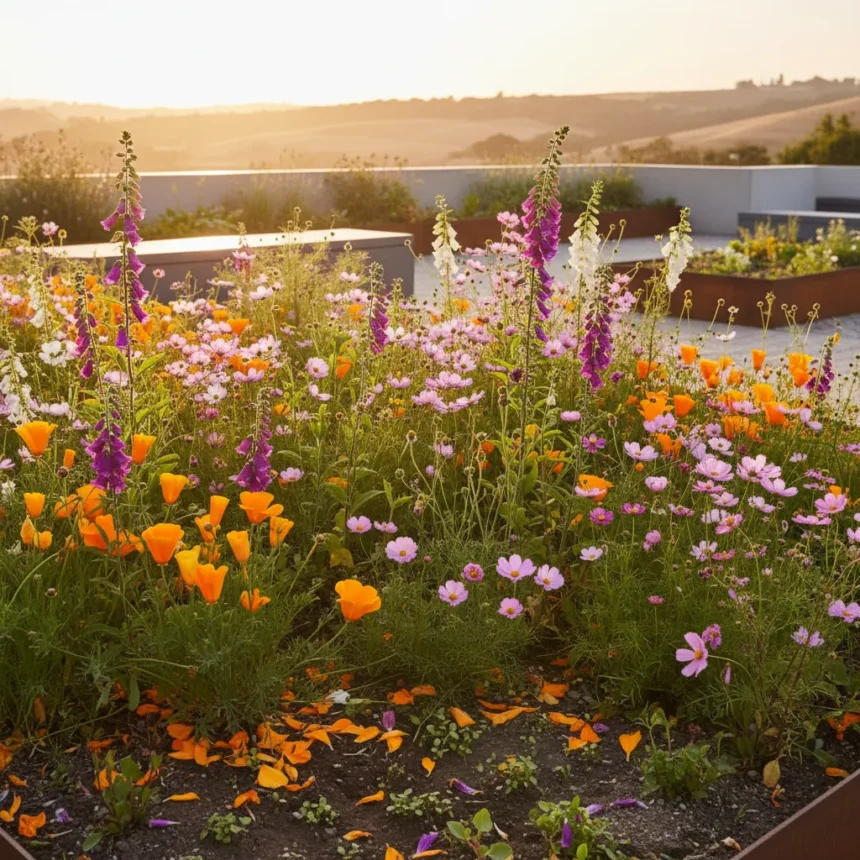
Self-seeding flowers are plants that naturally drop seeds and regenerate the following season, eliminating the need to purchase new seed packets each year. Rather than treating your garden as an annual expense, you can build a fuller, more established landscape by choosing flowers that reseed themselves. This approach turns gardening into a more sustainable, budget-conscious practice while maintaining visual interest across seasons.
Key Takeaways
- Self-seeding flowers eliminate yearly seed-buying costs and effort.
- California poppies create a tremendous display with orange and red tones when grown in bulk.
- Cosmos are annual flowers that self-seed abundantly despite not surviving winter frost.
- Foxgloves are short-lived perennials or biennials that remain established through self-seeding.
- Rose campion blooms more prolifically in its second year and regularly reseeds in cottage gardens.
Why Self-seeding flowers Matter for Budget Gardeners
Most gardeners spend money replanting annuals every spring, treating the garden as a seasonal reset. Self-seeding flowers disrupt this cycle by dropping seeds naturally during the growing season, which then germinate and bloom the following year without your intervention. This means a California poppy planted once can return for multiple years with fresh blooms appearing automatically. The financial savings compound over time, especially for gardeners managing large beds or borders where seed costs add up quickly.
The practical benefit extends beyond cost. Once you establish self-seeding varieties, your garden becomes more resilient and self-sufficient. You spend less time planning seed purchases and more time enjoying the results. This approach also suits gardeners who want a naturalistic, cottage-style aesthetic where plants appear to have established themselves organically rather than following strict design rules.
California Poppies Create Bold Color Without Replanting
California poppies are technically short-lived perennials, though they are often treated as annuals in colder climates. What makes them valuable for self-seeding strategies is their ability to drop seeds during the growing season, which then produce fresh blooms the following season. When grown in bulk, California poppies create a tremendous display with orange and red tones that dominate the landscape.


The appeal lies in their low-maintenance nature combined with visual impact. Unlike traditional annuals that require replanting each spring, California poppies establish themselves naturally once introduced to your garden. They thrive in sunny locations and poor soil, making them adaptable to various garden conditions. The color intensity they provide rivals more labor-intensive flowering plants but without the yearly replanting burden.
Morning Glory and Foxglove: Self-seeders for Vertical Interest
Morning glory self-seeds readily, producing seedlings the following season that climb trellises and fences with minimal effort. This makes them ideal for gardeners seeking vertical interest without annual installation. The seedlings emerge naturally where the parent plant dropped seeds, though you can thin or relocate them as needed.



Foxgloves occupy a similar niche but with different visual characteristics. These short-lived perennials or biennials self-seed readily, which means they remain established in the garden even though individual plants may not survive multiple seasons. This distinction matters: foxgloves do not live indefinitely, but their self-seeding habit ensures continuous presence. They excel in partial shade and woodland-style gardens, offering tall spires of flowers that contrast with lower-growing plants.
Cosmos and Rose Campion: Hardy Performers Across Conditions
Cosmos are low-maintenance and pretty hardy flowers with daisy-shaped blooms that survive a range of conditions. However, these annual flowers will not survive outside winter frost, which means they cannot overwinter in cold climates. The key advantage is that they self-seed abundantly, so you can create a similar display once temperatures rise again. This makes cosmos ideal for gardeners in areas with harsh winters who still want reliable color without replanting effort.
Rose campion produces delicate flowers in pink, white, and purple tones and is also called crown pink, rabbit’s ears, and bloody William. As a short-lived perennial or biennial, rose campion blooms more prolifically in its second year. The flowers appear from late spring to late summer, extending the visual season significantly. Rose campion regularly reseeds, so it is often found in cottage landscape décor and on rocky surfaces where it establishes itself naturally. This adaptability to poor, rocky soil makes it valuable for gardeners with challenging terrain.
How Self-seeding Flowers Compare to Traditional Annuals
Traditional annuals require purchasing new seed or transplants each spring, then removing plants at season’s end. Self-seeding flowers break this cycle by handling their own propagation. While some self-seeders like cosmos are technically annuals that cannot survive frost, their self-seeding habit eliminates the replanting step. Others, like foxgloves and rose campion, are perennials or biennials that persist through their own reproduction rather than long individual lifespans.



The trade-off is control. Self-seeding flowers spread where seeds naturally fall, which may not align perfectly with your garden design. Seedlings might emerge in unexpected locations, requiring thinning or removal. For gardeners comfortable with a more naturalistic aesthetic, this unpredictability adds charm. For those preferring rigid design structure, it may feel chaotic. Understanding this balance helps you choose self-seeders strategically within your garden zones.
Can you control where self-seeding flowers spread?
Self-seeding flowers spread based on where seeds naturally fall, so precise control is limited. However, you can manage them by deadheading spent flowers to prevent seeding in unwanted areas, or by thinning seedlings that emerge outside your preferred zones. Some gardeners allow self-seeders to dominate specific beds while removing them elsewhere, creating zones of controlled naturalism.
Do self-seeding flowers work in all climates?
Self-seeding success depends on climate and plant type. Cosmos and California poppies may require warm seasons to thrive, while foxgloves and rose campion adapt to cooler regions. The key is matching the plant’s hardiness to your local conditions. Some self-seeders like cosmos will not survive winter frost but will reseed the following spring, making them reliable in seasonal gardens.
Are self-seeding flowers considered weeds?
Self-seeding flowers occupy a gray zone between cultivated plants and weeds. They spread without your direct intervention, which some gardeners view as invasive and others celebrate as naturalistic beauty. The distinction often comes down to whether seedlings appear where you want them. Strategic placement and management help keep self-seeders feeling intentional rather than uncontrolled.
Building a garden around self-seeding flowers shifts the relationship between gardener and landscape. Instead of replanting annually, you become a steward of plants that propagate themselves, reducing cost and labor while creating a more established, resilient garden. California poppies, cosmos, foxgloves, and rose campion prove that abundance does not require yearly seed purchases—just the right plants and patience to let nature handle the rest.
Edited by the All Things Geek team.
Source: Tom's Guide