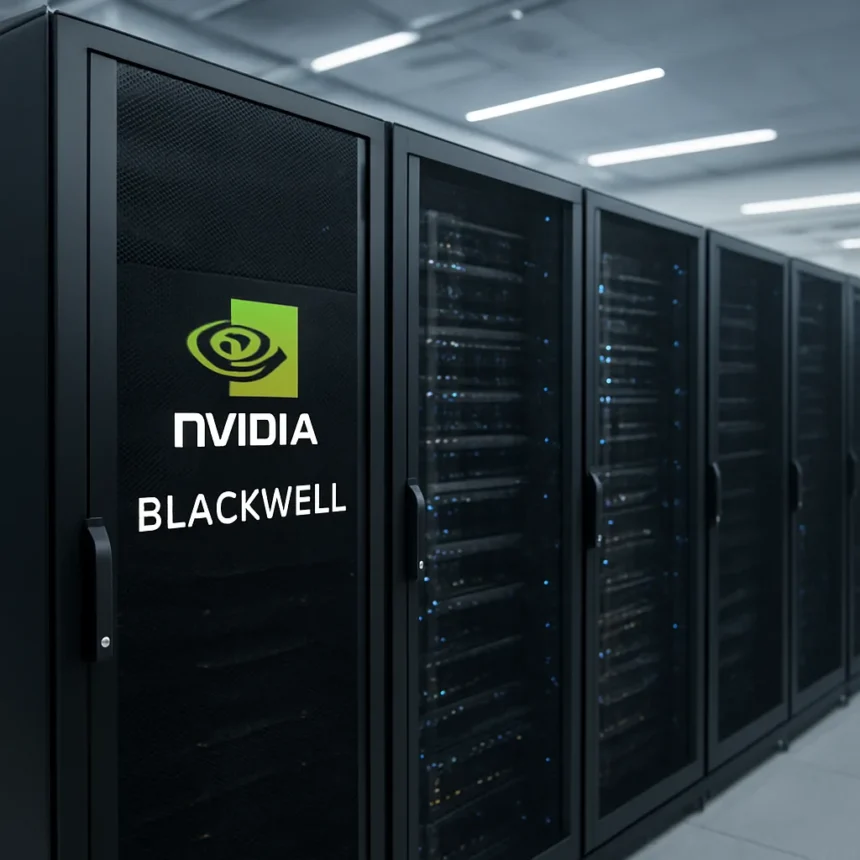
US AI export controls were supposed to keep cutting-edge Nvidia chips out of Chinese hands, but ByteDance’s latest move in Malaysia suggests the policy has a runway-sized loophole. The Chinese parent company of TikTok is partnering with Southeast Asian startup Aolani Cloud to deploy approximately 500 Nvidia Blackwell computing systems in Malaysia, totaling around 36,000 B200 chips — at a cost of nearly US$2.5 billion. Nvidia has confirmed no objections, and the deal is fully compliant with current regulations. That compliance is precisely the problem.
How ByteDance Is Routing Around US AI Export Controls
US AI export controls restrict the sale of advanced Nvidia chips directly to Chinese data centers. They say nothing about a Chinese company accessing those chips through a cloud operator headquartered in Southeast Asia. Aolani Cloud, the Malaysian startup at the center of this deal, has stated it fully complies with all applicable export control regulations. Hardware assembly is handled by Aivres, a company that builds systems using Nvidia chips. The cluster sits in Malaysia. ByteDance accesses it remotely. The letter of the law is satisfied; the spirit of it is not.
This is not a one-off workaround. Alibaba is training its Qwen large language model using leased compute in Singapore and Malaysia. ByteDance is also deploying B200 chips in Indonesia and has been training its Doubao LLM on overseas infrastructure. A pattern is forming across Southeast Asia, and it is accelerating precisely because China has suspended Nvidia chip sales to new domestic data centers — pushing Chinese AI firms to build their compute base abroad instead.
What 36,000 Nvidia Blackwell B200 Chips Actually Means
The scale of this cluster deserves context. Each Nvidia B200 chip delivers 20x FP4 AI compute compared to the previous generation, with 192GB of HBM3e memory and 8 TB/s memory bandwidth. Against the H100 architecture that dominated AI training just two years ago, the B200 provides 5x performance on critical workloads. According to Jason Wei of Epoch AI, the Malaysian cluster scales compute capacity 30x compared to Hopper inference. Thirty times. That is not an incremental upgrade — that is a generational leap handed to a Chinese AI company through a technically compliant offshore arrangement.


ByteDance plans to use this infrastructure for AI model training across its entire product portfolio: Douyin and TikTok (which together serve 1.7 billion users), customer service systems, recommendation algorithms, and global AI products including Seedance, its AI video generation offering. This is not a research experiment. It is production-scale AI infrastructure designed to power one of the world’s most-used platforms.
The Regulatory Gap US AI Export Controls Have Not Closed
An Nvidia spokesperson acknowledged that the regulatory environment is effectively eliminating the capabilities of Nvidia’s premier GPUs to compete in the domestic Chinese market. That framing is revealing — Nvidia frames this as a competitive disadvantage for itself in China, not as a policy failure for the US government. The reality is that ByteDance is projected to invest US$23 billion in AI in 2026, with half of that budget going toward processors. Reportedly, the company has around $14 billion worth of Nvidia AI GPU purchases planned for 2026 alone. None of that spend is blocked by current export controls, because none of it is happening inside China.


The Trump-era H20 embargo and subsequent diffusion rule rollback tightened controls on lower-tier chips sold directly into China. But the Malaysia arrangement demonstrates that Chinese AI firms do not need to buy chips into China — they can build world-class AI infrastructure just outside its borders and access it from anywhere. Domestic Chinese chip alternatives from companies like Baidu and Huawei exist and are being promoted by Beijing, but they are not yet competitive with Blackwell-class hardware at scale. Until they are, the offshore compute route remains the rational choice for any Chinese AI firm serious about global competition.
Is the ByteDance Malaysia cluster legal under US export controls?
Yes. The cluster is being built in Malaysia by Aolani Cloud, a Southeast Asian operator, and Nvidia has confirmed the deal complies with current US export control regulations. US export controls restrict chip sales into China, not offshore deployments accessed by Chinese companies remotely.
How does the Nvidia B200 compare to the H100 for AI training?
The Nvidia Blackwell B200 delivers 5x performance on critical workloads compared to the H100 architecture and scales compute capacity approximately 30x compared to Hopper inference, according to Epoch AI’s Jason Wei. It also features 192GB of HBM3e memory and 8 TB/s memory bandwidth, making it significantly more capable for large-scale model training.
Why is ByteDance building AI infrastructure in Malaysia instead of China?
China has suspended Nvidia chip sales to new domestic data centers as part of an effort to promote local semiconductor alternatives. This has pushed ByteDance and other Chinese AI firms to build overseas compute clusters in Southeast Asia — particularly Malaysia and Indonesia — where advanced Nvidia hardware remains accessible and export controls do not apply.

The ByteDance Malaysia cluster is a stress test that US AI export controls have visibly failed. A 36,000-chip Blackwell deployment, fully legal, fully operational, and fully accessible to one of China’s most powerful AI companies — built just outside the regulatory perimeter. If policymakers do not close the offshore access loophole, the chip export restrictions will increasingly function as a domestic inconvenience for Chinese firms rather than a meaningful brake on their AI ambitions.
Edited by the All Things Geek team.
Source: Tom's Hardware