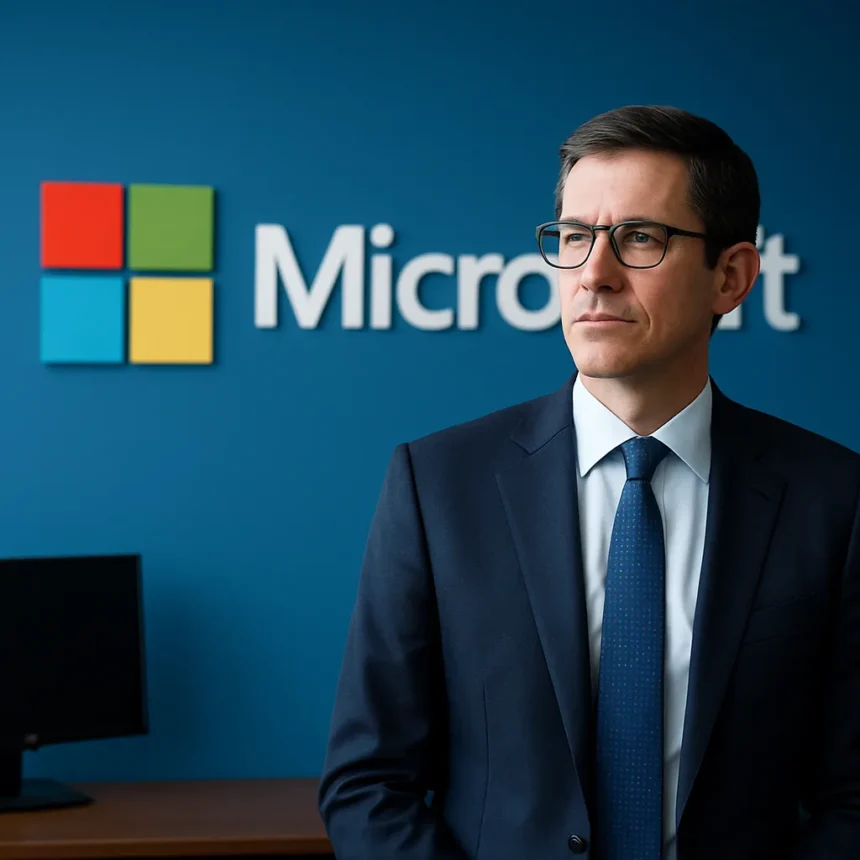
Microsoft’s latest Microsoft AI leadership reshuffle marks a deliberate strategic pivot toward building independent artificial intelligence capabilities. The company has restructured its AI and Copilot divisions under new leadership, signaling a shift away from reliance on OpenAI partnerships and toward developing proprietary technology.
Key Takeaways
- Microsoft restructured AI leadership to accelerate Copilot and AI agent development
- The reshuffle positions the company to reduce dependence on OpenAI technology
- New leadership appointments focus on integrating AI across Microsoft’s core products
- The strategy reflects broader industry movement toward in-house AI capability building
- Organizational changes align with Satya Nadella’s vision for AI-driven product transformation
Why Microsoft’s AI Leadership Reshuffle Matters Now
Microsoft has undertaken a significant organizational restructuring focused on accelerating its AI and Copilot initiatives. The company appointed new executive leadership to oversee these divisions, reflecting CEO Satya Nadella’s commitment to embedding artificial intelligence throughout Microsoft’s product ecosystem. This reshuffle comes at a critical moment when tech companies are racing to develop proprietary AI models and reduce reliance on external partnerships.
The Microsoft AI leadership reshuffle represents more than routine executive shuffling. It signals that Microsoft is investing heavily in building independent AI infrastructure and capabilities. Rather than remaining dependent on OpenAI for advanced AI features, the company is assembling teams to develop its own models and integrate them across Copilot, Office, and enterprise products.
Microsoft’s Strategic Shift Toward Proprietary AI
The restructuring demonstrates Microsoft’s determination to own its AI future rather than licensing it from external partners. By reorganizing leadership and creating new AI-focused units, the company is positioning itself to accelerate development of proprietary models and agents. This approach reduces long-term dependency on OpenAI while allowing Microsoft to differentiate its products through unique AI capabilities.



Microsoft’s investment in building proprietary AI reflects a broader industry trend. Other major tech companies are similarly developing in-house AI models to avoid reliance on third-party providers. The Microsoft AI leadership reshuffle accelerates this shift internally, with leadership now directly accountable for delivering independent AI innovation.
How This Reshuffle Compares to Industry Practices
Most major tech companies maintain some partnership with external AI providers while simultaneously developing internal capabilities. Google has Gemini, Meta has Llama, and Amazon has built AWS AI services—all while maintaining strategic partnerships. Microsoft’s Microsoft AI leadership reshuffle follows this pattern but emphasizes the independent development track more explicitly than before.



The distinction matters strategically. Companies that rely solely on partnerships face margin pressure and reduced competitive differentiation. By building proprietary capabilities, Microsoft can embed custom AI features into Copilot and its broader product suite without sharing revenue or technology control with external partners.
What the Reshuffle Means for Copilot Users
The organizational changes position Copilot to evolve more rapidly and independently. Users should expect Copilot to gain new capabilities developed in-house rather than waiting for OpenAI to release features that Microsoft then integrates. This could accelerate feature velocity while allowing Microsoft to tailor AI behavior specifically for enterprise and consumer use cases.
The reshuffle also suggests Microsoft will invest more heavily in AI agents—autonomous systems that perform tasks without constant human direction. These agents represent the next frontier in AI adoption, and the new leadership structure prioritizes their development and integration across Microsoft 365, Windows, and Azure.
Will This Reduce Microsoft’s Dependence on OpenAI?
The Microsoft AI leadership reshuffle is explicitly designed to reduce long-term dependence on OpenAI technology. While Microsoft will likely maintain partnerships with OpenAI, the new structure allows the company to offer competing AI capabilities developed internally. This gives Microsoft negotiating leverage and ensures the company is not held hostage to OpenAI’s pricing, roadmap, or strategic decisions.


However, complete independence will take time. OpenAI’s models remain among the most capable available, and Microsoft will continue integrating them into products while its proprietary alternatives mature. The reshuffle accelerates the timeline for this transition but does not eliminate it overnight.
FAQ: Microsoft AI Leadership Reshuffle Questions Answered
What triggered Microsoft’s recent leadership changes?
The reshuffle reflects CEO Satya Nadella’s strategic priority to accelerate AI and Copilot development across the company. The new structure consolidates AI leadership under executives focused on building proprietary capabilities and integrating them into Microsoft’s core products.
Does this mean Microsoft is leaving OpenAI?
No. Microsoft will continue partnering with OpenAI, but the new structure allows Microsoft to develop competing proprietary AI models. The reshuffle positions the company to reduce reliance on OpenAI over time while maintaining access to its technology.
How will this affect Copilot’s features and performance?
The reshuffle should accelerate Copilot’s development cycle and feature rollout. With dedicated leadership focused on independent AI development, Copilot will gain capabilities developed in-house, potentially offering features tailored specifically to Microsoft’s products and user bases.
Microsoft’s Microsoft AI leadership reshuffle represents a calculated bet on the company’s ability to compete in artificial intelligence without outsourcing its core technology to external partners. The organizational restructuring sends a clear signal: Microsoft intends to lead the AI era on its own terms, with proprietary capabilities that differentiate its products and protect its strategic interests. For users and enterprises, this means faster innovation cycles and more integrated AI experiences across Microsoft’s ecosystem.
Edited by the All Things Geek team.
Source: Windows Central