





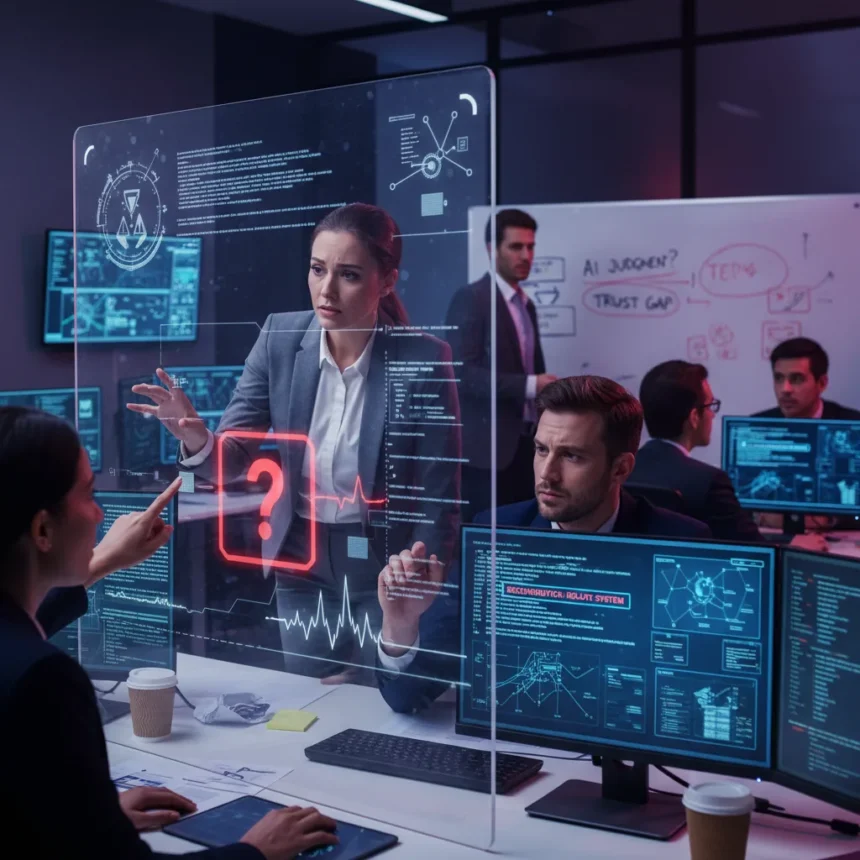
The AI-driven SOC represents the future of security operations, yet its greatest obstacle has nothing to do with machine learning algorithms or detection accuracy. The real challenge facing AI-driven SOC environments is whether human analysts can trust automated systems enough to act decisively on their recommendations when lives, data, and critical infrastructure hang in the balance.
Key Takeaways
- AI struggles with context-aware decision-making in high-stakes SOC environments, limiting its ability to judge threat severity accurately.
- The biggest barrier to AI-driven SOC adoption is not technical capability but human trust in automated judgment.
- Overreliance on AI without proper human oversight introduces operational risks including system failures and detection errors.
- Effective AI-driven SOC implementations require AI to enhance analyst capabilities, not replace human judgment.
- Security teams must maintain control over critical decisions while leveraging AI for speed and pattern recognition.
Why Trust Matters More Than Accuracy in AI-driven SOC
A system that catches 99 percent of threats but cannot explain why it flagged them is worthless to a security team under pressure. Trust in an AI-driven SOC isn’t about the technology being flawless—it is about analysts understanding the logic behind each alert and feeling confident enough to escalate it or dismiss it. The biggest challenge of AI in SOCs isn’t technical—it’s being able to trust its output while staying in control.
This distinction separates hype from reality. An AI-driven SOC that operates as a black box, spitting out alerts without reasoning, forces analysts into an impossible position: ignore the system and risk missing real threats, or blindly follow it and waste time on false positives. Neither option is sustainable when a team is already stretched thin. Trust requires transparency. It requires that when an AI-driven SOC flags a suspicious login from an unusual geography, the analyst can see the evidence, understand the logic, and make an informed decision rather than simply trusting the algorithm.
Context Awareness: Where AI-driven SOC Systems Fall Short
Human security analysts excel at something machines struggle with: understanding context. A file transfer from an employee working from home at midnight looks suspicious until you learn they are in a different timezone and it is mid-morning for them. An unusual spike in database queries might indicate an intrusion or a legitimate batch job that runs weekly. An AI-driven SOC often lacks the contextual reasoning to distinguish between these scenarios without explicit training.



This limitation becomes dangerous when organizations over-automate. Overreliance on AI without human oversight introduces risks like system failures and detection errors that cascade through an entire infrastructure. A poorly tuned AI-driven SOC might auto-isolate systems based on patterns it has learned, only to discover that it has crippled a critical business process. The system did exactly what it was trained to do. It simply did not understand the business consequences.
The Human Judgment Problem in Automated Threat Response
The promise of an AI-driven SOC is speed. Automated systems can detect anomalies and respond to threats faster than human analysts ever could. But speed without judgment is reckless. Consider a ransomware attack that an AI-driven SOC detects and begins to contain automatically. The system isolates infected machines, blocks suspicious network traffic, and alerts the team. Yet the analyst reviewing the incident discovers the system has also blocked legitimate backup traffic, preventing the organization from recovering critical data. The AI did not weigh the trade-off between containment and recovery because it was not designed to understand business priorities.


This is why the most effective AI-driven SOC implementations treat automation as enhancement rather than replacement. AI should enhance rather than replace human analysts. The system flags threats, prioritizes them, and provides context. The analyst makes the final judgment call on severity, response strategy, and business impact. This partnership model respects both the speed of machines and the wisdom of experienced humans.
Building Trust in AI-driven SOC Deployments
Organizations rolling out an AI-driven SOC must address trust systematically. This means investing in explainability—making sure the system can articulate why it flagged something. It means starting with AI as an advisor, not an executor. Let the system make recommendations for weeks or months while analysts validate its judgment. Only automate actions once the team has confidence in the system’s reasoning.
It also means accepting that some decisions will always require human involvement. An AI-driven SOC might be brilliant at detecting known attack patterns, but novel threats require the creativity and judgment that humans bring. The goal is not to eliminate human analysts from the SOC—it is to free them from routine alert triage so they can focus on investigation, threat hunting, and strategic defense decisions.
Can an AI-driven SOC ever be fully trusted?
Complete trust in any automated system is naive. Even the best AI-driven SOC will have blind spots, edge cases, and moments where it misunderstands context. The realistic goal is calibrated trust—knowing what the system does well, understanding its limitations, and designing workflows that leverage its strengths while compensating for its weaknesses.



What is the difference between an AI-driven SOC and traditional SOC automation?
Traditional SOC automation uses rule-based logic: if X happens, do Y. An AI-driven SOC uses machine learning to identify patterns and anomalies that rules would miss. However, this sophistication introduces complexity. Traditional automation is predictable. AI is probabilistic. That shift from certainty to probability is why trust becomes the critical challenge.
How should teams measure success in an AI-driven SOC?
Metrics matter, but they are not everything. Yes, measure detection rates and response times. But also measure analyst confidence. Survey your team on whether they trust the system’s alerts. Track how many flagged incidents the team overrides and why. If analysts are constantly dismissing AI-driven SOC recommendations, the system is not delivering value—it is just adding noise. True success is when the system and the humans in the SOC work as a coherent unit, each trusting the other to do what it does best.
The future of security operations will not be fully automated or fully manual. It will be hybrid, built on the foundation of trust between human judgment and machine intelligence. Organizations that invest in transparency, explainability, and human-centered design will get there first. Those that rush to automate without addressing the trust question will discover that speed without confidence is just a faster way to miss threats.
This article was written with AI assistance and editorially reviewed.
Source: TechRadar