




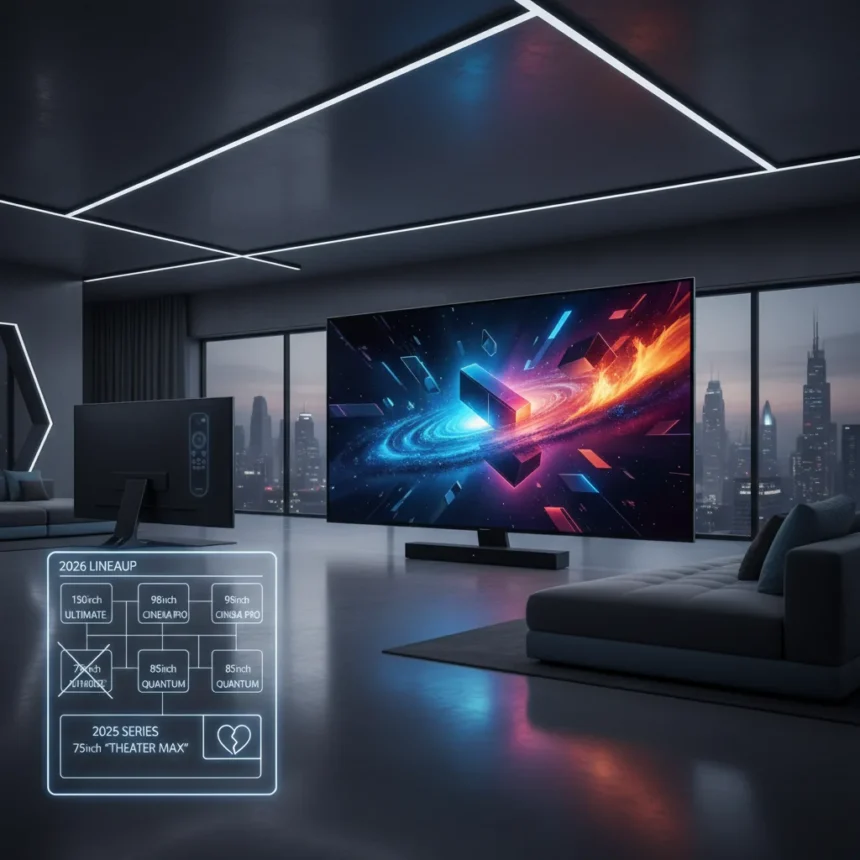
Samsung 2026 Mini-LED TVs officially debut at CES 2026, introducing a dramatically expanded lineup anchored by the world’s first 130-inch Micro RGB model alongside new M-series and Neo QLED options. The refresh represents a significant shift in Samsung’s premium backlit strategy, replacing traditional Neo QLED technology with next-generation Micro RGB architecture across multiple size tiers. Yet one popular TV from the previous generation will not return this year, signaling a consolidation of Samsung’s already crowded mid-premium segment.
Key Takeaways
- Samsung 2026 Mini-LED TVs debut at CES 2026 with Micro RGB replacing Neo QLED as the premium backlit option
- New 130-inch R95H Micro RGB is the world’s largest model in this category, up from 115-inch maximum in 2025
- M80H and M70H Mini-LED models join the M90H 100-inch variant in the expanded 2026 lineup
- Micro RGB Precision Color 100 achieves 100% of the BT.2020 wide color gamut with VDE certification
- One popular prior-generation TV drops from the 2026 refresh, though Samsung has not officially named which model
Samsung 2026 Mini-LED TVs: The Complete Lineup
Samsung 2026 Mini-LED TVs now span two distinct technologies. The core Mini-LED range includes the M80H and M70H models in standard sizes, while the premium tier shifts entirely to Micro RGB—a sub-100-micrometer RGB LED architecture that replaces the Neo QLED QN-series as Samsung’s top backlit option. The marquee model is the 130-inch R95H, which represents a major engineering milestone for Samsung and the broader TV industry. Alongside this flagship sits the R90H step-down Micro RGB variant, available across 55-, 65-, 75-, 85-, 100-, and 115-inch sizes, with the 130-inch option exclusive to the R95H. The M90H 100-inch Mini-LED completes the backlit portfolio, while the QN80H and QN70H Neo QLED models provide a bridge between Mini-LED and OLED technologies.
The shift from Neo QLED to Micro RGB represents more than a naming refresh. Traditional backlit TVs use white LED zones behind the panel, which limits color volume and precision. Micro RGB swaps this architecture for individually controlled red, green, and blue LEDs, enabling dramatically finer dimming control and richer color saturation. Samsung claims the 130-inch R95H reaches up to 30% higher brightness than its 2025 flagship OLED model, the S95F, though no independent brightness measurements have been published yet.
What Happened to That Missing TV?
One popular Samsung TV model from the prior generation will not appear in the 2026 lineup, but Samsung has not officially disclosed which specific model has been discontinued. Industry speculation centers on potential gaps in the mid-premium Mini-LED tier, where overlapping model numbers and unclear size differentiation have historically created buyer confusion. Without Samsung naming the dropped model explicitly, the exact discontinuation remains unconfirmed, though the announcement suggests a deliberate streamlining of the product stack.

This kind of model pruning is common during generational refreshes—companies kill slower-selling variants to reduce manufacturing complexity and inventory. However, Samsung’s silence on the specifics is unusual. Typically, the company would position a discontinued model as obsolete, replaced by a superior alternative. The lack of transparency here suggests the dropped TV may have occupied an awkward middle ground between the new Micro RGB flagships and the entry-level Mini-LED options.
AI Features and Vision AI Companion
Samsung 2026 Mini-LED TVs integrate Vision AI Companion, an LLM-powered assistant built into Bixby that goes beyond traditional TV controls. The system handles Live Translate for multi-language content, Generative Wallpaper for personalized screensavers, and AI Football Mode Pro—a feature that optimizes picture settings for sports broadcasts. Integration with Perplexity and Microsoft Copilot gives users access to web search and productivity tools directly from the TV interface, while AI Sound Controller Pro automatically adjusts audio balance based on content type.


The Micro RGB lineup also introduces Micro RGB AI Engine Pro, Color Booster Pro, and HDR Pro—post-processing technologies designed to maximize the capabilities of the new RGB LED architecture. Samsung claims these AI upscalers enhance lower-resolution content without introducing the blur or artifacts common in older scaling algorithms, though real-world results will depend on source material and viewing distance.
Design and Audio Overhaul
The 130-inch R95H features a tiltable frame and zero-gap wall mount, addressing a persistent complaint from owners of ultra-large TVs: installation complexity and visible gaps between the panel and wall. Swappable bezels allow customization, while a metallic back plate gives the model a premium feel that extends to the back—a detail often overlooked in TV design. Eclipsa Audio, Samsung’s proprietary speaker system, pairs with Dolby Atmos and Adaptive Sound Pro to deliver immersive sound without external speakers, while Q-Symphony allows seamless audio handoff to Samsung soundbars and other connected speakers.
How Samsung 2026 Mini-LED TVs Compare to OLED
Samsung 2026 Mini-LED TVs occupy a unique position between traditional Mini-LED and OLED technology. The Micro RGB R95H claims 30% higher brightness than Samsung’s 2025 S95F OLED, which hit 2000 nits in peak brightness. This advantage matters in bright rooms where OLED’s superior contrast and color accuracy become less visible. However, OLED TVs maintain a fundamental edge in black levels and response time—OLED pixels turn completely off, while Micro RGB zones, however fine, still emit some light. For consumers prioritizing sheer brightness and size (the 130-inch option has no OLED equivalent from Samsung), Micro RGB wins. For those seeking the best picture quality in dark viewing environments, OLED remains the choice.
Is Samsung discontinuing Mini-LED entirely?
No. Samsung 2026 Mini-LED TVs retain the M-series Mini-LED models at entry and mid-range price points. The company is upgrading its premium backlit tier from Neo QLED to Micro RGB, not abandoning Mini-LED altogether. The M80H and M70H represent a refresh of the traditional Mini-LED category, while the Micro RGB models serve as the new aspirational backlit option.

When will Samsung 2026 Mini-LED TVs be available?
Samsung has not announced specific launch dates or pricing for any 2026 models. The lineup was unveiled at CES 2026, with a showcase at Samsung’s Exhibition Zone, but no retail availability window has been confirmed. Historically, Samsung TV announcements at CES ship to retailers in the following months, but exact timing remains unknown.
What is Micro RGB and why does it matter?
Micro RGB replaces traditional white LED backlighting with individually controlled red, green, and blue LEDs. This architecture enables superior color volume—the brightness at which colors remain saturated—compared to white LED zones. The result is richer colors at higher brightness levels, a critical advantage in brightly lit rooms where standard Mini-LED and OLED struggle.
Samsung 2026 Mini-LED TVs represent a calculated bet that brightness and size matter more to premium buyers than the perfect blacks of OLED. The 130-inch R95H, in particular, signals the company’s confidence that Micro RGB can compete with OLED on picture quality while offering genuine advantages in specific use cases. Yet the discontinuation of a popular prior model hints that Samsung’s product strategy remains in flux—a reminder that even at the premium tier, TV makers must constantly prune and reshape their lineups to survive in a crowded market.
Edited by the All Things Geek team.
Source: Tom's Guide