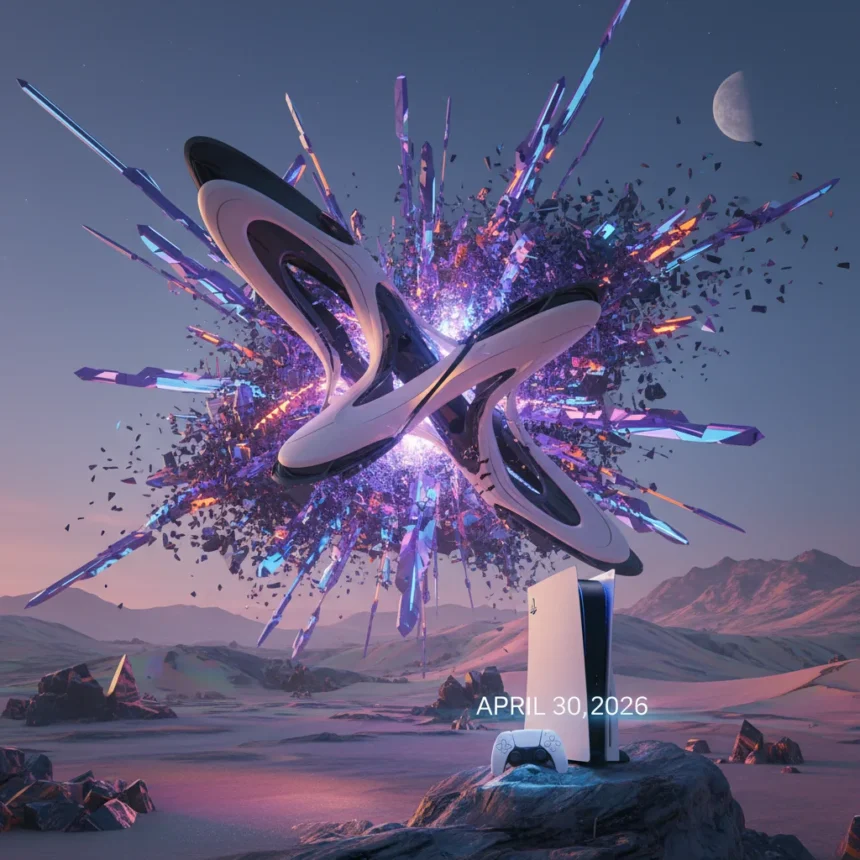
Saros handcrafted procedural levels represent Housemarque’s bold attempt to solve the roguelike replayability problem by hand-designing core content, then stitching it together with algorithmic variation. The studio’s new third-person action game launches April 30, 2026 on PlayStation 5, and it fundamentally rejects the idea that procedural generation must mean randomness at the expense of intentional level design.
Key Takeaways
- Saros combines handcrafted levels with procedural connections to create shifting biomes after each death
- Permanent progression system lets players upgrade weapons, suit parts, and perks to return stronger—unlike Returnal’s reset mechanic
- Carcosan Modifiers let players customize difficulty by adjusting enemy toughness, removing second-chance abilities, or corrupting projectiles
- Set on alien planet Carcosa under an eclipse, players control Soltari Enforcer Arjun Devraj searching for a lost colony
- PS5 features including DualSense haptics, 3D Audio, and SSD optimization drive the technical experience
How Saros Handcrafted Procedural Levels Actually Work
Housemarque’s approach sidesteps the traditional roguelike trap: either hand-craft everything and sacrifice replayability, or randomize everything and lose intentional design. Saros handcrafted procedural levels do both simultaneously. The studio creates discrete level chunks—rooms, encounters, art assets, and combat scenarios—then uses procedural logic to reassemble them differently on each respawn. New paths open, rare resources like halgon appear in different locations, and lore entries unlock in varied sequences. It is not pure randomization masquerading as design. It is curated pieces shuffled by algorithm.
According to Housemarque, they “handcrafted levels, art, design, and combat encounters and kind of connect them in a procedural matter to create Saros’ ever-changing levels”. This hybrid approach means every biome shift feels intentional because the underlying components are—but the arrangement ensures no two runs feel identical. Players can replay biomes multiple times, growing stronger through permanent upgrades while discovering previously locked areas unlocked by abilities earned later.
Permanent Progression Changes Everything
Where Saros diverges sharply from Housemarque’s earlier roguelike Returnal is permanent progression. In Returnal, death reset your loadout. In Saros, every death feeds permanent upgrades. Players permanently enhance weapons, suit parts, and perks, meaning each subsequent run begins from a stronger foundation. Housemarque explicitly stated that “permanent progression that really changes how you play the game” is central—leveling faster, gaining power quicker, and drastically altering how you approach levels and bosses without trivializing challenge.



This design choice reframes death itself. Rather than a setback, it becomes an investment in future runs. You lose the current attempt but gain permanent resources that shift your playstyle fundamentally. Housemarque emphasized the permanent progression “isn’t to trivialize the game,” meaning difficulty scales alongside your upgrades. You cannot simply grind until the game becomes trivial—the Eclipse threat escalates as you grow stronger.
Customizing Difficulty With Carcosan Modifiers
Saros hands control of difficulty directly to players through Carcosan Modifiers, a system that lets you adjust your experience granularly. You can make hostiles tougher or weaker, remove the second-chance ability entirely, or enable corrupted projectiles that reduce your maximum armor integrity. The catch: you must balance your choices to maintain consistent challenge. Removing all difficulty modifiers while enabling corruption would create an unbalanced experience.



The Eclipse mechanic reinforces this tension. As you progress deeper into Carcosa’s story, hostiles evolve, weapons and artifacts become corrupted with both positive and negative alterations, and threats escalate. Customization is not a way to trivialize the game—it is a way to personalize the difficulty curve to your skill level and playstyle. You might weaken basic enemies to focus on boss mechanics, or corrupt projectiles to force yourself to use your Soltari Shield and Carcosan Power Weapons more actively.
Combat and Traversal Mechanics
You control Arjun Devraj, a Soltari Enforcer voiced by Rahul Kohli, who wields a Soltari Shield for blocking and absorbing projectiles. Energy absorbed converts into Carcosan Power Weapons mounted on your right arm, which discharge at enemies—a feedback loop that ties defense directly to offense. This creates a rhythm: block, absorb, discharge, repeat.
World Dial Teleportation enables fast-travel to previously unlocked biomes, letting you restart runs quickly without trudging through early areas. This accelerates replayability and lets you focus on learning later biomes and bosses. Combined with permanent progression, it means you can target specific upgrades by replaying biomes you have already mastered, then push into new territory once stronger.
PS5 Hardware Showcase
Housemarque is pushing PlayStation 5’s capabilities deliberately. Saros leverages DualSense haptic feedback, 3D Audio, and the console’s SSD for fast level streaming as biomes shift. The alien planet Carcosa and its ominous eclipse setting demand visual fidelity—the procedural biome connections must feel seamless, not jarring. The SSD enables rapid biome transitions without loading screens breaking immersion.



Why This Matters for Roguelikes
Saros handcrafted procedural levels represent a philosophical shift in roguelike design. Most procedural roguelikes feel like algorithmic scaffolding wrapped in art. Most handcrafted games sacrifice replayability for polish. Housemarque’s hybrid suggests a third path: let designers craft the building blocks, then let algorithms arrange them. It respects both player time and design intent. You are not replaying a randomized mess—you are exploring curated content in fresh configurations.
Is Saros worth the wait until April 2026?
If you loved Returnal but craved permanent progression and shorter restart cycles, Saros directly addresses those frustrations. If you want a roguelike that feels designed rather than generated, the handcrafted-procedural hybrid is compelling. If you are skeptical of Housemarque’s roguelike formula entirely, permanent progression and difficulty customization might not convert you.
How does Saros differ from Returnal mechanically?
Returnal resets your entire loadout on death; Saros preserves permanent upgrades to weapons, suit parts, and perks. Returnal is harder and more punishing; Saros offers Carcosan Modifiers to tune difficulty. Both use procedural biomes, but Saros emphasizes handcrafted components connected procedurally, whereas Returnal leaned more heavily on algorithmic generation.
What is the Soltari Shield and how does it work?
The Soltari Shield blocks and absorbs projectiles, converting absorbed energy into Carcosan Power Weapons on your right arm that discharge at enemies. It ties defense directly to offense—blocking is not just survival, it is resource generation.
Saros launches April 30, 2026, and pre-orders are available now. Housemarque has crafted something genuinely different: a roguelike that respects both procedural replayability and intentional design, backed by permanent progression that makes every death valuable rather than frustrating. If the execution matches the vision, it could redefine how modern roguelikes balance randomness and craft.
Edited by the All Things Geek team.
Source: TechRadar