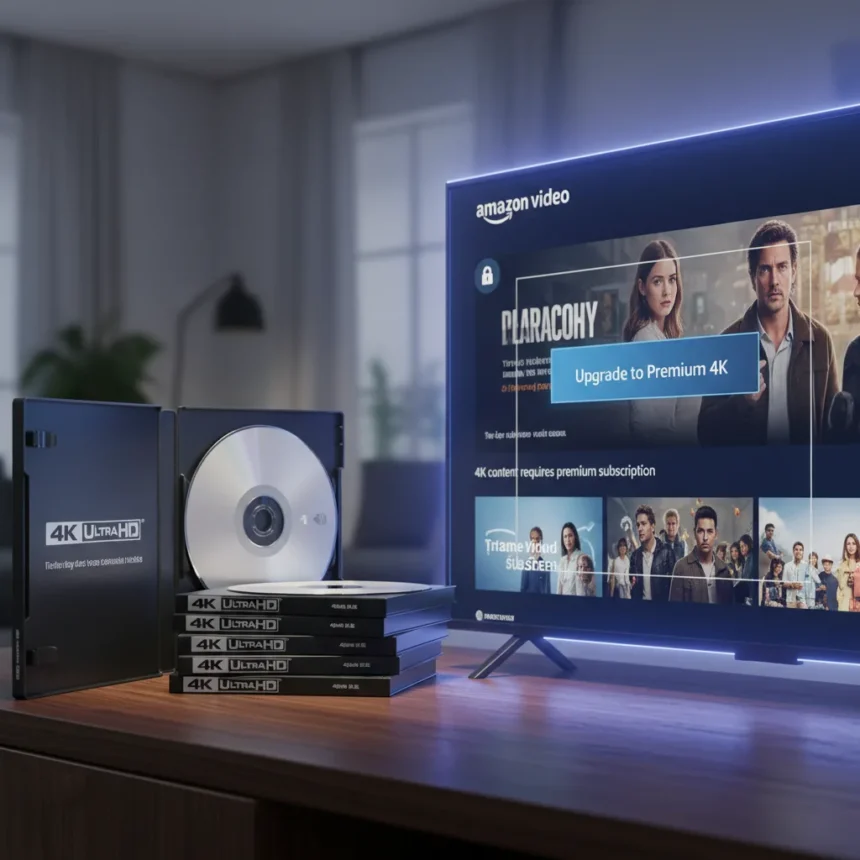
Amazon Prime Video’s inevitable 4K paywall represents a watershed moment for streaming. The introduction of Prime Video Ultra, launching April 10, 2026 in the US, will lock 4K and UHD streaming behind a premium tier, effectively downgrading the standard ad-free subscription from $4.99 to a lower-resolution experience. This shift exposes the core weakness of subscription streaming: when margins tighten, content quality is the first casualty.
Key Takeaways
- Amazon Prime Video Ultra launches April 10, 2026, restricting 4K/UHD to premium subscribers
- 4K was previously available on the standard tier before this paywall shift
- The price increase from $2.99 to $4.99/month for ad-free standard tier reflects broader streaming consolidation
- Physical media ownership avoids recurring subscription fees and resolution restrictions
- Streaming services have systematically degraded quality tiers as subscriber growth plateaus
Why Amazon Prime Video’s 4K paywall is inevitable—and infuriating
The Amazon Prime Video 4K paywall is not a surprise. It is the logical endpoint of a business model that prioritizes subscriber acquisition over sustainable pricing. Streaming services launched with aggressive content libraries and high quality tiers to undercut cable, but once they reached saturation, the economics flipped. Netflix, Disney+, and now Amazon are all squeezing existing subscribers rather than competing on value. Locking 4K behind a paywall is the streaming equivalent of charging extra for window seats on an airline—it extracts revenue from customers who already pay for the service.
What makes this move particularly telling is the timing. Amazon is not introducing 4K as a new premium feature; it is removing it from the standard tier. That distinction matters. Existing subscribers will experience a downgrade without choosing it. The company frames this as a new tier option, but the reality is degradation masquerading as choice.
Physical media’s case just got stronger
This is where 4K Blu-ray ownership becomes defensible again. A 4K Blu-ray disc costs between £15 and £25 per title, plays forever without subscription, and delivers bitrate-limited video quality that frequently exceeds streaming compression. Yes, you need a player and a disc drive—not ideal for casual viewers. But for anyone who watches the same films repeatedly or cares about image quality, the math shifts. Buy ten 4K Blu-rays at an average cost of £20 each, and you have spent £200 on permanent ownership. Subscribe to Prime Video Ultra for 24 months at the premium tier, and you have spent roughly £120 (assuming the US $4.99 tier converts to similar UK pricing), with nothing to show for it when you cancel.



Streaming services have systematically reduced bitrates, introduced ads, and fragmented content libraries across multiple platforms. Physical media sidesteps all three problems. A 4K Blu-ray cannot introduce ads mid-film. It cannot be delisted due to licensing disputes. It cannot be downgraded to 1080p because the studio needs to save bandwidth costs.
The broader pattern: streaming quality is declining
Amazon Prime Video’s 4K paywall is part of a larger retreat from the promises streaming made to consumers. When Netflix, Prime Video, and Disney+ launched, they offered premium quality at prices below cable. That was the entire pitch. Now, those same services are introducing ads, raising prices, cracking down on password sharing, and restricting quality tiers. They have achieved market dominance and are now extracting maximum revenue before the next disruption arrives.



The irony is that physical media companies never made those promises. Blu-ray was always positioned as a premium format for enthusiasts willing to pay for quality and ownership. It has become the honest alternative in a landscape of broken streaming commitments. That does not make it convenient, but it makes it reliable.
Should you buy 4K Blu-rays instead of streaming?
For casual viewers who watch new releases once and move on, streaming still makes sense—despite the Amazon Prime Video 4K paywall. The friction of buying, storing, and managing physical media is real. But for anyone with a core library of films they return to, or anyone who prioritizes picture quality, 4K Blu-ray ownership is no longer a niche hobby. It is a rational response to streaming services that have stopped competing on value.
Will other streaming services follow Amazon’s 4K paywall model?
Almost certainly. Netflix and Disney+ will watch how subscribers respond to Prime Video Ultra. If churn remains acceptable, both services will introduce their own 4K premium tiers within 18 months. The streaming industry has become a cartel of price increases and feature restrictions. Expect 4K to become the new battleground for premium pricing across the board.
Amazon Prime Video’s 4K paywall is not an outlier—it is a preview of the streaming industry’s future. As subscriber growth slows and competition intensifies, services will monetize every advantage they can, starting with resolution. That reality makes physical media’s permanence and reliability look less like a relic and more like a hedge against an industry that has stopped keeping its promises.



Where to Buy
Panasonic DP-UB820 | Panasonic DP-UB820-K Blu-Ray Player | Sony PlayStation 5
Edited by the All Things Geek team.
Source: T3