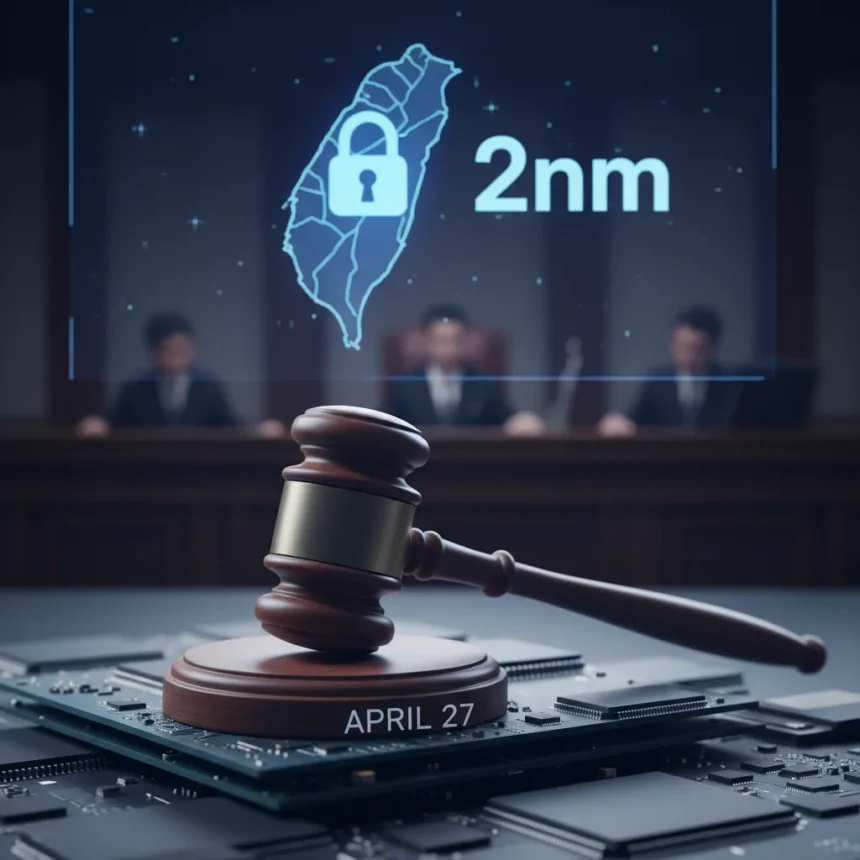
The TSMC espionage case represents a watershed moment for Taiwan’s enforcement of semiconductor intellectual property protection. A former engineer at Taiwan Semiconductor Manufacturing Company stands accused of stealing advanced 2nm technical information, with a verdict scheduled for April 27 in what marks the first major prosecution under Taiwan’s amended National Security Act. If convicted, the defendant faces potential imprisonment of up to 20 years, signaling how seriously Taipei treats leaks of what it now classifies as “national core critical technologies.”
Key Takeaways
- TSMC espionage case verdict arrives April 27 under Taiwan’s 2022 National Security Act amendments
- Former TSMC engineer accused of stealing 2nm technical secrets; faces up to 20 years if convicted
- Engineer later joined Intel, a TSMC competitor and customer, after alleged theft
- Part of three landmark trade secret cases; Tokyo Electron subsidiary also indicted for receiving leaked secrets
- Taiwan’s updated framework targets leaks to China and hostile nations; modeled partly on U.S. Economic Espionage Act
Why This TSMC Espionage Case Matters Now
The TSMC espionage case arrives at a critical moment in global chip competition. Taiwan amended its National Security Act in 2022 specifically to protect semiconductor manufacturing from economic espionage, especially leaks destined for China or other hostile nations. This case tests that framework for the first time. The verdict next month will establish precedent for how aggressively Taiwan prosecutes technology theft and whether penalties deter future breaches at the world’s most advanced chipmaker.
The timing reflects escalating tensions over semiconductor supply chains. As the United States tightens export controls on advanced chips, Taiwan has positioned itself as the guardian of latest manufacturing secrets. A conviction in this case would demonstrate that Taipei has real teeth in enforcing those protections, potentially influencing how other companies handle sensitive technical data and employee mobility between competitors.
The TSMC Espionage Case and Related Indictments
This case is one of three landmark trade secret theft cases that have progressed through Taiwan’s courts. The most significant parallel involves Tokyo Electron Limited, a Japanese equipment supplier to TSMC. On December 2, 2025, Taiwan’s High Prosecutors Office indicted Tokyo Electron’s subsidiary and multiple individuals for receiving stolen TSMC advanced process technology, marking the first significant corporate indictment under Taiwan’s updated National Security Act. Investigators discovered 12 pages of classified 2nm trade secrets leaked to the company, detected through TSMC’s internal monitoring systems.


Three engineers faced charges in the Tokyo Electron case: a former TSMC engineer surnamed Chen, and two current TSMC employees surnamed Wu and Ko. The defendants violated both the National Security Act and Taiwan’s Trade Secrets Act by stealing information with intent to transfer it outside Taiwan. Three other non-detained defendants faced only Trade Secrets Act charges; their cases closed after TSMC declined to press charges. TSMC reaffirmed a zero-tolerance policy on intellectual property breaches and announced plans to strengthen internal safeguards.
How Taiwan’s Legal Framework Evolved
Taiwan’s amended National Security Act represents a deliberate shift toward treating semiconductor leaks as national security threats rather than purely commercial disputes. The 2022 amendments introduced designated courts and anti-poaching measures specifically targeting economic espionage. This framework was modeled partly on the U.S. Economic Espionage Act, which has been used to prosecute technology theft for decades.



The TSMC espionage case is the first major test of this new framework. Earlier semiconductor theft cases in Taiwan, including a 2020 prosecution of United Microelectronics Corporation, resulted in UMC pleading guilty in the United States under the Economic Espionage Act. By bringing the current case under Taiwan’s own National Security Act rather than relying solely on U.S. prosecution, Taipei signals its commitment to defending its most valuable industry from within its own legal system.
Intel Connection and Competitive Risk
The accused engineer allegedly moved to Intel, one of TSMC’s largest competitors and customers, after the alleged theft occurred. This detail underscores a recurring vulnerability in semiconductor manufacturing: the mobility of skilled engineers between rivals. Intel competes directly with TSMC in advanced process technology, making the transfer of 2nm secrets particularly sensitive. The case raises uncomfortable questions about how companies vet employee hiring from competitors and whether non-compete agreements can meaningfully protect trade secrets in a global labor market.
Broader Context: Semiconductor Espionage Across Asia
The TSMC espionage case reflects a pattern of semiconductor theft across the region. Samsung arrested ten former employees for providing 10nm technology to a Chinese chipmaker, demonstrating that intellectual property theft is not unique to Taiwan. China has been the primary target of U.S. indictments related to semiconductor exports, including cases involving illegal sales of NVIDIA GPUs and attempts to conceal end-users. Taiwan’s aggressive prosecution signals it will not tolerate leaks regardless of destination, but the geopolitical reality is that China remains the most likely beneficiary of advanced process secrets.
What Happens After the April 27 Verdict
If convicted, the defendant faces up to 20 years in prison under the combined charges. A conviction would likely trigger appeals and could influence how other companies and employees assess the risks of technology transfer. Even if the verdict comes down in TSMC’s favor, the case will have already served as a public warning about the consequences of stealing semiconductor secrets in Taiwan.



The verdict will also shape enforcement priorities for Taiwan’s prosecutors. A harsh sentence could accelerate investigations into other suspected leaks and embolden TSMC to pursue more criminal cases rather than settling disputes privately. Conversely, a lenient verdict or acquittal could signal that Taiwan’s updated National Security Act lacks real enforcement muscle, potentially encouraging future theft.
Is the TSMC espionage case the first under Taiwan’s National Security Act?
Yes, the TSMC espionage case is the first major prosecution under Taiwan’s amended 2022 National Security Act framework. While earlier semiconductor theft cases like the 2020 UMC prosecution occurred, they were handled under different legal structures or prosecuted in the United States. This case represents Taiwan’s first significant test of its new economic espionage protections.
What happens if the defendant is convicted in the TSMC espionage case?
If convicted, the defendant faces up to 20 years in prison under charges under both the National Security Act and Trade Secrets Act. A conviction would establish precedent for how aggressively Taiwan enforces semiconductor intellectual property protection and could trigger additional investigations into suspected leaks at other chipmakers.
Why does Taiwan treat semiconductor leaks as national security threats?
Taiwan classified semiconductor manufacturing as a “national core critical technology” under its 2022 National Security Act amendments because the island’s economic security and geopolitical leverage depend on maintaining its technological edge in advanced chip production. Leaks to hostile nations, particularly China, could undermine Taiwan’s strategic position and accelerate rivals’ progress toward matching TSMC’s capabilities.
The TSMC espionage case will likely define how Taiwan balances innovation, employee mobility, and national security for years to come. A conviction sends a clear message that Taiwan views semiconductor secrets as assets worth protecting with serious criminal penalties. For TSMC and other Taiwanese chipmakers, the verdict offers clarity on what the legal system will tolerate—and what it will not.
Edited by the All Things Geek team.
Source: Tom's Hardware