




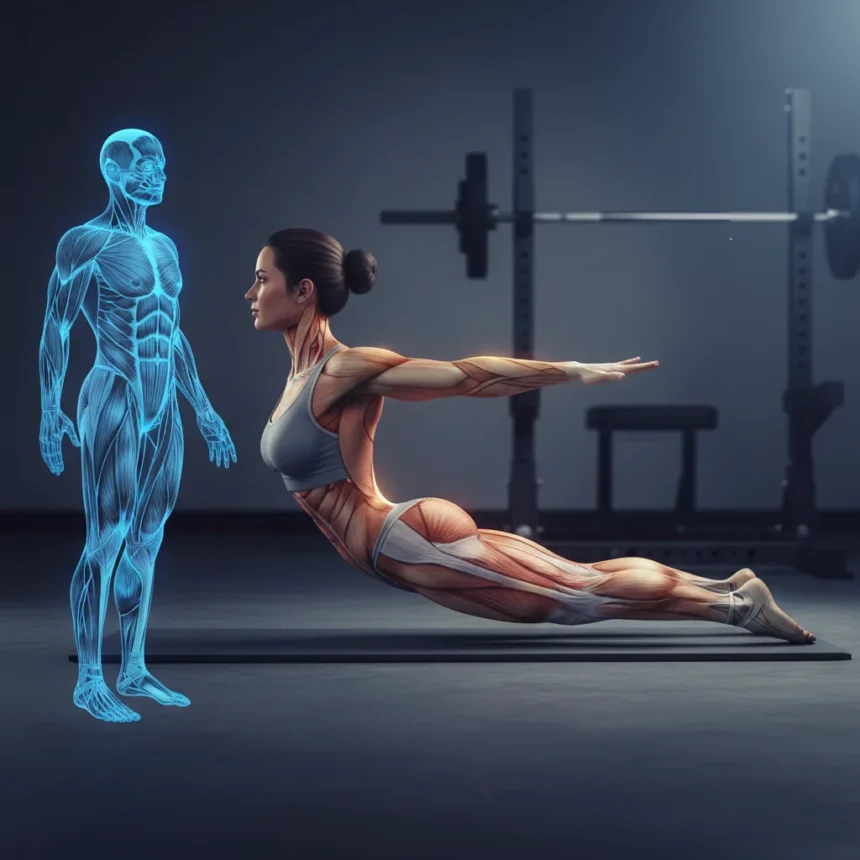
Pilates Swimmers is a prone exercise performed lying face down on a mat that strengthens your entire posterior chain and builds core stability without requiring any equipment. Unlike squats and lunges, which dominate lower-body routines, this single movement activates your glutes, hamstrings, erector spinae, lats, rhomboids, and traps while engaging the deep core stabilizers that most people never train directly. The exercise sits at the intersection of accessibility and effectiveness—something fitness culture desperately needs.
Key Takeaways
- Pilates Swimmers targets the entire posterior chain (glutes, hamstrings, back extensors) plus deep core stabilizers in one movement.
- No equipment required; performed prone on a mat for 20-60 seconds per set.
- Low-impact alternative to squats and lunges; safer for beginners and those managing joint issues.
- Requires proper form to avoid lower back strain; maintaining neutral spine is critical.
- Research shows 6-8 weeks of consistent core work improves athletic performance and injury prevention.
Why Pilates Swimmers Works Better Than Leg Day Staples
Squats and lunges dominate fitness marketing because they feel heavy and look impressive. But they bias the anterior chain—quads, hip flexors, and stabilizers on the front of your body. Pilates Swimmers isolates the posterior chain, the muscles most people neglect, which is exactly why they’re tight and weak. The exercise works your entire backside in one movement, targeting back extensors and stabilizers without quad dominance or knee stress. This matters for anyone recovering from injury, managing joint pain, or simply tired of exercises that prioritize ego over results.
The real advantage? Pilates Swimmers is low-impact but high-reward. It’s perfect if you’re short on time or nursing minor aches that make heavy squats uncomfortable. Deadlifts and good mornings demand equipment, coaching, and intimidation factor. Swimmers demands none of that—just a mat and honesty about your form.
How to Perform Pilates Swimmers with Proper Form
Correct form is non-negotiable. Poor execution turns this exercise into a lower back strain waiting to happen. Start by lying prone (face down) on a yoga mat with your forehead resting on stacked hands or directly on the mat. Extend your legs hip-width apart and position your arms forward in line with your shoulders, palms facing inward. This is your foundation.



Engage your core by drawing your belly button toward your spine—this activates the deep transverse abdominis, your internal corset. Maintain a neutral spine throughout; avoid arching or rounding. Inhale to prepare, then exhale as you lift your chest, head, arms, and legs two to four inches off the mat simultaneously. Keep your gaze down to avoid straining your neck. Now comes the swimming motion: alternate pulsing your arms and legs in opposition, so your right arm and left leg lift as your left arm and right leg lower, then switch. These should be small, controlled flutters mimicking freestyle swimming, not wild thrashing.
Breathe rhythmically—inhale for five pulses, exhale for five pulses. Hold for 20 to 60 seconds or complete 8 to 10 breaths per side. Keep your hips glued to the mat; any rotation reduces effectiveness and increases back strain. Slowly lower your torso, arms, and legs back to the mat and rest 30 seconds between sets. Perform three sets of 30 to 60 seconds. As you adapt, progress by increasing hold time or adding ankle weights.


A common form mistake: rotating your torso. Swimmers often don’t realize they’re rotating more on one side than the other, which reduces stability and shifts load to the lower back. Film yourself or work with a trainer initially to lock in neutral alignment.
Who Benefits Most From Pilates Swimmers
This exercise suits all fitness levels, but beginners should prioritize form over duration. If you run, swim, or play sports requiring explosive power and stability, Pilates Swimmers directly improves your performance. Research shows that six weeks of core workouts performed three times per week improved swimmer efficiency and stroke mechanics. Adolescent swimmers who performed core exercises four times weekly for eight weeks demonstrated better swim performance and lower injury risk on functional movement tests.
Athletes aren’t the only winners. Anyone sitting at a desk eight hours daily has a weak posterior chain—tight hip flexors, rounded shoulders, and dormant glutes. Pilates Swimmers counters this postural collapse. It enhances spinal alignment, boosts overall body control, and prevents the cascade of injuries that come from chronic underuse of your backside.
If you have acute lower back pain or recent spinal surgery, skip this exercise or modify it under professional guidance. The prone position and spinal extension aren’t suitable for all injuries. Consult a qualified professional if you’re returning from injury, pregnant, postpartum, or new to exercise.



Pilates Swimmers vs. Other Posterior Chain Exercises
Superman holds, bird-dogs, glute bridges, and prone cobras all target the posterior chain, but none engage as many muscles simultaneously. Superman holds are similar but lack the dynamic swimming motion and core control demand. Glute bridges isolate the glutes effectively but miss the upper back and lat activation. Pilates Swimmers combines the strengths of multiple exercises into one efficient movement.
The comparison to traditional strength training matters. Deadlifts and good mornings build raw strength through heavy loading—valuable for power athletes. Pilates Swimmers builds muscular endurance, stability, and control through bodyweight and time under tension. Neither approach is superior; they’re complementary. A complete program includes both. But if you have 15 minutes and must choose, Swimmers delivers more bang for your time investment.
Is Pilates Swimmers suitable for beginners?
Yes, but prioritize form over hold time. Start with 20-second holds and focus entirely on maintaining neutral spine and keeping your hips glued to the mat. As your stability improves over two to three weeks, increase duration. Never sacrifice alignment for duration—that’s when injuries happen.
Can Pilates Swimmers replace squats and lunges entirely?
No. Pilates Swimmers excels at posterior chain isolation and core stability but doesn’t build lower-body strength the way squats do. Use Swimmers to balance your routine and address posterior chain weakness, not to eliminate compound movements entirely. A strong program includes both.
How often should I do Pilates Swimmers?
Three to four times weekly works best. Research supporting athletic improvement used these frequencies over six to eight weeks. Rest at least one day between sessions to allow recovery. Consistency matters more than intensity—this is an endurance and stability exercise, not a strength sprint.
Pilates Swimmers succeeds because it solves a real problem: most people train forward, ignoring the posterior chain until pain forces attention. This exercise is free, requires no equipment, works in 15 minutes, and delivers measurable results in six weeks. That’s not hype. That’s efficiency. Stop waiting for the perfect squat rack and start lying on your mat.
Where to Buy
$6.99 at Amazon US | $9.44 at Amazon US | $24.40 at Amazon US | $55 at Amazon US
Edited by the All Things Geek team.
Source: Tom's Guide