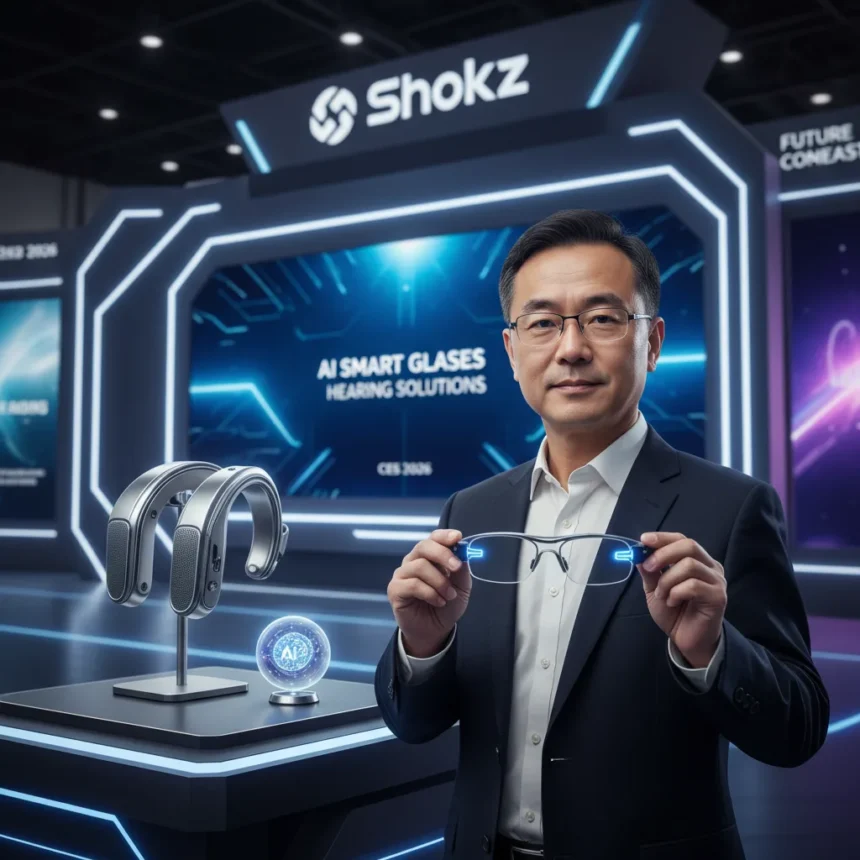
Shokz, the sports headphones maker known for open-ear audio, is pivoting toward AI smart glasses and broader wearable computing. The company has already cycled through multiple design iterations for glasses and is exploring hearing solutions and an always-on AI assistant for future headphones, according to CEO remarks tied to CES 2026. This shift signals a fundamental rethinking of what Shokz wants to be beyond bone-conduction sports audio.
Key Takeaways
- Shokz has gone through several design iterations for AI smart glasses specifically
- Early-stage smart glasses concepts were previewed at CES 2026 as future wearable audio experiences
- The company is exploring hearing solutions alongside smart glasses and AI assistant technology
- A “record everything” AI-powered assistant is planned for upcoming Shokz headphones
- These products represent exploratory concepts rather than confirmed retail launches
Shokz’s AI Smart Glasses Strategy Takes Shape
Shokz is moving beyond traditional open-ear headphones into AI smart glasses as part of a broader wearables strategy. The company has already gone through several design iterations for glasses specifically, according to CEO remarks highlighted in CES 2026 coverage. Early-stage smart glasses concepts were previewed at the event, offering a glimpse into how Shokz is thinking about future wearable audio experiences beyond traditional headphones. Rather than chasing the smartphone-replacement narrative that dominates the smart glasses market, Shokz appears to be positioning glasses as a natural extension of its audio-first philosophy.
The timing matters. Smart glasses remain a crowded and uncertain market, with Meta and Google investing heavily in AR platforms while startups struggle with battery life, thermal management, and killer apps. Shokz’s approach—grounding glasses in audio and personal assistance rather than visual augmentation—sidesteps some of those challenges but also limits market size. The company is thinking about how open-ear audio may evolve across new form factors, which is a narrower but potentially more defensible niche than trying to build the next computing platform.
Hearing Solutions and AI-Powered Recording Assistant
Beyond glasses, Shokz is exploring hearing solutions, suggesting the company sees an opportunity in the intersection of audio hardware, health, and AI. Hearing aids and hearing enhancement technology represent a massive addressable market that has historically been dominated by medical-device makers and legacy hearing aid brands. A tech-forward company like Shokz could disrupt that category if it can combine open-ear audio expertise with clinical-grade hearing support.


The more intriguing announcement is the “record everything” AI-powered assistant planned for future Shokz headphones. This concept positions headphones as always-on personal recorders—capturing ambient audio, transcribing conversations, and surfacing relevant information in real time. It’s an aggressive bet on AI-assisted memory and productivity. The privacy and ethical implications are substantial; always-on recording devices worn on the body raise serious questions about consent, data retention, and regulatory compliance. Shokz will need to navigate these concerns carefully, especially in regions with stricter privacy laws.
How This Compares to the Broader Wearables Market
Shokz’s expansion into AI smart glasses and hearing solutions positions it within a larger ecosystem of companies pursuing audio-first wearables. Meta and Google are building visual AR platforms; Shokz is betting that audio, combined with AI assistance, is the more practical entry point for everyday wearables. This is a fundamentally different bet. Audio wearables avoid the social friction of visible displays, the thermal challenges of dense computing, and the battery drain of continuous visual processing. They also avoid the regulatory minefield of always-on cameras.



The “record everything” assistant, however, brings Shokz closer to the privacy concerns that have plagued other always-on wearables. Whether users will embrace continuous audio recording for productivity gains remains an open question. Early adopters in professional and fitness contexts might; mainstream consumers may resist unless the privacy trade-offs are genuinely transparent and the AI value is undeniable.
When Can You Expect These Products?
Shokz has not announced launch dates or pricing for AI smart glasses, hearing solutions, or the AI assistant. The products shown at CES 2026 are exploratory concepts, not confirmed retail launches. This is typical for hardware companies testing market appetite and gathering feedback before committing to manufacturing and distribution. Expect a multi-year development cycle. Smart glasses require miniaturization of audio drivers, processing power, and batteries; hearing solutions require clinical validation and regulatory approval; the AI assistant needs privacy safeguards and user trust.
The fact that the CEO is publicly discussing these projects suggests Shokz wants to establish itself as a forward-thinking wearables company, not just a sports headphones maker. That narrative matters for investor confidence, talent recruitment, and brand perception. But it also sets expectations. If Shokz takes three to five years to ship these products, momentum could shift to faster-moving competitors.
Should You Care About Shokz’s AI Smart Glasses Right Now?
If you are a current Shokz customer or someone interested in open-ear audio, this roadmap suggests the company is investing in long-term innovation. If you are waiting for a finished AI smart glasses product, there is no timeline to wait for yet. The concepts previewed at CES 2026 are early-stage thinking, not shipping products. Treat them as signals of direction, not promises of imminent availability.



What makes Shokz’s AI smart glasses different from other smart glasses projects?
Shokz is prioritizing audio and AI assistance over visual augmented reality, avoiding the social friction and thermal challenges of camera-equipped glasses. This is a narrower but potentially more practical approach than Meta or Google’s AR platforms, though it also limits the use cases and market size.
When will Shokz AI smart glasses launch?
Shokz has not announced a launch date. The early-stage concepts previewed at CES 2026 are exploratory designs, and the company appears to be in the iteration phase rather than production phase. Expect a multi-year development timeline before any retail availability.
Is the “record everything” AI assistant coming to current Shokz headphones?
No. The “record everything” AI assistant is planned for future Shokz headphones, not current models. This is part of Shokz’s longer-term wearables strategy and will require new hardware and software architecture.
Shokz’s pivot toward AI smart glasses and hearing solutions reflects a company that recognizes the limits of the sports headphones market and is betting on audio-first wearables as the next frontier. Whether these bets pay off depends on execution, regulatory approval, and whether consumers trust their audio devices with always-on recording. For now, the company is laying groundwork—iterating on designs, testing concepts, and building narrative around innovation. The real test comes when products ship.
Where to Buy
Shokz OpenSwim Pro | Shokz OpenRun Pro 2 Bone Conduction | Shokz OpenFit 2
Edited by the All Things Geek team.
Source: TechRadar