






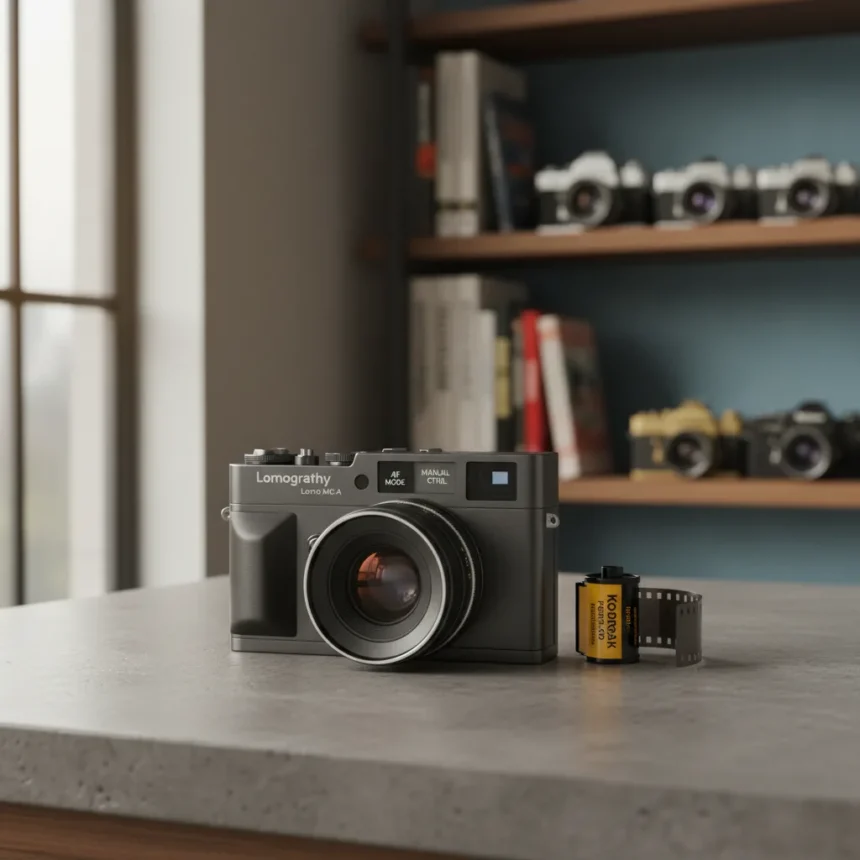
The Lomography Lomo MC-A is a 35mm film camera with autofocus powered by LiDAR technology, manual aperture and shutter controls, and a solid metal build that feels like a mirrorless camera. After years of testing film cameras, reviewers are calling it their new favorite—and for good reason. This is the first genuinely modern film compact in four decades, combining the tactile joy of shooting film with features that actually work.
Key Takeaways
- LiDAR autofocus locks onto subjects quickly, though the mechanism is audibly loud
- Metal exterior and premium build quality rival professional digital cameras
- Manual aperture priority and full manual modes available, starting in auto by default
- Produces sharp, detailed images with strong color rendering and solid low-light performance
- Compact size—larger than disposables but smaller than most 90s point-and-shoots—makes it genuinely portable
Why the Lomography Lomo MC-A Matters Right Now
Film photography has experienced a genuine renaissance over the past decade, but the camera options have been frustratingly limited. Shooters either bought expensive vintage gear with unreliable focus mechanisms or settled for manual-only Lomography models that lacked any modern convenience. The Lomo MC-A solves both problems. It’s the first film camera in 40 years that combines autofocus with manual controls, making it genuinely usable for everyday shooting without sacrificing creative control.
The build quality immediately distinguishes it from both vintage compacts and modern digital cameras. The metal chassis feels reassuringly solid, with a weight that signals durability rather than cheapness. When you power it on, the lens extends—a design borrowed from the legendary Contax T-series, one of the most revered film compacts ever made. That’s not nostalgia; that’s engineering heritage.
Autofocus and Manual Control: The Best of Both Worlds
The Lomo MC-A’s LiDAR autofocus is genuinely fast and accurate, locking onto subjects with impressive reliability. The trade-off is noise—the focusing mechanism is loud and jarring, a characteristic that takes adjustment. But once you accept that minor annoyance, the autofocus becomes liberating. You can shoot without thinking about focus, or you can seize full manual control whenever you want.



Manual settings are accessed through physical controls: rotate the front lens ring to adjust aperture priority, or dive fully manual for complete creative control. The camera defaults to full auto, so beginners won’t be overwhelmed, but experienced shooters can access everything they need. The film advance lever feels excellent in hand, though some users report it occasionally requires multiple turns to advance the frame.
The Lomo MC-A includes a rechargeable CR2 battery and features a PC sync port for flash, giving you professional flash integration on a film camera. These aren’t flashy features, but they’re exactly what working photographers need.



Image Quality and Real-World Performance
Where the Lomo MC-A truly excels is in the images it produces. Reviewers consistently praise sharp, bright, detailed results with lovely color rendering. Low-light performance is solid for a film camera, meaning you’re not forced into fast film stocks or tripod work in dim conditions. One user shot Fujicolor 200 on their first roll and called it their favorite film stock they’d tested.
The focal length is a deliberate compromise for general photography—fast enough to work indoors, unobtrusive enough for street work, and discreet enough that you won’t draw unwanted attention. This is the opposite of niche-focused design; it’s a camera built for real shooting, not Instagram aesthetics.
Size, Portability, and Everyday Carry
The Lomo MC-A is roughly the size of an average 1990s compact camera—larger than a disposable but smaller than many Canon SureShots or Nikon OneTouches. That means it’s genuinely bag-friendly and comfortable for everyday carry without feeling like you’re lugging around a heavy camera. For photographers who want film without the burden of a SLR, this is the sweet spot.
How does the Lomo MC-A compare to vintage film cameras?
The Lomo MC-A outperforms typical 90s point-and-shoots because it offers manual control, which those cameras lacked. It’s also far more reliable than high-end vintage cameras, which often suffer from focus inconsistency and mechanical wear. Modern autofocus and a rechargeable battery make it more practical for actual shooting than hunting down working examples of 40-year-old cameras.



Is the Lomo MC-A worth the premium price?
The camera commands a premium price, which is a legitimate consideration. However, if you’ve spent years cycling through unreliable vintage compacts or frustrated by manual-only film cameras, the Lomo MC-A justifies the investment through reliability, usability, and image quality. It’s positioned as the new benchmark for film compacts, and reviewers who’ve tested it extensively agree it delivers on that promise.
The Lomography Lomo MC-A is not a nostalgic throwback or a gimmick. It’s a genuinely modern film camera that respects the format’s strengths while solving decades-old frustrations. If you’ve been waiting for a film camera that actually works like a professional tool, this is it.
Where to Buy
Edited by the All Things Geek team.
Source: TechRadar




