




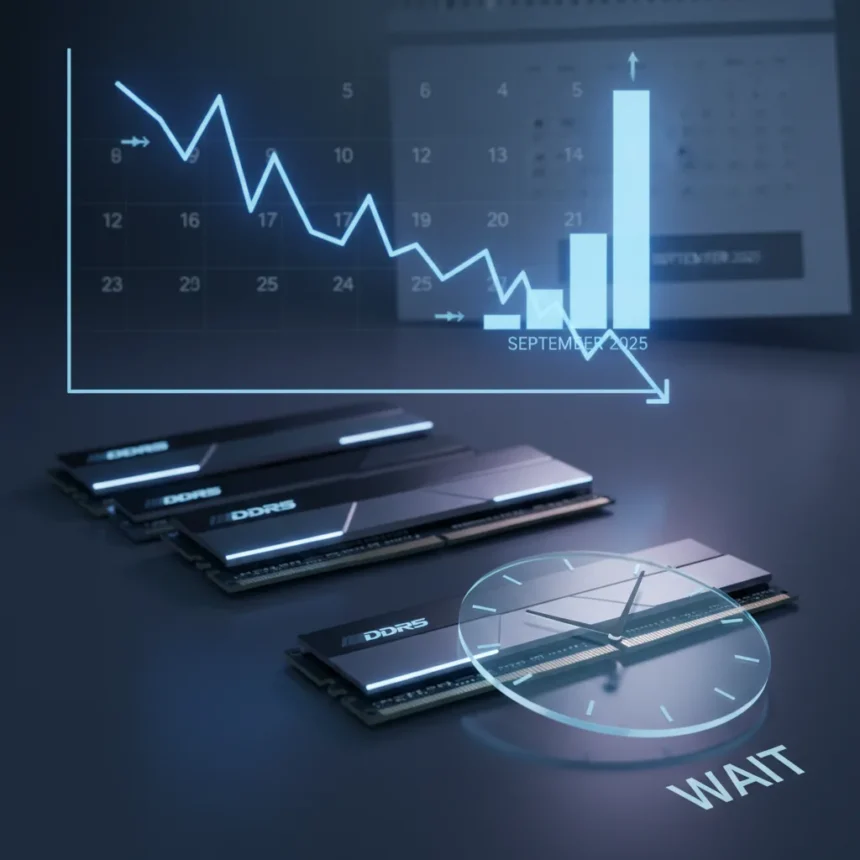
DDR5 RAM prices are finally starting to fall after an agonizing 18-month climb, but don’t reach for your wallet just yet. High-end DDR5 kits like the DDR5-5600 and DDR5-6000 in 2x32GB configurations have stabilized above the $200 mark, with early 2026 showing the first real signs of price relief. Yet this modest easing masks a harder truth: memory remains shockingly expensive, and the crisis shows no signs of ending soon.
Key Takeaways
- DDR5 prices dropped 10-20% in early 2026 but remain 4x higher than September 2025 levels.
- 64GB DDR5 kits surged 300% in six months, now costing more than a MacBook Air.
- AI and enterprise demand are hogging manufacturing capacity, starving consumer channels.
- The RAM crisis could persist into 2027 or beyond, with potential 50% tariff hikes looming in Q1 2026.
- Waiting for further price drops remains the safer financial move than buying now.
The Relief Is Real But Minimal
The recent price drops are genuine but geographically scattered and modest in scale. European DDR5 prices fell 10-15% recently, while a Corsair 32GB DDR5 kit dropped 20% in the US market, and 16GB sticks declined in China. These are the first meaningful pullbacks after weeks of relentless increases. PCPartPicker data shows that high-capacity DDR5 prices have slowed their weekly rises since early 2026, suggesting the market may finally be catching its breath.
But here’s the catch: even with these drops, DDR5 RAM remains quadruple its September 2025 price per 3D Center data. A 20% discount on something that costs four times what it should is still a losing proposition. The relief feels significant only because the preceding crisis was so severe. In absolute terms, memory is still absurdly expensive.
Why DDR5 RAM Prices Exploded in the First Place
The memory crisis did not happen by accident. AI and enterprise demand have priority access to DRAM manufacturing capacity, leaving consumer channels starved for supply. Simultaneously, older memory standards are being retired, forcing buyers toward pricier DDR5 kits whether they want them or not. Consumer demand itself has softened due to the high prices, creating a perverse feedback loop where fewer people buy, reducing negotiating power for retailers.


The clearest evidence of how bad things got: 64GB DDR5 kits surged from the low $200s to over $1,000 in just six months, a 300% increase that now makes these memory configurations more expensive than an entry-level MacBook Air. That shift transformed a routine PC upgrade into a luxury purchase. An MSI executive summed up the chaos bluntly: this year is the most challenging since the company was founded.
Why You Should Still Wait Before Buying DDR5 RAM Prices
The temptation to buy now is understandable. After months of rising prices, any drop feels like a victory. Resist it. Analysts and industry leaders expect the RAM crisis to continue into 2027 or beyond, with some predicting it could last until 2030. SK Group’s chairman offered a particularly bleak assessment, warning that relief may not arrive for years. The trajectory is uncertain, and prices could easily spike again.



More immediately, US tariff threats add a dangerous variable to the equation. The prospect of 100% tariffs could trigger a 50% price hike in Q1 2026, wiping out any gains from recent drops and pushing memory back into crisis territory. Buying RAM now locks you into current prices, but if tariffs hit, you will wish you had waited another month. The risk-reward calculation heavily favors patience.
When Should You Actually Buy DDR5 RAM?
Wait for sustained price declines over at least two to three months, not single-week dips. Watch for drops that push high-capacity kits significantly below their current ranges. If tariff threats materialize into actual policy, expect a brief panic spike followed by market stabilization—that stabilization period is when you buy. Until then, hold off. Your current system will survive a few more months without an upgrade, but overpaying for memory now will sting for years.
Will DDR5 RAM prices ever return to normal?
Normalcy depends on when AI demand moderates and manufacturing capacity rebalances toward consumer channels. The SK Group chairman’s warning that the crisis could extend to 2030 suggests a return to 2024 pricing is not imminent. More realistic is a gradual decline over the next 12-18 months, assuming no new tariff shocks.
Is a 20% price drop worth buying DDR5 RAM right now?
No. A 20% discount on a product that costs 4x its historical price is still a bad deal. Wait for drops of 40-50% from current levels, or for sustained month-over-month declines that signal a genuine market shift rather than temporary fluctuation.


Should I upgrade to DDR5 if my DDR4 system still works?
Not yet. If your current DDR4 setup handles your workload, keep it. DDR5 performance gains in most consumer tasks are marginal, and the cost premium makes upgrades unjustifiable until memory prices fall another 30-50% or your system genuinely needs more capacity.
The RAM crisis is easing, not ending. Early 2026 brought the first real relief after a brutal year, but prices remain at levels that punish buyers. Patience is the smarter strategy. In six months, you will either see prices drop further—making your wait worthwhile—or hit a tariff wall that clarifies the next move. Either way, buying now is a gamble you don’t need to take.
This article was written with AI assistance and editorially reviewed.
Source: TechRadar




