Battlefield 6 audio recording represents one of the most ambitious sound capture efforts in the franchise’s history. The development team conducted the most new weapon recordings ever attempted for a Battlefield title, executing multiple recording sessions across different locations to capture authentic gunfire, bullet impacts, and environmental audio. This commitment to real-world sound design distinguishes Battlefield 6 from competitors that rely on archived libraries or synthesized effects.
Key Takeaways
- Battlefield 6 audio team conducted more new weapon recordings than any prior Battlefield game.
- Custom harnesses were built for voice actors to capture believable first-person soldier perspectives.
- Recording sessions included guns, debris, vehicles, and ensemble voice work across multiple locations.
- War Tapes V.A.L. mode adds more power and distortion compared to standard War Tapes from Bad Company 2.
- Gritty, off-axis recordings are intentionally preserved to enhance immersion and believability.
The Scale of Battlefield 6 Audio Recording Sessions
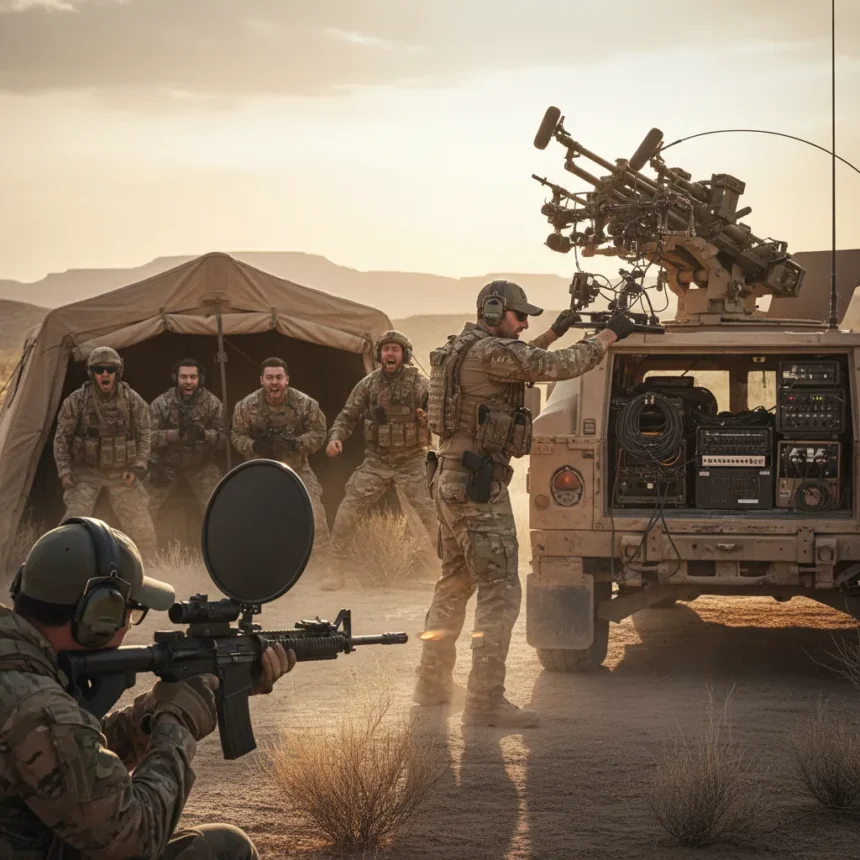
The Battlefield 6 audio team went beyond typical game sound design by conducting extensive real-world recording sessions. Rather than relying solely on existing weapon sound libraries or previous Battlefield recordings, the team executed multiple shoots to capture fresh audio of actual firearms, vehicle impacts, and destruction. According to the audio team, “We go to great lengths to record real sounds,” a philosophy that drove them to shoot up cars and destroy shipping containers to document authentic debris and impact sounds. This approach contrasts sharply with competitors who often layer synthesized effects over archived recordings, resulting in a more grounded, visceral audio landscape.
The team also leveraged access to previous weapon recordings from earlier Battlefield titles and collaborations between EA studios, creating a hybrid approach where new recordings complement proven archive material. This strategy maximizes authenticity without reinventing every sound from scratch, a balance that smaller studios cannot afford to pursue.
Voice Acting and Soldier Perspective Innovation
Capturing soldier voices for Battlefield 6 multiplayer required a departure from traditional game voice recording. The audio team built custom harnesses for actors to perform from a first-person perspective rather than the typical third-person booth setup. This physical innovation forced actors to position themselves differently, changing their breath patterns, vocal proximity to the microphone, and overall performance energy. The result is dialogue that sounds like it originates from inside the player’s head, not from a character standing across the screen.


Beyond individual performances, the team employed ensemble recording techniques, layering multiple actors’ deliveries to create richer, more naturalistic soldier lines. This approach adds group mechanics, physicality, and “in the moment” spontaneity that single-actor recordings cannot replicate. As one audio team member noted, “If there is grit or breath in the recordings, or if the voice is slightly off-axis, that’s okay. It makes it sound more believable and glues other sounds together in our soundscape”. This willingness to preserve imperfection directly contradicts the industry norm of pristine, heavily processed voice tracks.
War Tapes V.A.L. and Audio Mode Innovation
Battlefield 6 introduces War Tapes V.A.L. (Very Aggressive Listening), an enhanced audio mode that builds on the legacy War Tapes mix from Bad Company 2. The V.A.L. variant adds more power and distortion, delivering a grittier, more aggressive soundscape compared to the standard War Tapes mode, which some players find flat or washed out by comparison. This tiered approach acknowledges that different players prioritize different audio qualities—some want competitive precision, others want cinematic immersion.



The audio settings debate extends beyond War Tapes variants. Competitive players often prefer stereo headphones over surround sound configurations like 5.1 or 7.1 setups, as stereo isolation allows for more precise footstep detection and directional cueing. Battlefield 6’s audio design team appears to have optimized for both use cases, ensuring that casual players experience environmental richness while competitive players retain the precision they need.
How Does Battlefield 6 Audio Compare to Previous Titles?
The scale of Battlefield 6 audio recording dwarfs previous franchise entries. While earlier Battlefield games drew heavily on archived weapon sounds and third-party libraries, Battlefield 6’s team executed the most new weapon recordings in franchise history, setting a new standard for audio authenticity in the series. This investment reflects the competitive pressure from other AAA shooters and the rising player expectation for immersive soundscapes.
Previous Battlefield titles relied more heavily on layering and processing existing recordings. Battlefield 6’s emphasis on capturing raw, gritty source material—including the imperfections that make audio feel alive—represents a philosophical shift. The team’s decision to preserve breath, off-axis positioning, and natural flaws rather than surgically removing them shows confidence in the source material and trust in the player’s ear.
Why Real-World Recording Matters for Game Audio
Synthesized and processed sounds carry subtle artifacts that trained ears detect immediately. A gunshot generated by a synthesizer or heavily processed from archival sources often lacks the transient detail, frequency complexity, and spatial character of a real firearm recorded in a real environment. Battlefield 6’s investment in authentic recordings addresses this gap directly, creating audio that feels tactile and immediate rather than digital and distant.


The team’s willingness to destroy shipping containers and shoot vehicles for audio capture reflects a deeper philosophy: sound design is not a post-production afterthought but a core pillar of game design. This approach aligns with how top-tier films treat sound, where Foley artists, recordists, and sound designers are considered equal to cinematographers and editors. Battlefield 6 treats audio with similar respect, investing resources that most game studios reserve for graphics and gameplay mechanics.
How many new weapon recordings did Battlefield 6 capture?
The research brief does not specify an exact count of new weapon recordings, only that the Battlefield 6 audio team conducted “the most new weapon recordings ever in a Battlefield game”. The emphasis is on scale and precedent within the franchise rather than an absolute number.
What audio settings should competitive Battlefield 6 players use?
Competitive players typically prefer stereo headphones over surround sound setups like 5.1 or 7.1 configurations, as stereo isolation provides better footstep detection and directional precision. War Tapes V.A.L. mode offers more aggressive sound shaping compared to standard War Tapes, though the choice depends on individual preference and hardware.
Does Battlefield 6 use audio from previous games?
Yes. The Battlefield 6 audio team has access to weapon recordings from previous Battlefield titles and collaborations between EA studios, which they use alongside new recordings. This hybrid approach balances authenticity with production efficiency, ensuring both fresh and proven audio elements contribute to the final mix.
Battlefield 6 audio recording sets a new benchmark for how seriously a major FPS franchise takes sound design. By investing in real-world captures, custom voice harnesses, and ensemble performances, the development team has signaled that audio immersion ranks alongside graphics and gameplay as a core design pillar. For players who care about presence and believability, this commitment translates into a more convincing, visceral experience. For competitive players, the audio modes and precision-focused settings ensure that sound remains a tactical asset, not a distraction. The result is a game where you don’t just see the action—you feel it through your ears.
Edited by the All Things Geek team.
Source: TechRadar