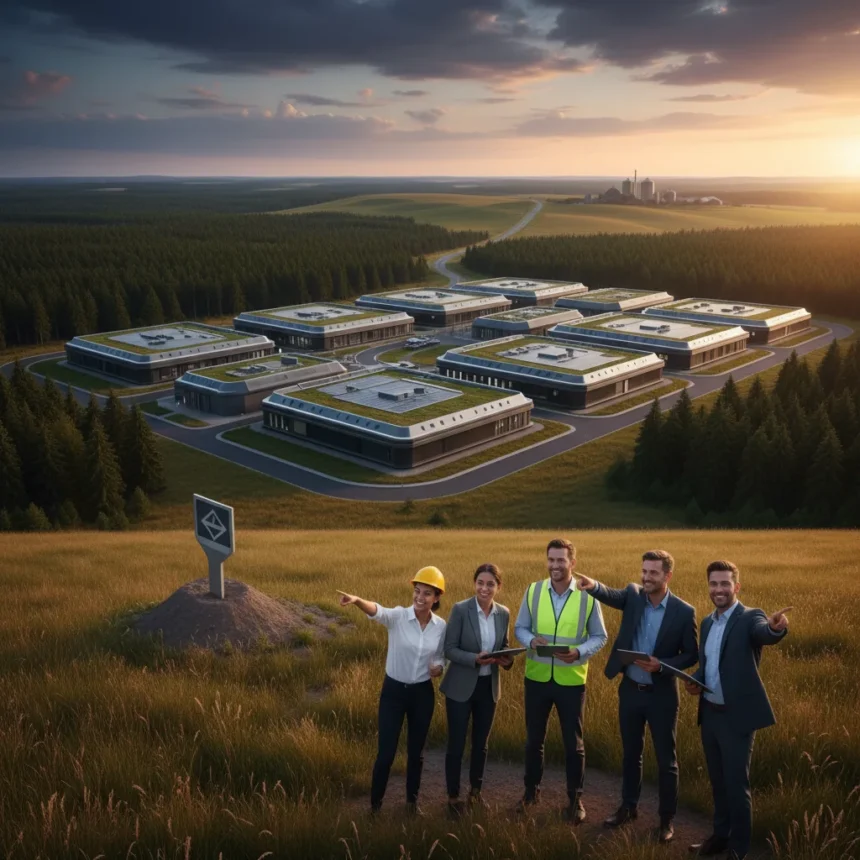
AI data center developers are shifting projects to unincorporated rural land to avoid the regulatory gauntlet of municipal approval processes. Cities across the United States have responded with bans and moratoriums, but rural counties offer a faster path to construction—one that sidesteps city council votes, rezoning hearings, and the public scrutiny that has become routine in urban areas.
Key Takeaways
- AI data center developers target rural unincorporated land to bypass city council approvals and rezoning votes.
- Rural counties offer faster permitting due to less stringent oversight compared to municipal processes.
- 50+ active data center bans and moratoriums now exist across U.S. cities, with 14 new restrictions added in March-April 2026.
- Rural sites enable co-location near power infrastructure like nuclear and wind facilities to reduce grid strain.
- 27 states are advancing bills on data center energy costs and moratoriums, creating tension with federal acceleration.
Why Rural Counties Became the New Frontier
Urban data center projects face an increasingly hostile regulatory environment. Cities like Atlanta and Phoenix have imposed construction bans, while Loudoun County, Virginia—once a data center hub—and Chandler, Arizona, have tightened restrictions. Developers cite “regulatory friction” as the primary obstacle. Rural unincorporated areas bypass these hurdles entirely. County-level oversight is often less stringent than city processes, enabling faster permitting and fewer approval stages. Larger contiguous land parcels in rural zones also allow developers to build multiple facilities on a single site, something urban zoning rarely permits.
The shift reflects a fundamental mismatch: AI infrastructure demand is surging while municipal resistance hardens. National data center power consumption stands at 15GW currently, with Virginia, Texas, and Arizona accounting for 2GW of that capacity. Rural expansions are now targeted to capture 20-30% of new capacity additions by 2027. A July 2025 White House executive order defined “Data Center Project” as any facility exceeding 100 MW dedicated to AI tasks, streamlining federal permitting—but this does not override local zoning authority.
The Infrastructure and Resource Pressure
Rural data centers demand massive resources. A single AI facility can consume 100+ MW of electricity, straining county grids designed for agricultural loads. Water usage becomes another flashpoint, with rural areas already competing with agriculture for limited supplies. Rural counties often lack the planning staff and technical expertise to negotiate with major developers, according to Brookings research. This power imbalance means communities may approve projects without fully understanding long-term impacts on electricity costs, water depletion, or grid reliability.



Developers counter that rural sites enable co-location near existing power infrastructure—nuclear plants, solar arrays, and wind farms—minimizing strain on the broader grid. This co-location strategy is attractive to federal regulators pushing AI infrastructure expansion. However, grid interconnection delays of 6-18 months remain common, even in rural areas, potentially offsetting permitting speed gains.
Political Backlash and the Federal-Local Divide
The rush to rural deployment has triggered a bipartisan response. A bill called the Unleashing Low-Cost Rural AI Act requires the USDA, DOE, and Department of Interior to study rural impacts on grids, electricity costs, and water resources. Meanwhile, 27 states are advancing their own data center bills focused on energy costs and moratoriums, directly opposing federal acceleration efforts. This creates a patchwork where federal policy encourages rural expansion while state and local governments resist it.



As of April 2026, the U.S. Data Center Moratorium Tracker documented 50 active bans, 4 permanent bans, 14 new restrictions, and 3 proposed moratoriums under review. Oklahoma City, for example, implemented a moratorium set to expire at the end of 2026. These restrictions push developers further into unincorporated territory, where oversight is minimal and public opposition carries less weight.
Tax Incentives and the Rural Opportunity Zone Play
Federal policy sweetens the rural bet. Qualified Rural Opportunity Fund (QROF) tax credits starting in 2027 offer approximately 30% credits for clean energy and data center projects in rural zones. This financial incentive accelerates rural site selection, particularly in Midwest and Western counties. The combination of lower regulatory friction, faster permitting, and federal tax benefits creates a powerful pull away from cities.
What Happens to Communities Left Behind?
Rural leaders report feeling outmatched in negotiations with major developers. The lack of planning expertise means communities may underestimate electricity demand growth, water depletion, or grid strain. Long-term employment claims from developers often exceed actual job creation, and construction-phase impacts (traffic, noise, dust) frequently outlast initial promises. Without the regulatory machinery cities have built over decades, rural counties absorb these costs with minimal leverage.
Can Rural Expansion Continue Unchecked?
Federal streamlining via executive order has limits. While the White House order accelerates federal permitting for projects exceeding 100 MW, it does not grant immunity from state or county zoning laws. Rural counties retain authority to deny projects or impose conditions. However, the combination of weak planning capacity, federal incentives, and developer pressure creates conditions for rapid approval without robust community input.



FAQ
Why are AI data center developers avoiding cities?
Cities impose bans, require rezoning votes, demand environmental reviews, and face organized public opposition. Rural unincorporated areas bypass these processes entirely, offering faster county-level approvals with minimal scrutiny.
How many data center bans exist in the United States?
As of April 2026, 50 active bans and moratoriums are documented, with 14 new restrictions added in March-April 2026 alone. This surge is driving developers toward rural alternatives.
What federal policy is encouraging rural AI data centers?
A July 2025 White House executive order streamlined federal permitting for data center projects exceeding 100 MW dedicated to AI. QROF tax credits starting in 2027 offer 30% credits for clean energy and data center projects in rural opportunity zones.
The rural data center boom represents a fundamental shift in infrastructure development: federal policy acceleration meeting local resistance, with rural counties caught in the middle. Cities can ban new construction, but developers will simply move elsewhere. The real question is whether rural communities will negotiate better terms before projects break ground, or absorb the consequences afterward.
Edited by the All Things Geek team.
Source: Tom's Hardware