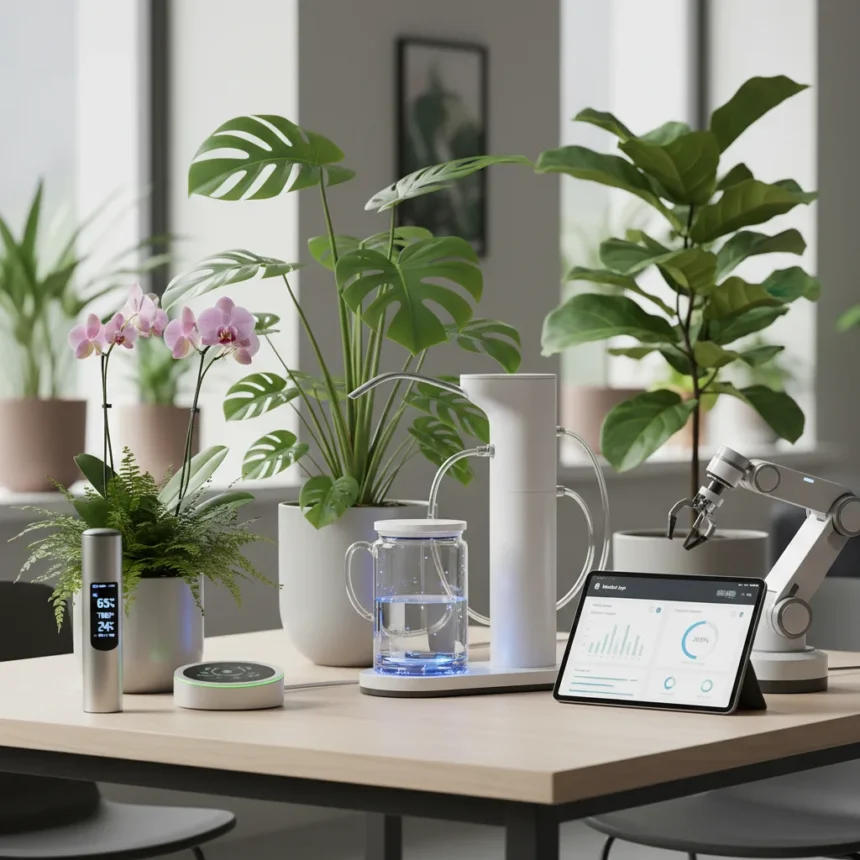
Smart plant-care gadgets are transforming indoor gardening from a skill-dependent hobby into an automated process that works for anyone, regardless of botanical expertise. These devices monitor soil moisture, light levels, and nutrient content while automating watering schedules and fertilizer delivery, making it possible to maintain thriving houseplants with minimal daily attention.
Key Takeaways
- Smart plant sensors monitor soil moisture, light, and nutrients in real time
- Automated watering systems eliminate guesswork and prevent overwatering
- Modular smart gardening systems support multiple plants with centralized control
- Integration with smartphone apps lets you manage plants remotely
- These gadgets reduce plant care failures for beginners and busy owners
How Smart Plant-Care Gadgets Monitor Your Houseplants
Smart plant-care gadgets use embedded sensors to track the environmental conditions your plants actually need. Soil moisture sensors detect water levels in the potting mix, light sensors measure ambient brightness, and nutrient sensors analyze the chemical composition of the soil. This real-time data feeds directly to a smartphone app, where you can see exactly what each plant requires at any moment.
The advantage over manual checking is precision. A plant may look fine visually but be severely underwatered at the root level, or overwatered to the point of root rot. Sensors eliminate this guesswork by providing objective measurements. You no longer rely on sticking your finger in soil or guessing based on leaf appearance—the gadget tells you the precise moisture percentage and nutrient levels.
Most smart plant-care gadgets also track light exposure, which is critical for photosynthesis and flowering. If your houseplant sits in a corner receiving only indirect light, the sensor alerts you to move it closer to a window or add a grow light. This targeted feedback prevents the slow decline that happens when plants languish in inadequate light for months.


Automated Watering Systems Prevent Common Plant Failures
Overwatering is the single biggest killer of houseplants, especially for beginners. Automated watering systems connected to soil moisture sensors solve this by delivering water only when the soil actually needs it. Instead of watering on a fixed schedule (which varies by season, humidity, and pot size), the system waters when soil moisture drops below your plant’s threshold.
These systems typically consist of a water reservoir, a pump, and tubing that connects to individual pots. When a sensor detects dry soil, the pump activates and delivers a measured amount of water directly to the plant’s roots. Once soil moisture reaches the target level, the pump stops. This prevents both the underwatering that stresses plants and the overwatering that causes fungal infections and root rot.


For apartment dwellers or frequent travelers, automated watering removes the anxiety of returning home to dead plants. You can leave for two weeks knowing your houseplants will receive exactly the water they need, delivered automatically based on real conditions rather than a calendar date.
Modular Smart Gardening Systems Scale From Single Plants to Entire Rooms
For serious plant collectors, modular smart gardening systems offer centralized control over dozens of plants simultaneously. These systems consist of individual smart modules that can be connected together, each monitoring and watering multiple pots. A single smartphone app controls the entire network, letting you adjust watering schedules, check soil moisture across all plants, and receive alerts if any plant is struggling.
Modular systems are more expensive than single-plant sensors, but they scale efficiently. Adding a new plant means simply connecting another module to the network rather than buying a separate device for each pot. This architecture also means you can start small with one or two modules and expand as your plant collection grows, without replacing your entire setup.
The centralized control is particularly valuable if you grow plants in different rooms or environments. A succulent in a sunny windowsill has completely different watering needs than a fern in a humid bathroom. A modular system lets you set custom thresholds for each plant while managing everything from a single app, eliminating the mental load of remembering which plant needs what.



Nutrient Delivery and Fertilization Made Automatic
Beyond water, houseplants need nitrogen, phosphorus, potassium, and micronutrients to thrive. Some smart plant-care gadgets include automated fertilizer dispensers that deliver nutrients on a schedule or in response to sensor data. Rather than guessing how much fertilizer to add or risk burning roots with too much, these systems measure nutrient levels and dispense precise amounts.
This is especially useful during growing season when plants consume nutrients rapidly. Instead of manually mixing and applying fertilizer every few weeks, the system handles it automatically. You simply fill the nutrient reservoir periodically, and the gadget takes care of the rest.
What smart plant-care gadgets should I look for when choosing one?
Look for devices with soil moisture sensors, light sensors, and smartphone app integration. Check whether the system supports multiple plants or just one, and verify that the app provides real-time alerts for dry soil, low light, or nutrient deficiencies. Ensure the water reservoir capacity matches how many plants you’re growing and how long you plan to be away between refills.
Can smart plant-care gadgets work with any type of houseplant?
Most smart plant-care gadgets work with common houseplants like pothos, snake plants, philodendrons, and ferns. However, succulents and cacti have very different watering needs than tropical plants. Choose a gadget that lets you customize moisture thresholds for different plant types, or use separate systems for succulents versus humidity-loving plants.
Do smart plant-care gadgets require special installation or electricity?
Most systems plug into a standard outlet and require no installation beyond inserting sensors into soil and connecting tubing to your water reservoir. Some battery-powered sensors exist, but they typically need frequent battery replacement. Plug-in systems are more reliable for long-term use and don’t require you to remember battery maintenance.
Smart plant-care gadgets democratize indoor gardening by removing the expertise barrier. Whether you travel frequently, forget to water plants, or simply want to optimize growing conditions, these devices deliver measurable results. The combination of real-time monitoring, automated watering, and nutrient delivery transforms even the most neglectful plant owner into someone who can maintain a thriving indoor garden.
Where to Buy
Click & GrowSmart Garden 3£99.75shop now | 10% OFFGrow GangClaria Full Spectrum LED Grow Light Pendant £81£90shop now | elhoSmart Pebble £39.99shop now
Edited by the All Things Geek team.
Source: TechRadar