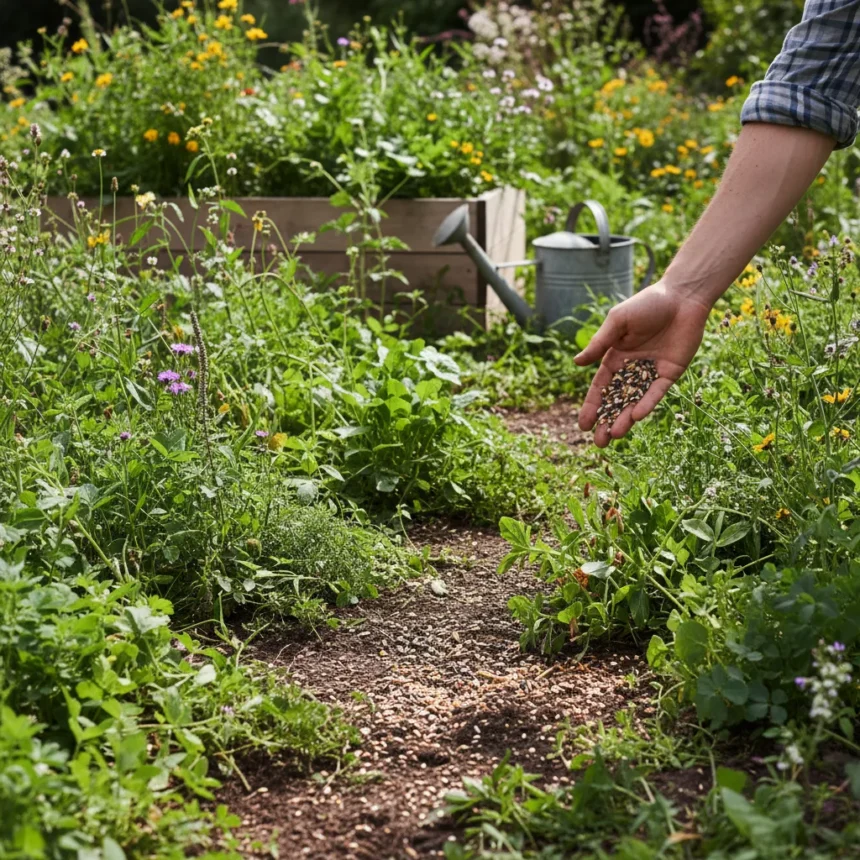
Chaos gardening is a planting method where seeds are scattered randomly into prepared soil without planning spacing, rows, or layouts, mimicking natural wild growth patterns. The trend has exploded on social media, with billions of TikTok views and recognition at prestigious events like the Chelsea Flower Show, making gardening accessible to beginners and time-strapped enthusiasts who find traditional methods intimidating.
Key Takeaways
- Chaos gardening scatters seeds randomly into soil without rows, spacing, or formal planning.
- Rooted in regenerative, permaculture, and cottage-style British gardening traditions.
- Ideal for beginners, lazy gardeners, and those short on time, money, or gardening knowledge.
- Uses shallow-sowing seeds like flowers, vegetables, herbs, and perennials.
- Budget-friendly approach requiring only basic soil preparation and inexpensive seed packets.
Why Chaos Gardening Works for Lazy Gardeners
The appeal is straightforward: chaos gardening eliminates the planning paralysis that stops many people from starting a garden. Traditional gardening demands spacing calculations, row layouts, yield optimization, and constant maintenance. Chaos gardening abandons all of that. As landscape designer Zachary Westall explains, “The seeds know what to do and watching nature take its course is a wonderfully freeing experience”. This philosophy resonates with rewilding advocates and those seeking to create pollinator-friendly spaces without the commitment of formal landscape design.
The method works because it mirrors how plants grow in nature—unplanned, competitive, and self-regulating. Stronger seeds germinate and thrive while weaker competitors naturally fail. The result is seasonal drama and an ever-changing garden design that evolves throughout the year, creating what practitioners call “rangy wildness”. For beginners intimidated by gardening’s technical demands, this randomness is liberating rather than chaotic.
How to Start Chaos Gardening: Step-by-Step
The process requires minimal preparation and no specialized equipment. First, clear your chosen area of weeds and loosen the soil by raking it smooth. This foundation matters—compacted earth prevents seeds from making contact with soil, reducing germination rates. Once prepared, select your seeds, mixing shallow-rooting varieties like flowers, vegetables, herbs, and perennials. Avoid deep-rooted plants, which struggle in this uncontrolled environment.


Next comes the fun part: scatter handfuls of seeds sporadically across the space, then rake lightly to bury them shallowly. Water gently initially, then step back and let nature take over. Rain and natural moisture handle most of the watering from that point forward. Unlike traditional gardening, chaos gardening requires minimal intervention—no staking, pruning, or constant tending. The strongest plants survive; the weakest fade away.
This approach contrasts sharply with meticulous traditional gardening, which demands precise spacing, row alignment, and ongoing cultivation to maximize yields and uniformity. Chaos gardening trades control for freedom, making it unsuitable for formal landscapes or competitive growing but ideal for wildflower borders, pollinator strips in vegetable gardens, or replacing conventional lawns.



Budget-Friendly and Accessible to Everyone
Chaos gardening costs almost nothing to start. It uses cheap or old seed packets that many gardeners already have, requires no plants or specialized tools beyond basic soil prep, and relies on seeds widely available year-round. This affordability removes a major barrier to gardening—the perception that it requires expensive equipment, plants, or expertise. According to Garden Therapy, “Chaos gardening is one of the easiest ways to start a garden from scratch. If you don’t have the time, money, or knowledge… it’s a great solution”.
The trend’s viral momentum on social media has democratized gardening for younger and newer audiences who might otherwise assume they lack the skills or resources to grow anything. What started as a permaculture and regenerative agriculture principle has become a social media sensation precisely because it removes the gatekeeping that traditional gardening culture sometimes imposes.
The Realistic Limitations
Chaos gardening is not a zero-maintenance miracle. Some plants will dominate while others fail to establish, creating uneven growth and unpredictable results. This randomness is the method’s appeal but also its weakness—you cannot control which seeds thrive or guarantee uniform yields. For those seeking a formal, manicured garden or reliable vegetable harvests, chaos gardening will disappoint.
Additionally, while the method requires less active tending than traditional gardening, it still demands occasional weeding and observation. Marketing claims of “zero maintenance” overlook this reality, though the workload remains minimal compared to conventional approaches. Andrew O’Donoghue, director of Gardens Revived, acknowledges the appeal while noting its transformative potential: “It’s a very exciting idea for a garden… your outdoor space will grow and transform throughout the months”.



Is Chaos Gardening Right for You?
Chaos gardening suits anyone who values experimentation over control, enjoys watching nature unfold, and wants to start growing without the intimidation factor of traditional methods. It works particularly well for creating seasonal color, establishing wildflower patches, attracting pollinators, or converting unused lawn space into a productive garden. If you have old seed packets gathering dust, an afternoon to prepare soil, and the patience to let nature decide the outcome, chaos gardening is worth trying.
The method also aligns with broader environmental movements toward rewilding and regenerative practices, making it appealing to those seeking gardening methods that support biodiversity and ecosystem health. For lazy gardeners, budget-conscious growers, and curious beginners, chaos gardening delivers on its promise—a genuinely effortless way to grow something beautiful without planning, expense, or expertise.
What seeds work best for chaos gardening?
Shallow-rooting seeds perform best, including most flowers, vegetables like lettuce and radishes, herbs, and perennials. Avoid deep-rooted plants and seeds requiring stratification or special treatment. Mix varieties to create seasonal interest and support pollinators.
Can chaos gardening replace a traditional vegetable garden?
Chaos gardening can supplement a vegetable garden or create a pollinator strip alongside conventional beds. However, it lacks the yield control and uniformity needed for reliable vegetable production. Use it for herbs and quick-growing crops rather than relying on it as your primary food source.
How long before chaos garden plants appear?
Germination depends on seed type and season, typically ranging from one to three weeks. Growth accelerates through spring and summer, with visible results by mid-season. Patience is required in early stages, but transformation becomes apparent as plants establish.
Chaos gardening succeeds because it stops fighting nature and starts working with it. For anyone tired of gardening’s perfectionism or intimidated by traditional methods, this trend offers permission to plant, scatter, and let the garden become what it wants to be.
Where to Buy
Edited by the All Things Geek team.
Source: Tom's Guide