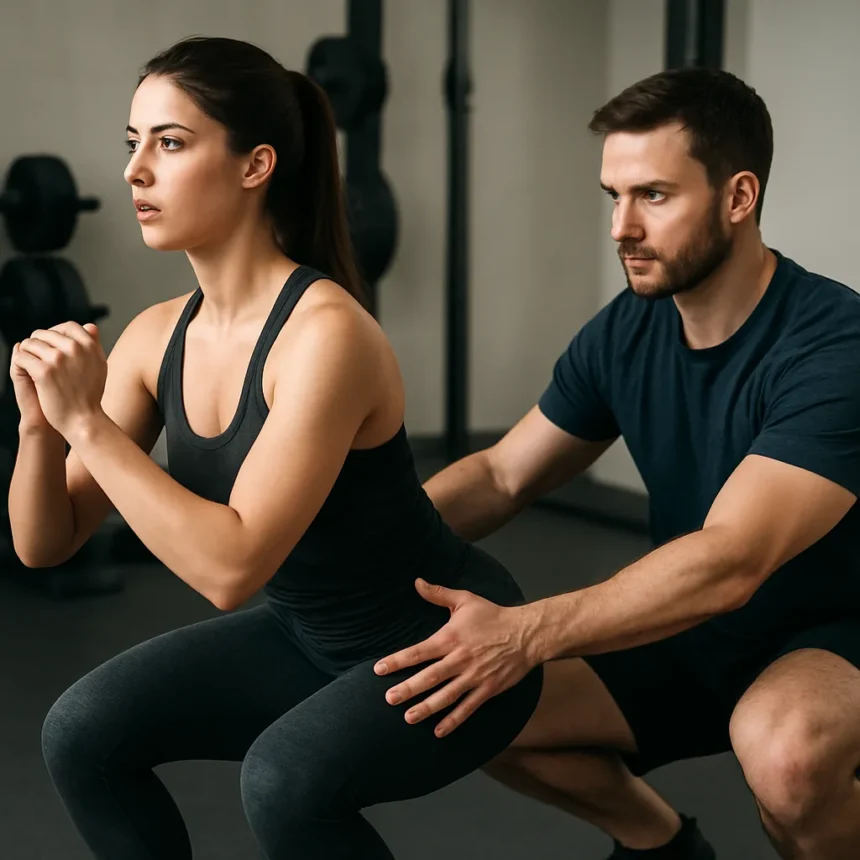
Butt wink during squats is the posterior tilt of your pelvis at the bottom of the movement, causing your lower back to round into flexion. This shift pulls your tailbone toward the floor and compresses your lumbar spine in a position it is not built to handle under load. If you have felt your hips tuck underneath you mid-squat, you have experienced it. And if you are loading that movement with a barbell, it is a problem worth fixing.
Key Takeaways
- Butt wink is posterior pelvic tilt at the squat bottom, causing lumbar spine rounding and flexion.
- It poses serious injury risk during loaded squats (barbell, dumbbells) but minimal risk in bodyweight versions.
- Common causes include limited hip and ankle mobility, weak core control, improper bar placement, and excessive squat depth.
- High bar squats allow upright torso and reduce wink risk; low bar squats increase forward lean and wink likelihood.
- Fixing it involves improving mobility, building strength in shallow ranges, and adjusting technique before chasing depth.
Why Butt Wink During Squats Matters for Your Lower Back
When your pelvis shifts from neutral or anterior tilt into posterior tilt, your lower back enters spinal flexion. Under the load of a barbell squat, this position multiplies stress on your intervertebral discs and ligaments. Peloton instructor Jess Sims describes it plainly: a butt wink happens when your pelvis tucks underneath you, causing your lower back to go into flexion or round. The danger escalates with weight. Bodyweight squats carry minimal injury risk even with a slight wink, but loaded squats—especially heavy ones performed repeatedly—turn that rounding into a genuine threat.
Your spine is designed to extend and rotate, not flex under tension. Repeated flexion under load accumulates microtrauma. Over time, this damages disc integrity and strains the posterior ligaments that stabilize your lumbar spine. If you have ever felt lower back pain after heavy squat sessions, butt wink is a likely culprit.
The Root Causes of Butt Wink During Squats
Butt wink during squats rarely stems from a single factor. Most lifters experience it because of a combination of mobility limits, technique errors, and anatomical constraints. The most common triggers are lack of hip mobility, limited ankle dorsiflexion, weak lumbopelvic control, and excessive squat depth relative to your current range of motion.


Bar placement matters more than most lifters realize. A high bar squat—where the barbell sits on your traps—allows your torso to stay upright and your pelvis to remain neutral deeper into the squat. A low bar squat, where the bar rests on your rear deltoid shelf, demands more forward trunk lean to balance the load. If your bar position drifts too low, that forward lean increases, and your pelvis tilts backward to compensate. Weak core and lumbopelvic control amplifies the problem. Lumbopelvic control is the ability to control the spine and pelvic movement together. Without it, your pelvis cannot maintain neutral tilt under load.
Forward foot pressure also plays a role. If you are driving force through your toes instead of your whole foot, your weight shifts forward, forcing your torso to lean more aggressively and your hips to tuck. Chasing depth beyond what your mobility allows is perhaps the most common mistake. Not everyone can squat below parallel with a neutral spine due to anatomy. Forcing that depth triggers the wink as your body runs out of available range.



How to Fix Butt Wink During Squats
Fixing butt wink during squats requires a three-part approach: restore mobility, build strength in available range, and adjust technique. Start by identifying your current squat depth without losing neutral spine position. Lower until you feel your pelvis begin to tuck, then stop. That is your working depth—not your ego depth. From there, you can systematically improve.
A pillar bridge builds core stability and lumbopelvic control. Face the floor, position your elbows under your shoulders, and place your feet hip-width apart with toes tucked. Lift your knees, extend your legs, and push the floor away through your elbows to stack your ribcage over your pelvis. Hold for time under tension. This teaches your core to maintain neutral spine position against gravity, a skill that transfers directly to squats.
An assisted squat—lowering to the depth where you can maintain neutral spine, then holding isometrically—acclimates your nervous system and tissues to deeper ranges. As your tissues adapt to that position, you will start to access deeper ranges of motion in a better position. Progress depth gradually. Do not chase the bottom of the squat if your body is not ready. High bar positioning reduces wink risk compared to low bar, so if you are new to loaded squats or recovering from injury, high bar is the safer choice. Ensure your feet drive evenly through the whole foot, not just your toes. A slight forward shin angle is normal, but excessive forward weight shift forces compensation in your hips.
Butt Wink During Squats vs. Natural Spine Flexion
One source of confusion: your spine does flex naturally during deep squats and other movements. A distinction exists between controlled, minimal flexion in a deep squat and the uncontrolled posterior pelvic tilt that characterizes butt wink. The latter is a loss of lumbopelvic control. The former, in small amounts, may be unavoidable in very deep ranges. The risk lies in loading that uncontrolled flexion. A slight wink in a bodyweight pistol squat is not the same as a wink under a heavy barbell. Context matters. If you are pain-free and moving within your current capacity, minor flexion is not an emergency. But if you are loading it or experiencing discomfort, it is worth addressing.



Is Butt Wink During Squats Always a Problem?
Not every lifter needs to eliminate butt wink entirely. Anatomy varies. Some people have femur lengths, hip socket angles, or ankle mobility that make a perfectly neutral spine squat below parallel biomechanically difficult or impossible. In those cases, the solution is not to force neutrality—it is to squat to a depth that respects your anatomy and keeps you pain-free. Parallel squats (thighs to floor) are a legitimate endpoint. Below parallel is not mandatory for strength or muscle gain.
The key question is load and pain. If you are squatting with weight and your lower back hurts, butt wink is the likely cause and you should address it. If you are moving bodyweight with no discomfort, a minor wink is not urgent. But if you plan to add load—a barbell, dumbbells, or a weighted vest—fixing it now prevents injury later.
FAQ
What exactly is butt wink during squats?
Butt wink is the posterior tilt of your pelvis at the bottom of a squat, causing your lower back to round into flexion. Your hips shift from a neutral position to a tucked position, pulling your tailbone toward the floor and compressing your lumbar spine.
Can butt wink cause a serious injury?
Butt wink poses serious injury risk under load—barbell squats, heavy dumbbells, or weighted movements repeated over time. Repeated spinal flexion under tension damages disc integrity and strains supporting ligaments. Bodyweight squats carry minimal injury risk even with a slight wink, but loaded squats turn rounding into a genuine threat.
How long does it take to fix butt wink during squats?
Fixing butt wink depends on the underlying causes. If mobility is the issue, consistent stretching and mobility work over 4–8 weeks can help. If lumbopelvic control is weak, core training takes similar time. Most lifters see noticeable improvement within 2–3 weeks of focused work, but complete resolution may take longer depending on your starting point and training consistency.
Butt wink during squats is fixable, but it requires patience. Stop chasing depth you are not ready for. Build strength in the range you can control. Progress mobility gradually. Your lower back will thank you, and your squat will improve as a result.
Where to Buy
$26 at Amazon US | $159 at Amazon US | $16 at Amazon US
Edited by the All Things Geek team.
Source: Tom's Guide