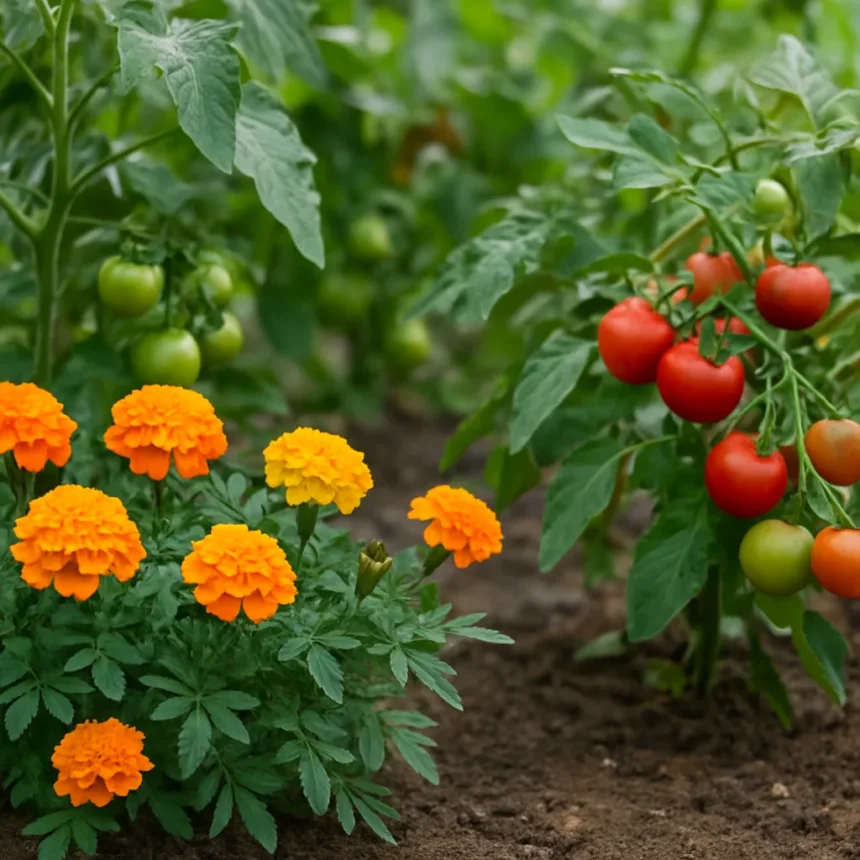
Companion planting with marigolds is a natural, chemical-free approach to protecting vegetables from common garden pests, especially tomatoes. Marigolds are valued in vegetable gardens not just for their vibrant yellow and orange blooms, but for their powerful pest-deterrent properties. By planting these flowers strategically alongside your vegetables, you can reduce pest pressure without relying on synthetic pesticides.
Key Takeaways
- Marigolds deter aphids, whiteflies, blackflies, mosquitoes, and nematodes through their strong scent
- Companion planting with marigolds works especially well for tomatoes, cucumbers, beans, and cabbages
- Marigold roots emit alpha-terthienyl, a phototoxin that repels nematodes and other soil pests
- Marigolds also attract pollinators, providing dual benefits of pest control and pollination
- These flowers thrive in USDA zones 2–11 with full sun and well-draining soil
How Companion Planting With Marigolds Protects Your Vegetables
The strong scent of marigolds is their primary defense mechanism. This aroma repels a wide range of common garden pests, including aphids, whiteflies, blackflies, and mosquitoes. Beyond airborne insects, marigold roots produce alpha-terthienyl, a phototoxin that is particularly toxic to nematodes—microscopic soil-dwelling pests that damage plant roots. This dual action—both above and below ground—makes companion planting with marigolds a comprehensive pest-management strategy.
Companion planting with marigolds is especially valuable for gardeners growing tomatoes, cucumbers, beans, or cabbages, since these crops are frequently targeted by the very pests marigolds repel. Rather than treating your entire garden with pesticides, you can plant marigolds directly alongside vulnerable vegetables to create a natural protective barrier. The flowers act as a living pest deterrent, working continuously throughout the growing season.
Growing Conditions for Marigolds in Your Garden
For companion planting with marigolds to be effective, these flowers need the right growing conditions. They perform best in nutrient-rich, well-draining soil and require ample sunlight. Marigolds are hardy plants that grow well across USDA zones 2–11, making them accessible to gardeners in most climates. In the heat of summer, water them about once a week, though they prefer dry conditions overall.


Plant marigolds in full sun for the strongest growth and most abundant blooms. Position them within a few feet of your vulnerable vegetables—tomatoes especially benefit from nearby marigold companions. The flowers’ vibrant appearance also adds aesthetic value to your vegetable garden, creating a more visually appealing growing space while doing the work of pest control.
Companion Planting With Marigolds vs. Other Pest-Repellent Flowers
While marigolds are highly effective, they are one option among several pest-repellent flowers. Tom’s Guide identifies nine pest-repellent flowers for gardens, including chrysanthemums, calendula, nasturtiums, lavender, dill, parsley, asparagus, and borage. Each of these plants offers different strengths depending on which pests you’re targeting and which vegetables you’re growing.



For slugs and snails specifically, companion planting options extend beyond marigolds to include rosemary, mint, sage, lavender, chervil, thyme, roses, ferns, and hydrangeas. If you’re dealing with multiple pest pressures, combining marigolds with one or two complementary companion plants can strengthen your garden’s natural defenses. Many gardeners find that a diverse companion planting strategy—using marigolds alongside herbs like lavender or dill—creates a more resilient pest-management system than relying on a single flower.
The Dual Benefit: Pest Control and Pollination
An often-overlooked advantage of companion planting with marigolds is that these flowers attract pollinators. While they’re busy repelling pests, marigolds simultaneously draw bees and other beneficial insects to your garden. This pollination support directly improves fruit set on tomatoes, cucumbers, and beans—the very crops you’re protecting from pests. You’re essentially solving two garden challenges with a single plant.
This dual benefit makes marigolds particularly valuable for organic and chemical-free gardeners. You’re not just avoiding pesticides; you’re actively improving your garden’s ecosystem by supporting pollinator populations while deterring harmful pests.
Is companion planting with marigolds effective for all vegetables?
Companion planting with marigolds works best for tomatoes, cucumbers, beans, and cabbages, which are frequently affected by the pests marigolds repel. While marigolds can provide some pest deterrence in any garden, they’re most effective when planted near vegetables that are vulnerable to the specific pests their scent repels.



How often should I water marigolds in my garden?
Marigolds prefer dry conditions and typically need watering about once a week during the heat of summer. They thrive in well-draining soil, so avoid overwatering, which can lead to root rot. During cooler months or periods of regular rainfall, reduce watering frequency accordingly.
Are marigolds safe to plant near pets?
Garden marigolds are non-toxic to dogs and cats, making them a safe choice for gardeners with pets. You can plant them throughout your vegetable garden without worrying about accidental ingestion harming your animals.
Companion planting with marigolds offers gardeners a straightforward, effective way to reduce pest pressure without chemicals. By understanding how these flowers work—both through their scent and their root compounds—and by matching them to the vegetables they protect best, you can build a more resilient, self-sustaining garden. The combination of pest control, pollinator support, and pet safety makes marigolds a practical choice for any vegetable gardener looking to move away from synthetic pesticides.
Where to Buy
The Three Company Live Flowering Marigold – 4 Pack : | Sow Right Seeds Marigold Collection (3-Pack):
Edited by the All Things Geek team.
Source: Tom's Guide