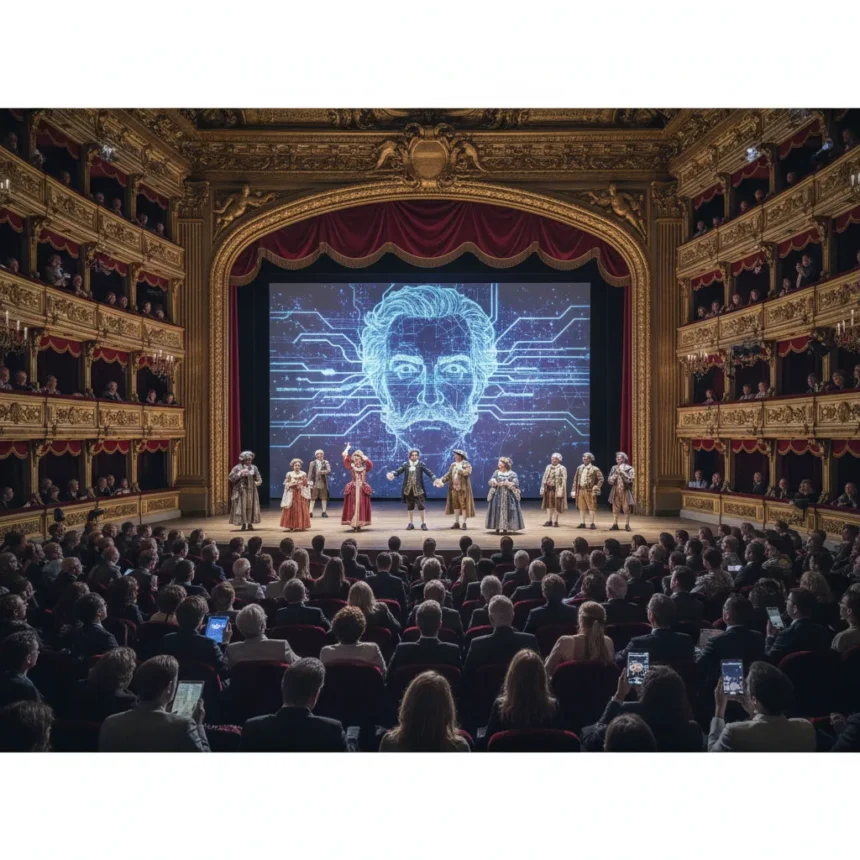
An AI-generated theatrical comedy has premiered before audiences at Versailles Opera, marking a striking experiment in using machine learning to resurrect the literary voice of Molière, the 17th-century French playwright. French researchers trained artificial intelligence on Molière’s body of work to generate a new sharp satire, demonstrating that generative AI can move beyond text prediction into genuine creative production across classical literary traditions.
Key Takeaways
- French researchers trained AI on Molière’s writings to create a new theatrical comedy.
- The AI-generated work premiered before audiences at Versailles Opera.
- The project demonstrates AI’s capacity to produce satirical theater in the style of a historical master.
- The work was created more than 350 years after Molière’s death.
- The initiative blends latest generative AI with classical French literary legacy.
How Researchers Used AI to Generate New Molière-Style Theater
The core innovation here is straightforward but ambitious: instead of using AI merely to analyze or annotate historical texts, researchers fed Molière’s complete body of work into a machine learning model and asked it to generate original dramatic material in his satirical voice. The resulting theatrical comedy represents not a remix or mashup of existing scenes, but a genuinely new work structured as a full-length play. This approach treats AI as a creative collaborator capable of learning and reproducing the distinctive comedic sensibility of a specific author, rather than as a tool for summarization or pattern recognition.
The choice of Molière as the subject is deliberate. Often called the French Mark Twain for his biting social satire and comedic mastery, Molière spent his career skewering the pretensions of French aristocracy and the emerging middle class. His plays—Tartuffe, The Misanthrope, The Imaginary Invalid—remain textbooks in how to structure comedy around human folly. By training AI on this corpus, researchers essentially asked the machine to internalize not just Molière’s vocabulary and plot structures, but his particular worldview: skeptical, observant, and merciless toward hypocrisy.
Why This Matters Beyond the Novelty Factor
The premiere at Versailles Opera signals that this is not a curiosity project confined to academia or a tech lab. Staging the work before a paying audience at one of France’s most prestigious cultural venues suggests institutional confidence in the quality and coherence of the AI-generated script. Theater is unforgiving—a poorly structured play, weak dialogue, or confused narrative arc becomes immediately apparent to a live audience. The fact that this work made it to the stage implies it met basic theatrical standards for pacing, character development, and dramatic tension.



What matters most is that this project challenges the assumption that AI can only remix or interpolate existing creative work. Generative models have proven capable of producing passable poetry, functional code, and serviceable marketing copy. But theater is different. It requires sustained narrative logic across acts, consistent character voices, escalating tension, and payoff. If an AI system trained on Molière’s works can generate a coherent satire that holds an audience’s attention, it suggests these models have absorbed something deeper than surface-level stylistic patterns—perhaps something closer to dramatic structure and comic timing themselves.
The Limits of AI-Generated Creativity in Classical Contexts
That said, calling this a true revival of Molière’s spirit overstates what the technology actually accomplishes. The AI did not understand Molière’s historical moment, his political allegiances, or the specific social targets he attacked. It learned statistical patterns in his language and dramatic structure, then extrapolated new combinations. The resulting work may be witty and well-crafted, but it is not Molière—it is a sophisticated pastiche trained on Molière’s data.



This distinction matters because it clarifies what AI-generated art actually is: not creation from insight or lived experience, but synthesis from training material. A human playwright who writes satire does so because they observe injustice, hypocrisy, or absurdity in the world around them and feel compelled to expose it through comedy. An AI system writes satire because it has learned the statistical patterns that characterize satirical writing. The gap between those two processes is significant, even if the output appears similar on a stage.
What This Means for the Future of AI in Theater and Literature
The Versailles premiere opens questions about the role of generative AI in cultural institutions. Will museums and theaters begin commissioning AI-generated works in the styles of canonical artists? Will literary estates use AI to produce posthumous novels or plays attributed to deceased authors? The technical capability now exists. The ethical and aesthetic questions lag behind.
One practical implication is clear: AI can serve as a research tool for understanding historical authors. By training on Molière’s complete works and generating new material, researchers gain insight into what makes his comedies distinctive—what patterns, structural choices, and thematic preoccupations define his voice. The AI becomes a kind of literary microscope, revealing the underlying architecture of genius in a way that traditional criticism cannot. Whether audiences find the resulting play entertaining is secondary to the fact that it exists at all, and that it suggests machines can now approximate the voice of a master dramatist with enough fidelity to fool a theater audience.
Does AI-Generated Theater Diminish Human Creativity?
The existence of an AI-generated Molière comedy does not make human playwrights obsolete. If anything, it clarifies what human dramatists do that machines cannot: they write from conviction, from a specific historical moment, and in response to urgent questions about how to live. An AI system can generate formally competent satire. A human playwright can write satire that changes how audiences see the world. The Versailles premiere demonstrates technical achievement, not artistic replacement.


Can AI Capture the Spirit of a Historical Author?
The research brief describes the project as reviving Molière’s spirit, but that language is promotional rather than literal. The AI learned patterns in Molière’s writing and generated new material consistent with those patterns. Whether it captured his actual spirit—his moral vision, his sense of purpose, his understanding of human nature—is unanswerable and probably not the right question. What it did capture is his stylistic DNA: the rhythm of his dialogue, the structure of his comedic situations, the types of characters and conflicts he favored. That is substantial enough without overstating what the technology accomplished.
The premiere at Versailles Opera represents a genuine milestone in AI-assisted creative production. It proves that generative models can produce coherent, stageable theatrical work in the voice of a historical master. Whether future audiences will find such AI-generated plays as moving or insightful as human-written drama remains an open question—but the technical barrier has clearly fallen away.
Edited by the All Things Geek team.
Source: TechRadar