AI identity protection trademarks represent a new legal frontier for celebrities fighting unauthorized voice and image replication. Taylor Swift’s company, TAS Rights Management, LLC, filed three trademark applications with the United States Patent and Trademark Office on April 24, marking a significant escalation in how high-profile figures are defending themselves against deepfakes and AI-generated impersonations.
Key Takeaways
- Taylor Swift filed three trademark applications covering her voice and stage image on April 24, 2025.
- Two applications protect specific audio clips: “Hey, it’s Taylor Swift” and “Hey, it’s Taylor” linked to album promotions.
- One application covers a photograph of Swift performing with a guitar during the Eras Tour.
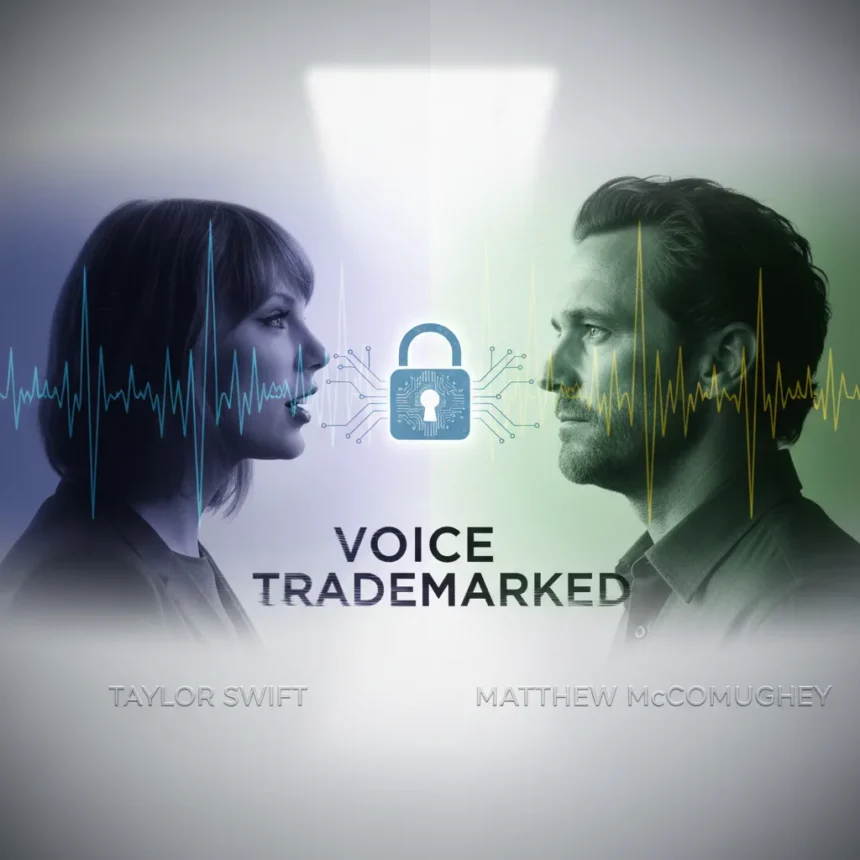
- Matthew McConaughey had eight voice, image, and catchphrase trademarks approved in 2025 following similar AI concerns.
- Trademarks could allow legal challenges to AI-generated content that sounds or looks “confusingly similar” to the registered identity.
Why Taylor Swift is filing AI identity protection trademarks now
The timing is urgent. Deepfakes targeting celebrities have proliferated across the internet, with bad actors using AI to create explicit material, misleading advertisements, and false endorsements without consent. Swift’s filings directly address this threat by establishing legal ownership of her distinctive voice and image. If trademark law can protect a brand logo, the reasoning goes, it should protect a celebrity’s identity from AI replication.
Swift already holds over 50 existing trademarks related to her name, song lyrics, and album titles, dating back to 2014 registrations for lyrics like “This sick beat” from Shake It Off and “We never go out of style” from Style. In 2024, she registered a trademark for Female Rage: The Musical, the Eras Tour section featuring songs from The Tortured Poets Department. These earlier filings show Swift’s legal team has long understood the value of protecting her intellectual property—the new voice and image trademarks extend that strategy into AI defense.
How trademark law becomes a shield against AI misuse
Trademark attorney Josh Gerben explained the mechanics: if Swift were to file a lawsuit over unauthorized AI voice use, she could claim that any AI-generated voice sounding like her registered trademark violates her trademark rights. The same principle applies to her image. Trademarks create a legal baseline—a registered identity that cannot be copied without permission.



This approach is novel because it repurposes trademark law, traditionally used to protect brand names and logos, into a tool for personal identity defense. Instead of protecting “Coca-Cola” the brand, Swift is protecting “Taylor Swift” the voice and likeness. The strategy shifts the burden: rather than proving emotional harm or privacy violation, she can argue that an AI replica is a trademark infringement—a more straightforward legal claim.
Matthew McConaughey sets the precedent for AI identity protection
Swift is not alone. Matthew McConaughey had eight trademark applications approved in 2025 for his voice, image, and his famous catchphrase “Alright, alright, alright”. McConaughey’s motivation mirrors Swift’s: he told his legal team, “My team and I want to know that when my voice or likeness is ever used, it’s because I approved and signed off on it.” He emphasized the need for clearer boundaries around “ownership and consent” with AI technology.



McConaughey’s successful filings validate the trademark strategy and suggest other celebrities will follow suit. The broader pattern is clear: as AI tools make voice cloning and image synthesis easier and cheaper, high-profile figures are moving from reactive complaints to proactive legal registration. Trademarks turn identity into defensible property.
What these trademarks actually protect—and what they don’t
the limits. Trademark protection is not a guarantee against all AI misuse. Rather, it gives celebrities a clearer legal pathway to challenge “confusingly similar” AI replicas. If someone creates a deepfake video of Swift singing a song she never recorded, she can now argue the synthetic voice infringes her registered trademark. But the effectiveness of this approach will depend on how courts interpret trademark law in the context of AI—a question that remains unsettled.
No lawsuits have been filed yet based on these trademark filings. The applications are preventative, establishing legal standing before disputes arise. Swift and McConaughey are essentially creating a paper trail that says: this voice, this image, this identity belongs to me and is protected by law.
Is trademark filing enough to stop AI deepfakes?
Trademark law alone will not eliminate deepfakes. A bad actor in another country, operating anonymously, may not care about US trademark law. But for mainstream platforms and commercial actors—those creating misleading advertisements or profiting from AI replicas—trademark protection creates legal liability. Platforms may face pressure to remove content that violates a celebrity’s registered trademarks, similar to how they handle copyright strikes.


The real significance is cultural and legal precedent. Swift and McConaughey are signaling that celebrity identity is property worth protecting, and trademark law is a tool to do it. Whether other celebrities, athletes, and public figures adopt the same strategy will determine how quickly this becomes standard practice.
Could trademark protection become standard for all celebrities?
As AI voice cloning and image synthesis improve, trademark filings for personal identity may become routine for anyone in the public eye. The cost is minimal, the legal pathway is established, and the upside—the ability to challenge unauthorized AI replicas—is significant. A musician, actor, or politician could register their voice and likeness and gain immediate legal recourse against deepfakes.
The broader implication is that AI misuse is forcing a reckoning with identity ownership. Before 2024, few celebrities thought to trademark their voices. Now, it is becoming a necessity. This shift reflects how AI has accelerated the need for legal frameworks that did not previously exist.
Can I file trademark protection for my own voice or image?
Yes, anyone can file trademark applications with the US Patent and Trademark Office, though approval is not guaranteed. The trademark must be used in commerce—meaning you are offering goods or services associated with that voice or image. For celebrities and public figures, this is straightforward. For private individuals, the bar is higher. The process costs money and requires legal guidance, making it practical mainly for those with significant public profiles or commercial value.
Will trademark law actually stop AI deepfakes?
Trademark law will deter mainstream commercial misuse and provide legal grounds for takedown requests on major platforms. However, it will not stop all deepfakes, especially those created by bad actors operating outside US jurisdiction or anonymously. The protection is strongest against organized, profit-driven AI misuse and weakest against individual bad actors with no commercial intent. Think of it as a legal tool that raises the cost of infringement, not a complete barrier.
Taylor Swift’s trademark filings signal a turning point: celebrities are no longer waiting for legislation to catch up with AI capabilities. They are using existing legal tools—trademarks, copyright, publicity rights—to establish ownership of their identities before the technology outpaces the law. Whether this approach succeeds in court will shape how the entertainment industry defends itself against AI for years to come.
Edited by the All Things Geek team.
Source: TechRadar