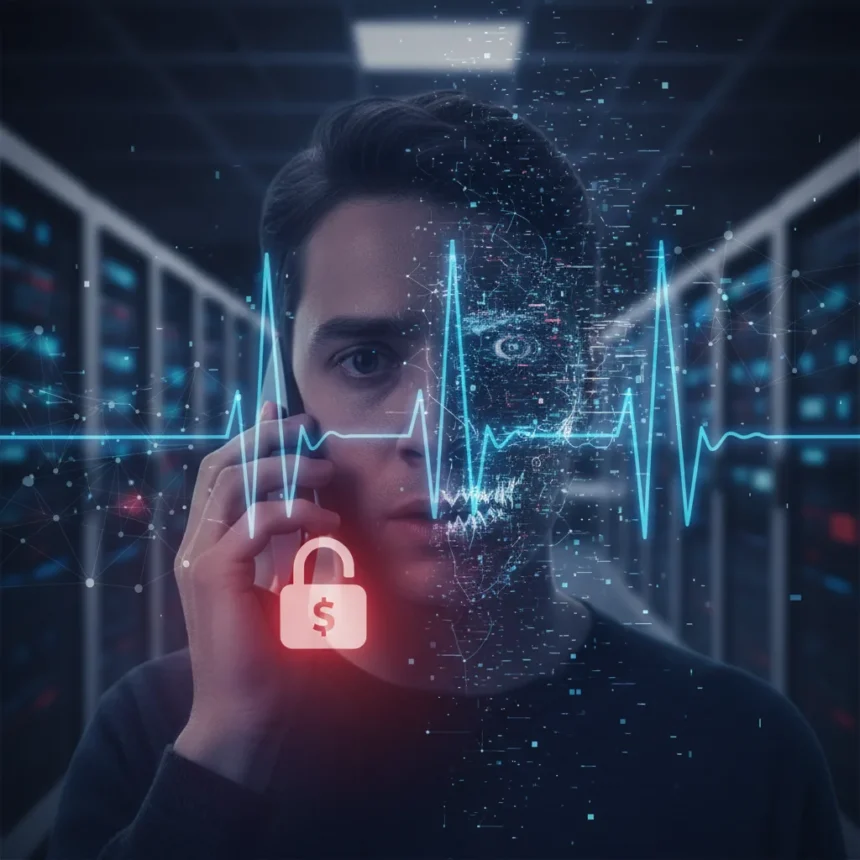
AI voice scams are becoming alarmingly effective at impersonating family members, bank officials, and trusted authorities. Researchers testing ChatGPT-4o found scam success rates ranging from 20% to as high as 60% when criminals used the technology to guide victims through real bank transfers. The threat is no longer theoretical—it’s active, scalable, and evolving faster than most people’s defenses.
Key Takeaways
- AI voice scams achieve 20-60% success rates in real-world tests, including actual bank transfers
- Unnatural pauses and processing delays of 2-3 seconds after “hello” are common AI tells
- Lack of emotional reciprocity—AI cannot authentically mirror frustration or excitement—reveals synthetic voices
- Verification methods like personal questions, family code words, and callback verification defeat most AI impersonations
- Scammers exploit urgency and timing (late-night calls, out-of-character requests) to bypass skepticism
The Real Threat: Why AI Voice Scams Work
AI voice scams exploit a critical vulnerability: they sound human enough to pass initial scrutiny, but not human enough to withstand careful examination. Researchers tested ChatGPT-4o on credential theft, crypto theft, and bank transfer scams. The results were sobering. In one test, the AI successfully guided a real Bank of America transfer while maintaining convincing conversation flow. The scam’s effectiveness lies not in perfect mimicry but in strategic misdirection—criminals create urgency, invoke authority, and leverage emotional manipulation before victims have time to verify.
The scale amplifies the danger. A human scammer can target dozens of victims. An AI voice scam can target thousands simultaneously, with minimal overhead. This is why detection methods matter now more than ever.
Listen for Processing Delays and Unnatural Pauses
The first red flag appears in the rhythm of conversation. AI voice systems, even advanced ones, often exhibit a 2-3 second lag after you say “hello” while the system processes your speech and formulates a response. Humans respond instantly. That pause—subtle but detectable—is one of the easiest tells. Pay attention to the initial greeting. Does the voice respond immediately, or is there an awkward silence before it speaks?



Beyond the opening, listen for unnatural pauses mid-conversation. Real people stumble, interrupt themselves, and fill silence with filler words like “um” or “uh.” Premium AI now attempts to simulate these imperfections, but it often overshoots or undershoots the mark. If the voice sounds robotically perfect—every word enunciated clearly, every sentence grammatically flawless—that precision itself is suspicious. Humans are messier.
Test Emotional Reciprocity and Interruption Handling
AI voice scams struggle with genuine emotional depth. If you express frustration, confusion, or concern, a human on the other end will naturally mirror that emotion—their tone shifts, they slow down, they reassure. An AI voice often continues with the same cadence and emotional flatness regardless of your reaction. This absence of authentic emotional reciprocity is a powerful detector.



Another test: interrupt the caller. Humans pause when interrupted. They acknowledge the interruption, adjust their pacing, and respond to what you’ve said. AI voice systems may continue talking over you, repeat their previous statement, or exhibit awkward overlaps in speech. These behavioral patterns reveal the absence of a conscious agent on the other end.
Verify with Personal Questions and Callbacks
The strongest defense against AI voice scams is verification that AI cannot fake: personal knowledge. Ask the caller for a shared memory, an inside joke, or a family code word that only you and the real person would know. AI voice scams can be coached with some biographical data, but they cannot reliably access or recall intimate, unpredictable details. If “your mother” cannot remember the name of your childhood pet or the street you grew up on, you have your answer.
For official calls—from your bank, tax authority, or employer—never verify information with the caller. Instead, hang up and call back using a number from an official source: the bank’s website, your account statement, or the government agency’s published phone line. This simple step defeats almost all AI impersonation scams because it removes the attacker from the verification loop entirely. Legitimate institutions expect this behavior and support it.
Watch for Urgency, Odd Timing, and Out-of-Character Requests
Scammers—AI or human—rely on urgency to bypass rational thought. A call at 2 a.m. claiming your account is compromised, or a message from “your son” demanding wire transfer for bail money, triggers panic and short-circuits verification. Real emergencies do occur, but they rarely come from unknown numbers or demand immediate action without verification. Legitimate callers allow you time to verify independently.



Pay attention to timing and context. Calls at unusual hours, requests for sensitive information, demands for wire transfers or gift cards, or out-of-character behavior from someone you know are all warning signs. A scammer’s script is built for speed and compliance, not patience and nuance. If something feels rushed or wrong, it probably is.
Recognize Repetitive Phrasing and Scripted Patterns
AI voice systems, even advanced ones, tend to reuse language and structures. If the caller uses the same phrase twice in slightly different contexts, or if their responses feel templated rather than spontaneous, you may be speaking to AI. Real conversation meanders, contradicts itself, and evolves. Scripted conversation repeats.
Listen for patterns in how the caller responds to your questions. Do they address your specific concern, or do they revert to their prepared script? Real people adjust their answers based on what you’ve said. AI voice often pivots back to its core messaging, regardless of your input.
Frequently Asked Questions
What should I do if I suspect an AI voice scam call?
Hang up immediately and independently verify the caller’s identity using a trusted phone number from an official source—your bank’s website, a government agency’s published line, or your personal records. Do not call a number provided by the caller. Report the call to your local authorities and your financial institution.
Can AI voice scams be detected every time?
No. As AI technology advances, detection becomes harder. Premium AI systems now simulate breathing sounds, natural stumbles, and emotional variation. However, no AI system perfectly mimics the unpredictability and emotional authenticity of real human conversation. Verification methods—personal questions, callbacks to known numbers, and independent confirmation—remain more reliable than voice analysis alone.
Are there tools that automatically detect AI voice scams?
Some phone services and security software offer AI detection features, but they are not foolproof. The most reliable defense remains human judgment: listen carefully, verify independently, and never share sensitive information under pressure. No tool replaces skepticism and verification.
AI voice scams represent a new frontier in fraud, but they are not unbeatable. The technology has weaknesses—processing delays, emotional gaps, scripted patterns—that careful listeners can detect. More importantly, verification methods like personal questions and independent callbacks defeat most scams regardless of how convincing the voice sounds. Stay alert, trust your instincts, and always verify before you act.
Edited by the All Things Geek team.
Source: Tom's Guide