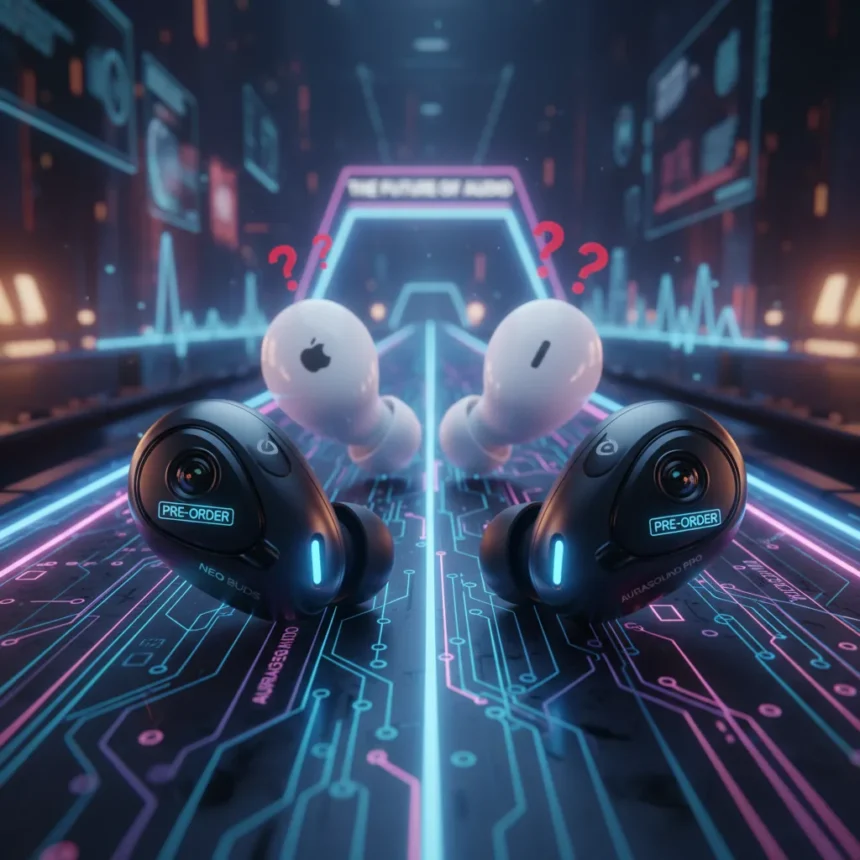
Apple’s AI-powered earbuds with integrated cameras remain firmly in rumor territory, but the competitive landscape is shifting faster than Cupertino typically moves. While Apple continues to develop what insiders call camera-equipped AI AirPods, at least one rival brand has already brought comparable smarter earbuds to market—and they’re accepting pre-orders now.
Key Takeaways
- Apple’s AI-powered earbuds with camera capabilities are still unconfirmed rumors, not announced products.
- Competing brands have already launched smarter earbud alternatives and opened pre-order channels.
- The AI-powered earbuds category is accelerating beyond Apple’s traditional product timeline.
- Camera integration in earbuds remains controversial among consumers and engineers alike.
- Pre-order availability signals genuine market demand for AI-enhanced audio wearables.
Why AI-powered earbuds matter right now
The race for AI-powered earbuds reflects a fundamental shift in how tech companies view wearables. Rather than treating earbuds as passive audio devices, manufacturers are embedding processing power, sensors, and increasingly, visual capture capabilities. Apple’s rumored approach would add cameras to its existing AirPods lineup, enabling features tied to AI assistants and on-device processing. However, the fact that competitors are already shipping similar concepts suggests the market opportunity is too large to wait for Apple’s inevitable announcement.
What makes this timing significant is the contrast between rumor and reality. Apple has built enormous credibility by being first to mainstream categories—but AI-powered earbuds may be one where that advantage is slipping. The company’s cautious approach to new hardware categories, coupled with its lengthy development cycles, means rivals can establish market presence, gather user feedback, and refine features before Apple officially enters the space.
Competing brands are already taking pre-orders
At least one manufacturer has moved beyond concept stage and opened pre-order channels for AI-powered earbuds that deliver similar functionality to what Apple is rumored to pursue. This represents a critical inflection point: when pre-orders open before Apple’s official announcement, it signals genuine consumer demand and validates the product category itself. Pre-order availability also means early adopters can experience these features now rather than waiting for Apple’s timeline.



The move reflects a broader industry pattern where companies no longer wait for Apple to legitimize new earbud capabilities. Instead, they’re building features—AI assistants, sensor integration, context-aware processing—and launching directly to consumers. For Apple, this creates pressure to differentiate beyond hardware specifications. The company’s ecosystem advantages and software integration remain substantial, but they’re no longer sufficient to guarantee first-mover benefits in emerging categories.
What AI-powered earbuds actually do
AI-powered earbuds are designed to process audio and visual information in real time, enabling features like live translation, audio transcription, and context-aware notifications. The camera component—still controversial among privacy advocates—would theoretically allow the earbuds to understand visual context and provide more intelligent responses to user queries. Apple’s version, based on rumors, would likely integrate tightly with Siri and on-device AI models to minimize data transmission and maximize privacy.



However, the practical value of cameras in earbuds remains debated. Engineers point out that a camera mounted on an earbud has a severely limited field of view and cannot reliably capture the scene in front of a user. Privacy concerns are equally substantial—carrying a camera in your ear raises legitimate questions about consent, surveillance, and regulatory compliance. These tensions explain why even as competitors launch, skepticism persists about whether camera-equipped earbuds represent genuine innovation or novelty.
The broader competitive landscape
Apple’s delay in releasing AI-powered earbuds creates an unusual dynamic in the wearables market. Typically, Apple’s entry into a category reshapes competitive dynamics—but here, the company is entering a space where alternatives already exist. This means Apple must not only deliver compelling hardware and software but also convince users that its approach offers meaningful advantages over established competitors. The company’s track record suggests it will succeed, but the initial window for market leadership has narrowed considerably.
For consumers, this competition accelerates feature development across the industry. Brands racing to differentiate their AI-powered earbuds will iterate faster, add capabilities more aggressively, and price more competitively than they would in a market waiting for Apple. The pre-order availability of competing products means interested buyers need not wait—they can experience AI-enhanced audio today and decide whether the category justifies the investment.
Should you pre-order AI-powered earbuds now?
If you’re interested in AI-powered earbuds and want access immediately, pre-orders from established competitors offer a viable path. However, if you prefer to wait for Apple’s inevitable entry into the category, understand that you’ll be trading current availability for potential ecosystem advantages and refined software integration. Apple typically enters categories with polish and ecosystem depth that take competitors months to match, but you’ll be waiting for that advantage.



When will Apple release its AI-powered earbuds?
Apple has not officially announced AI-powered earbuds with cameras, so no confirmed launch date exists. Based on historical patterns, the company typically announces major new product categories at keynote events, but the rumor timeline remains uncertain. Competitors moving to pre-orders now suggests Apple may accelerate its timeline to avoid ceding too much market share.
What makes AI-powered earbuds different from regular AirPods?
Regular AirPods focus on audio quality, connectivity, and basic voice assistant integration. AI-powered earbuds add on-device processing, context awareness, and—in some cases—visual sensors to enable more sophisticated interactions. The core difference is active intelligence: AI-powered earbuds attempt to understand and respond to your environment, not just your voice commands.
The competitive race for AI-powered earbuds is accelerating precisely because Apple hasn’t yet defined the category. Rivals are establishing features, gathering user feedback, and building market presence before the inevitable Apple announcement reshapes the landscape. For consumers, this creates immediate choice and competition-driven innovation. For Apple, it means entering a category where the rules are already being written by others—a rare position for the company, but one that often leads to refined execution rather than first-mover advantage.
Where to Buy
Edited by the All Things Geek team.
Source: T3