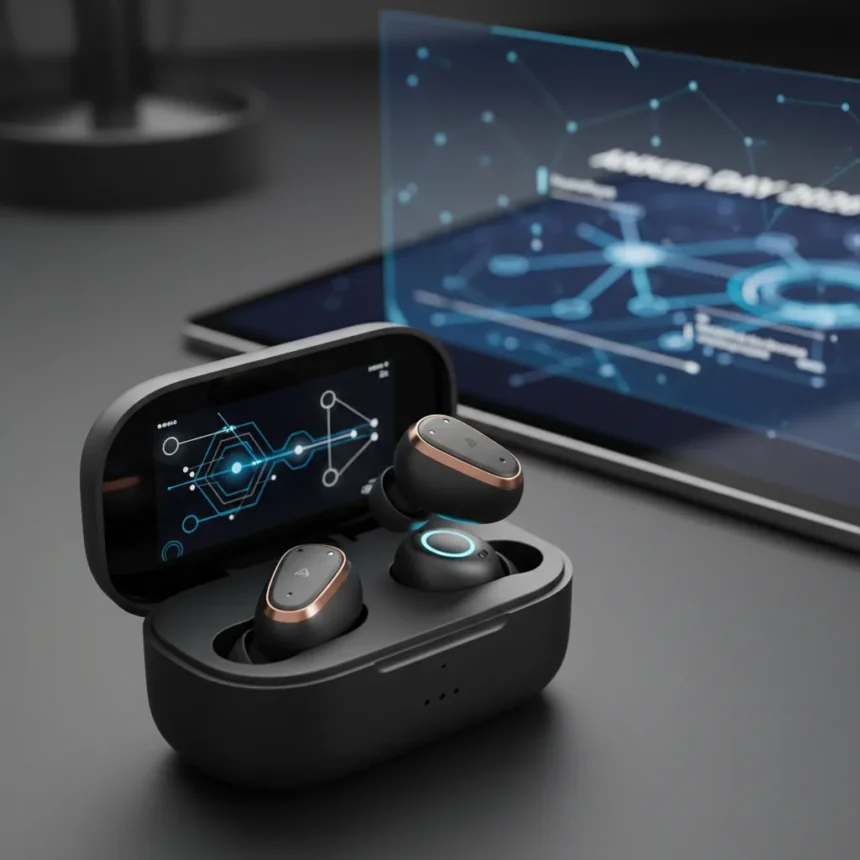
Anker new earbuds launched at Anker Day 2026 represent a shift in how the company thinks about premium audio accessories. Rather than relying on flashy exterior design alone, Anker is betting that the real appeal lies in what’s happening inside the earbuds and how they integrate with your phone.
Key Takeaways
- Anker Day 2026 introduces two new earbud models with screen-equipped charging cases
- The focus is on internal hardware improvements and smartphone app integration, not just case displays
- Both models emphasize software-driven features over exterior aesthetics
- The companion app plays a central role in the earbuds’ functionality
- This dual-flavor approach lets Anker target different user preferences within the same product family
Anker new earbuds shift focus from case design to internal innovation
The most telling detail about Anker’s new earbuds is what the company chose to emphasize: not the screens on the charging cases, but the components packed inside and the smartphone app that ties everything together. This strategic messaging reveals a fundamental truth about modern earbuds—flashy case displays attract attention in retail, but sustained user satisfaction comes from what the hardware can actually do and how smoothly it works with your phone.
Anker is launching two distinct versions, giving buyers a choice rather than forcing everyone into a single design. This dual approach mirrors how established competitors segment their lineups, allowing Anker to appeal to different budgets, use cases, and feature preferences without diluting the brand with too many SKUs.
What makes Anker new earbuds different from the competition
The earbuds industry has become saturated with me-too products that copy Apple’s AirPods Pro formula without adding meaningful innovation. Anker’s emphasis on internal hardware and app-first design suggests the company understands this trap. Rather than simply adding a screen to the case and calling it premium, Anker is investing in the components that actually shape the listening experience—the drivers, the processing, the connectivity—and the software that lets users control and customize those elements from their phone.



This philosophy contrasts with competitors who lead with industrial design and exterior features. When you open a product announcement and the headline focuses on case screens, you’re being sold aesthetics. When the focus shifts to what’s under the hood and on your phone, you’re being sold functionality. Anker is choosing the latter, which is a smarter long-term bet for a brand competing against entrenched players.
The role of the smartphone app in Anker new earbuds
The companion app is where Anker new earbuds likely differentiate themselves most. Modern earbuds live or die by their software ecosystem—the ability to customize sound profiles, manage connectivity, control active noise cancellation, update firmware, and access exclusive features. A well-designed app transforms earbuds from simple audio devices into personalized audio platforms. Anker’s emphasis on the app suggests the company is treating this tier as equally important as the hardware itself.



For users, this means the earbuds should feel more intelligent and responsive over time. Updates can add features without requiring new hardware. Settings can be tailored to individual preferences rather than forcing everyone into preset modes. The phone becomes the control center, and the earbuds become more capable as the app matures.
Two flavors give Anker flexibility in a crowded market
Offering two versions of the earbuds at Anker Day 2026 is a calculated move. Rather than betting everything on a single product, Anker can serve different segments—perhaps one model targets bass-heavy listeners or gaming enthusiasts, while the other appeals to professionals who prioritize call quality and noise isolation. Without knowing the specific differences, the strategic intent is clear: maximize market reach while maintaining a cohesive product family.
This approach also signals confidence. Anker isn’t hedging with a single safe design; it’s committing to innovation across multiple tiers, trusting that the internal improvements and app integration will justify the investment across both models.
Why case screens matter less than you think
The case screens are real, and they’re part of the product story. But they’re not the story. Case displays add visual polish and can show battery status or connectivity info at a glance. However, they also add complexity, battery drain, and manufacturing cost. The fact that Anker chose to include them on both models suggests the company sees them as table stakes for premium positioning, not as the primary innovation. The real selling points are the hardware inside and the software controlling it.



Is Anker new earbuds worth the upgrade?
Without confirmed pricing or full specifications, it’s premature to declare a verdict. However, Anker’s approach—prioritizing internal components and app integration—suggests the company is serious about competing with established premium brands. If the hardware delivers on the promise and the app is polished and feature-rich, these earbuds could be compelling alternatives to more expensive options. The question is whether Anker’s execution matches its strategy.
What features should you expect from Anker new earbuds?
Based on the launch messaging, expect solid audio quality driven by thoughtful internal design, intelligent app controls that let you fine-tune the experience, and case screens that add convenience without being the main draw. Both models should feel premium and responsive, with the app serving as the command center for customization and updates.
When will Anker new earbuds be available?
Anker Day 2026 marks the official announcement, but specific release dates and regional availability have not been confirmed in available sources. Typically, Anker products roll out to major markets within weeks of an announcement, but you should check Anker’s official channels for precise timing and pre-order details.
Anker’s new earbuds represent a maturation in how the company approaches premium audio. By focusing on what’s inside and how the earbuds talk to your phone, rather than relying on case screens as the main selling point, Anker is signaling that it understands what actually matters to serious listeners. If the internal hardware and app delivery live up to the positioning, these earbuds could be among the most thoughtfully designed options in their category.
Edited by the All Things Geek team.
Source: TechRadar